Chinese Doctors Build 3D Printed Model to Repair a Shattered Shoulder


Chinese doctors and technicians have used 3D printing to treat an injury referred to as “floating shoulder,” a condition so dangerous to a patient that it often results in death.
The ‘‘floating shoulder’’ injury is essentially a combination of ipsilateral scapular neck and clavicular shaft fractures. It’s an injury caused by a high-energy trauma directly onto the shoulder, and traffic accidents are generally the culprit.
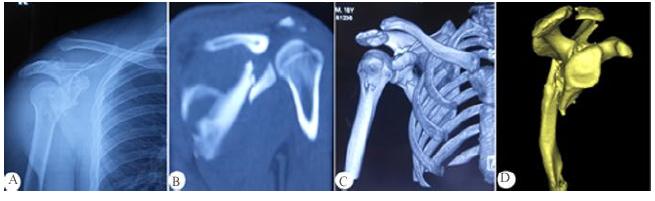 In this case, an 18-year-old male patient had his shoulder badly injured in a traffic accident, and after being examined at a local hospital, an anteroposterior X-ray was performed and the patient was diagnosed with acromial fracture, scapular fracture, and displaced clavicle by the emergency doctor.
It was an injury so severe that the patient was immediately transferred the department of orthopedics where a computed tomography (CT) scan of the shoulder was done, and that scan revealed the seriousness of his situation.
There are three treatment options to fix the problem, but they all require a thorough understanding of the complex anatomy of the shoulder girdle itself, so doctors used a 3D image taken from the CT scan data of the patient’s injured shoulder joint to plan the operation.
 Based on the patient’s CT data, the fracture model was built with a digital orthopedic workstation called Mimics from Materialise.
Once the image of the 3D model was smoothed, the area of the fracture was sliced using Cura 5.0 to produce the necessary files, and then Rhinoceros 5.0 was used to create the printer files. The data was then sent to an industrial-grade FDM 3D printer to print the surgical planning model.
As part of the preoperative process, the 3D printed model of the injured shoulder was used to evaluate the size and shape of the defect, then to simulate the operation and map out a plan for the operation.
The 3D visualization model was produced to precisely show the anatomical details of the tissues and bones affected, and that allowed the team of surgeons on the case to have an accurate visualization for their preoperative surgical planning.
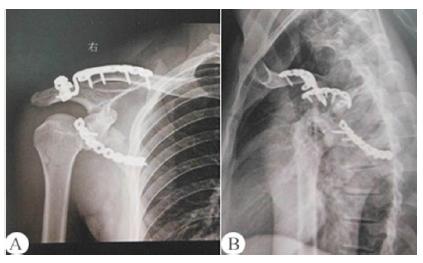
The team say the result was reduced operative time and a much better operative outcome. They add that having a reference to prepare for the operation also aided them in properly building the shape and curvature of the plates needed to support the repairs done to the patient’s shoulder.
The work at the Department of Orthopaedic Surgery of Union Hospital, Tongji Medical College, Huazhong University of Science and Technology, the Department of Orthopaedic Surgery at Puren Hospital, and the University of Science and Technology in Wuhan was supported by a grant from the National Natural Science Foundation of China.
Doctors are finding that building 3D printed models of their patients can be key to planning complex surgical procedures. Do you know of any instances where surgeons are using 3D printing technology to more effectively care for their patients? Let us know your thoughts in the 3D Printed Model to Repair a Shattered Shoulder forum thread on 3DPB.com.
Subscribe to Our Email Newsletter
Stay up-to-date on all the latest news from the 3D printing industry and receive information and offers from third party vendors.
Print Services
Upload your 3D Models and get them printed quickly and efficiently.













You May Also Like
Oxidation Used to Create Self Lubricating CCA’s
Oxidation affects many substances but can also be beneficial. Aluminum, for example, forms a passive oxide film that helps it resist seawater. NAB is often used in ships and forms...
3D Printing News Briefs, September 26, 2026: Bioceramic Implants, 3D Concrete Printing, & More
In this weekend’s 3D Printing News Briefs, we’ll start with an integration between PanOptimization and AMCM, before moving on to healthcare news from KLS Martin and Lithoz, and then UltiMaker...
Malping Wants to Offer FGF PEEK as a Service
Germany-based Malping, located in Neuhausen auf den Fildern, is moving into more high performance materials for Material Extrusion. The service operates FGF and FDM high-temperature material printers, and offers parts,...
Why Beam Control Could Redefine the Future of EB-PBF
In Part 1, Ulf Lindhe examined how advances in beam control, point melting strategies, and process monitoring are changing the way engineers think about electron beam powder bed fusion (EB-PBF)....