FreeLSS Open Source 3D Printable Scanning System Powers DIY Scanners Like the ATLAS 3D


 While the 3D printer has garnered an enormous amount of attention, performing new and heroic tasks on almost a daily basis, the 3D scanner has not historically received a proportionate amount of time in the spotlight, necessary tool that it often is to achieving the desired result in the maker’s world.
The 3D scanner gives us the independence to make what we want without having to download someone else’s files. That can come with a price though. With the new FreeLSS 3D printable scanner, with files now available for free download, makers have another new opportunity to sidestep expense without sacrificing quality. As we saw last week with the launch of a Kickstarter campaign to fund Uriah Liggett’s ATLAS 3D scanner based on the FreeLSS software, this scanning technology is truly opening up the arena.
For 3D printing purposes, the 3D scanners around have a reputation for being on the expensive side if you are looking for high resolution. Often, the best solution for ‘too expensive’ is to make it yourself and that’s central to the making community.
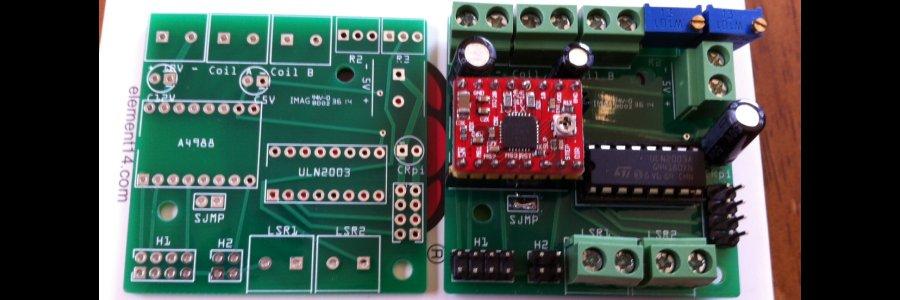 DIY projects are now featuring many DIY made tools, and the 3D scanner seems to be headed that direction as makers figure out what ingredients are required for a quality 3D scanner, and how to pull that all together for less, and offered to all. 3D printing enthusiasts tend to want it all with the 3D scanner: speed, high resolution, and affordability. FreeLSS attempts to encompass and fulfill all these needs.
Both big companies and DIYers are beginning to show their stuff with the 3D scanner, all with unique features, and featuring different levels of expense, resolution, and performance from free and 3D printable to desktop to the more elite models. Scanners based on FreeLSS technology seem to be leading the DIY charge on these for makers interested in crafting their own scanners from the 3D printed ground up. Taking a closer look into this build-your-own scanner trend requires an in-depth look at the FreeLSS platform.
 Some of these solutions are not only less expensive but are better, and with the open source design, fit the making/hacking/tinkering community far better. For the FreeLSS, all the user has to do is download the designs and purchase the electronic parts. There is the minor engineering know-how required, but the design is simple and should present no complication for most.
The Raspberry Pi, a low-cost computer that’s compact and capable, plays a part in many of the recent 3D printable scanners, and it has been put to good use in the FreeLSS with the 3D scanner centering around the Raspberry Pi’s multi-use 5 MP Raspberry Pi camera for laser sensing. Both still and video mode are available. The 3D scanner is not tethered to a PC connected by USB as the software is self-contained with a web-based interface.
Featuring a completely open design with flexible architecture, FreeLSS is simple, easy, and affordable. It’s a comprehensive design available on github that features a turntable laser platform that allows for manual control. Also included in the FreeLSS design are the following features:
- Point cloud export
- Triangle mesh export
- Assisted calibration
- Dual laser line support
- Up to 6400 samples per table revolution
- Configurable image processing
- Scan storage library
The output formats are as follows:
- PLY – Colored Point Cloud
- XYZ – Comma Delimited 3D Point Cloud
- STL – 3D Triangle Mesh
With a bit of finesse in electronics and the motivation to create an awesome new tool for your 3D printing endeavors, you should be in business in no time for personalizing your own designs. Is this 3D printable 3D scanner something you are interested in building for yourself? Please share your thoughts with us in the FreeLSS forum over at 3DPB.com.
Subscribe to Our Email Newsletter
Stay up-to-date on all the latest news from the 3D printing industry and receive information and offers from third party vendors.
Print Services
Upload your 3D Models and get them printed quickly and efficiently.













You May Also Like
Conexeu Sciences Wishes to Make a Regenerative Breast Matrix Solution (and sell shares)
Conexeu Sciences wants to commercialize a regenerative breast matrix solution. For years, Australian firm BellaSeno and Lattice Medical have been working on similar solutions. In 2018, Lattice came out with...
3D Printing News Briefs, August 23, 2025: Facial Implants, Tibial Fractures, Lamps, & More
It’s all about medical in this weekend’s 3D Printing News Briefs. BellaSeno established a clinical advisory board. MedCad is donating 3D printed facial implants to war-injured Ukrainians, and researchers in...
BellaSeno’s 3D Printed Breast Implants Keep Shape with 87% Fat Volume, Avoids Silicone Risks
At a medical conference in Austin this week, a new kind of breast implant took center stage. It is not made from silicone but from a 3D printed, fully resorbable...
BellaSeno Completes Two Clinical Trials on 3D Printed Resorbable Breast Implants
German firm BellaSeno, which is focused on 3D-printed resorbable breast implants for both augmentation and lumpectomy, has completed two clinical trials for resorbable breast implants. These trials represent the first-ever...