3D Printed Propulsion Specialist Ursa Major Plans to Go Public via SPAC in Q1 2027


The Special Purpose Acquisition Company (SPAC) boom was devastating for the additive manufacturing (AM) industry. Peaking in 2021 — and, of course, subsuming companies from industries far beyond AM — the SPAC boom brought billions of dollars into AM and left very little to show for it, other than an investment world that grew wholly wary of AM.
Despite this overall track record, SPACs have been making a comeback, one the AM industry is not exempt from: none other than Ursa Major, the Colorado-based manufacturer of propulsion hardware that leverages metal AM, is combining with Bleichroeder Acquisition Corp. III, in a $2.3 billion deal. The deal is backed by Inflection Point Asset Management, whose portfolio includes strategic infrastructure plays like Intuitive Machines and USA Rare Earth. Cantor FItzgerald is lead financial advisor to Bleichroeder, with Ursa Major being advised by Moelis.
Ursa will get at least $350 million from the deal, with the potential for that amount to nearly double, and the startup will be funded with $110 million as soon as the deal is signed. The listing is expected to happen in Q1 2027, at which point Ursa Major will be traded on the NASDAQ.
$110 million is, interestingly enough, around the same amount that Ursa received in its previous two funding rounds, with the company’s total all-time funding standing at just under $400 million. At the time of its Series E round last December, Bloomberg noted that Ursa Major’s valuation was around $600 million, so while its current valuation of $2.3 billion may seem like a rather sizable leap in just eight months, it is more than accounted for by the surging demand for the rocket components that Ursa Major can deliver.
Nonetheless, it’s perhaps a bit jarring that Ursa Major, which in recent years has embodied the height of operational excellence in the context of rising defense sector demand for metal AM capabilities, is choosing to go the SPAC route. The list of companies that have been successful following a SPAC deal is extremely short.
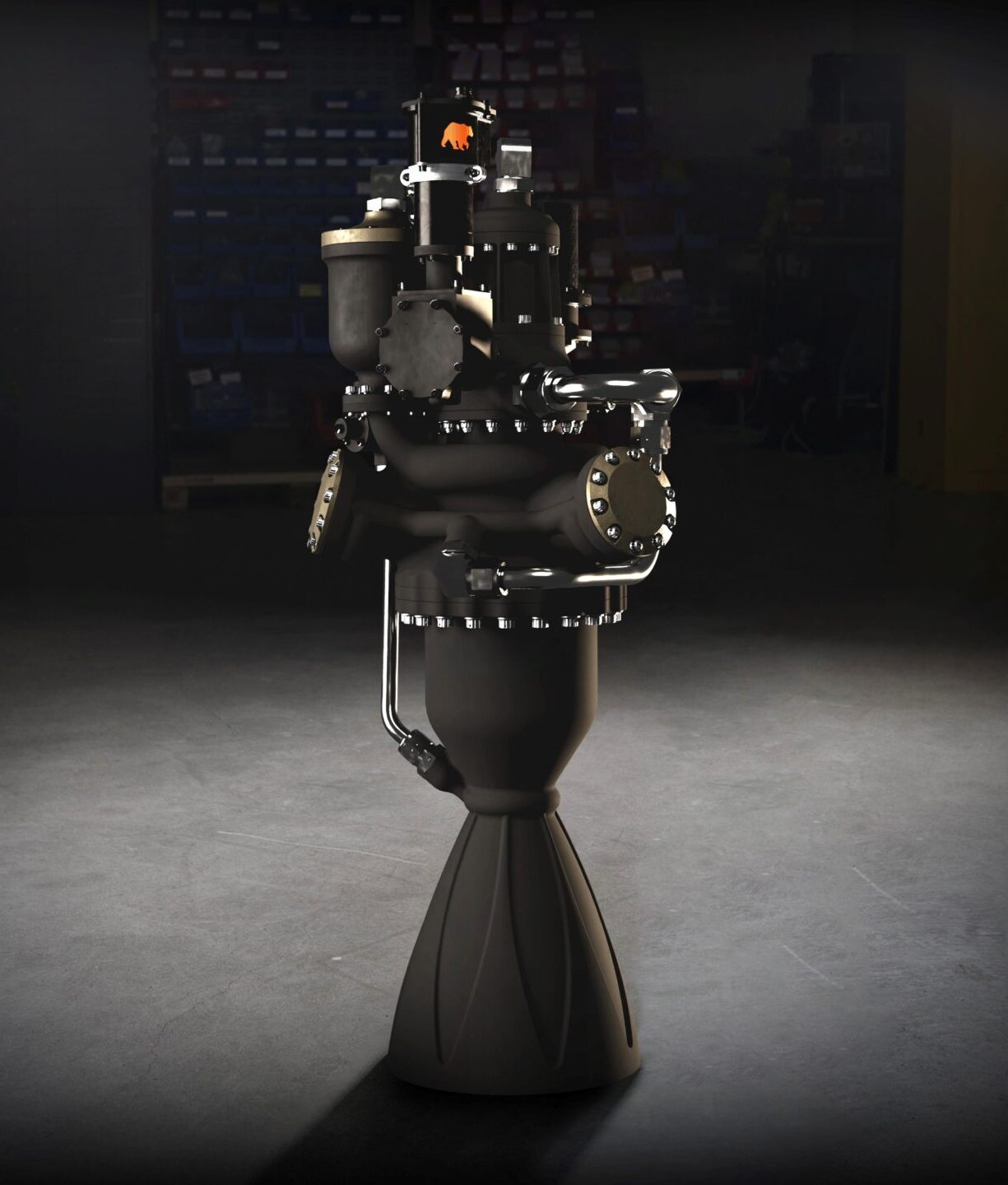
On the other hand, one of those success stories happens to be Rocket Lab, meaning that there is precedence for an American company that uses AM for space and defense infrastructure turning SPAC proceeds to good use. It is also the case that there is a growing trend whereby US strategic sector firms — in particular, anything defense-related — are turning to less conventional sources of funding in order to make forward-facing Capex commitments sufficient to the task of achieving rapid growth in a mature industrial economy.
The aforementioned USA Rare Earth is in fact a good example of that: its latest government-funded haul comes from the Pentagon’s Economic Defense Unit (EDU), the existence of which I was not previously aware of but which just invested $750 million in USA Rare Earth. It’s not immediately obvious why I should consider this to be any less risky than a SPAC (although it is, maybe, a cause for concern that SPAC ventures seem to be the test cases for experimental forms of US government funding).
Primarily, I think that this testifies to the length that American investors now have to go to in order to keep capital flowing into domestic heavy industry. Except for a rare handful of Masters of the Universe like Jamie Dimon and Eric Schmidt, people really don’t seem to have bought into the idea of US reshoring, and thus far, frankly, there is little reason for them to have done so.
Ursa Major is the kind of company whose success could start to change people’s minds, although it’s an increasingly competitive market, with enterprises like Beehive Industries building up the capacity to target the general AM for propulsion space that Ursa Major dominated. None of these companies will be successful without proving themselves against robust competition, so it’s actually a good thing that there is a growing number of them. The Big Five primes arguably have had the easiest ride in the history of business and that has worked out horribly for the world (to the benefit, indeed, of the Ursa Majors out there). But it does seem like Ursa Major’s path forward will only get more challenging from here, and proving that it can go against the grain of SPAC history is now a major component of that challenge.
Images courtesy of Ursa Major
Subscribe to Our Email Newsletter
Stay up-to-date on all the latest news from the 3D printing industry and receive information and offers from third party vendors.
Print Services
Upload your 3D Models and get them printed quickly and efficiently.













You May Also Like
Russia’s 3D Printed Missiles & Can NATO Get Its Act Together?
For most of US history, however much the two major parties differed on domestic policy (in some cases a lot, overall less than you’d think), there was always essentially a...
3D Printing News Briefs, October 21, 2026: Digital Twins, AI CAD Service, AR Smart Glasses, & More
In today’s 3D Printing News Briefs, America Makes announced the winners of its MIAMI Project Call, and AM Europe released a new report. Artec 3D launched its new Artec Twins...
3D Printing News Briefs, October 10, 2026: Drones, WAAM, Ceramics, & More
We have a packed 3D Printing News Briefs for you this weekend! First, America Makes celebrated the recent National Manufacturing Day with 3D printed drones, and then it’s on to...
The Manufacturing Race Behind the Drone Revolution
We are in the middle of a major manufacturing shift focused on the production speed and payload capacity of uncrewed aerial systems (UAS), or drones. A recent Manufacturing Dive article...