What the AM Workforce Is Telling Us About the Industry’s Growth Priorities


The most interesting workforce trends in additive manufacturing have little to do with salaries and everything to do with where companies are placing their bets.
One of the clearest signs that additive manufacturing is maturing is that its workforce challenges are beginning to look remarkably similar to those faced by manufacturing as a whole. Defense spending is increasing across multiple regions, governments are investing in manufacturing resilience, and industrial organizations continue to explore how technologies such as artificial intelligence, automation, and digital manufacturing can improve productivity and competitiveness.
For AM businesses, these developments present significant opportunities. However, they also introduce a new challenge. As the industry continues to move beyond experimentation and toward industrial-scale adoption, the battle for competitive advantage may no longer be on technology alone. Increasingly, it will be determined by whether companies can build teams capable of delivering reliable, repeatable manufacturing outcomes.
The workforce data emerging from the latest AM Salary Survey Report from Alexander Daniels Global (AD Global) suggests this transition is already underway.
While salary surveys are often viewed through the lens of compensation, they can also provide valuable insight into where our industry is heading. Hiring priorities, salary growth, and workforce composition often reveal strategic shifts long before they become obvious in financial results or market share data.
Looking beyond compensation data, three workforce trends stand out. Each reflects a broader shift in how AM is being deployed, funded, and evaluated.
Signal One: Production Has Become the Industry’s Top Hiring Priority
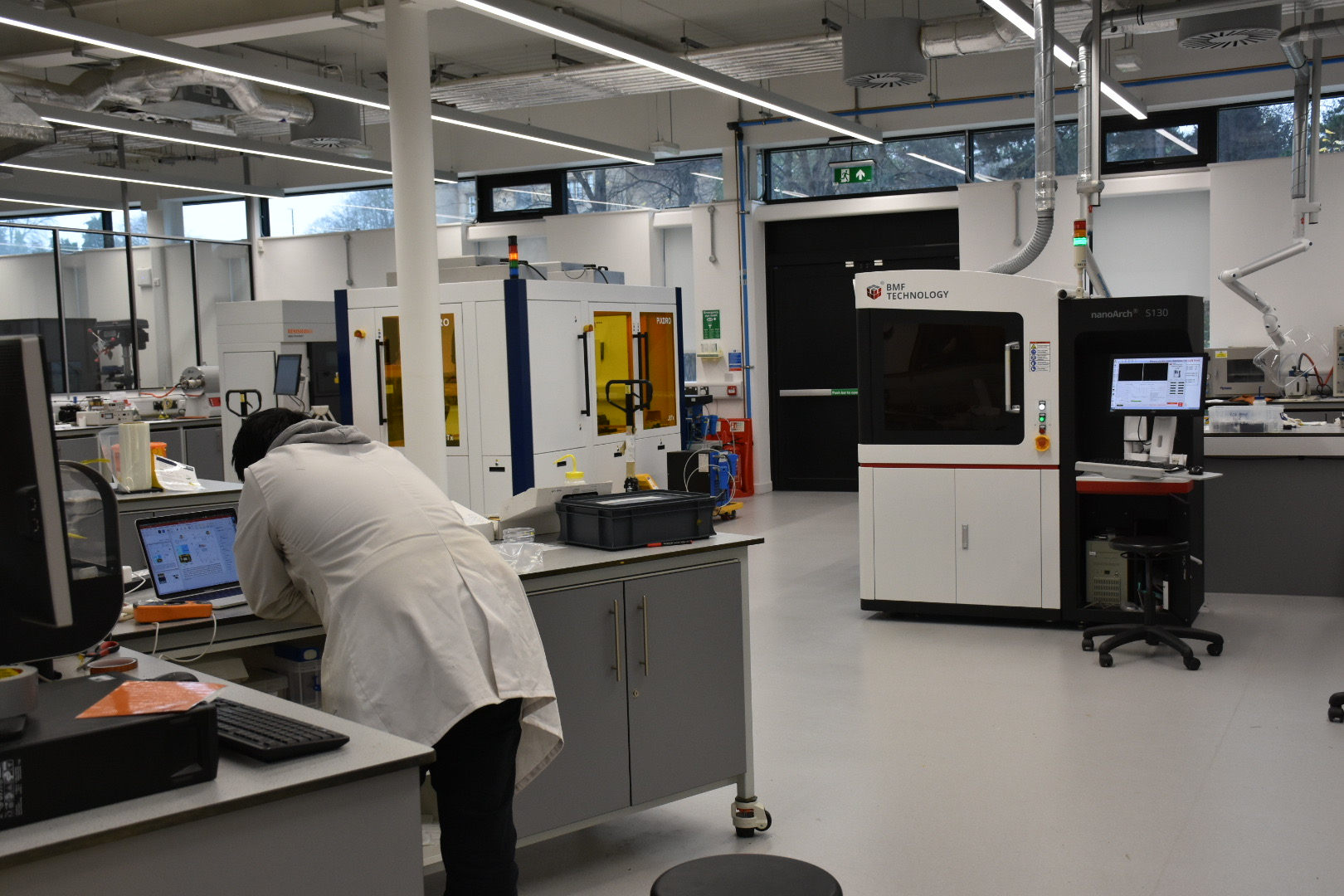
AM lab at Nottingham University. Image courtesy of Alexander Daniels Global
For much of the past decade, AM hiring was heavily focused on engineering, R&D, and commercial development. Companies were building technologies, developing materials, validating processes, and educating customers about what additive manufacturing could achieve. Today, the priorities look different.
Production has emerged as the industry’s most in-demand discipline in 2026, with the vast majority of employers planning to hire production-focused talent throughout this year (2026 AM Salary Survey Report, Alexander Daniels Global).
This shift reflects a broader change taking place across the AM sector.
The industry has moved away from being dominated by prototyping, proof-of-concept projects, and technology demonstrations. Instead, growth is increasingly being driven by qualified industrial applications, serial production, spare parts manufacturing, defense programs, and industrial deployment.
Success in this environment requires a different workforce. Machine operators, manufacturing engineers, quality specialists, process engineers, and production managers are becoming increasingly critical to organizational success.
One of the most significant developments in the market is that many of the largest investment programs are no longer focused solely on AM. Investment is increasingly being directed towards defense capability, digital manufacturing, automation, and industrial resilience, with AM deployed as part of a wider manufacturing strategy.
As a result, workforce requirements are changing. Companies need people who understand not only additive manufacturing but also production systems, quality management, industrial operations, and manufacturing execution.
For AM businesses, attracting and developing that talent may become just as important as developing the next generation of technology.
Signal Two: Software Is Becoming a Manufacturing Skill
One of the most notable findings in this year’s salary data was the continued strength of software compensation. At first glance, this may appear to be a technology trend. In reality, it is more accurately an industrialization trend.
Modern manufacturing increasingly relies on software to connect machines, manage workflows, monitor quality, optimize production, and support decision-making.
The same transformation is occurring within AM. As organizations scale operations, they are investing more heavily in:
- workflow automation
- process monitoring
- manufacturing execution systems
- machine connectivity
- production analytics
- AI-enabled decision support
The result is a growing demand for professionals who can operate at the intersection of software and manufacturing.
This is particularly significant because AM is entering the market for talent traditionally associated with industrial automation, digital manufacturing, and smart factory initiatives. These individuals are in high demand across the manufacturing sector.
The organizations that successfully integrate software, automation, and production expertise into their operations are likely to gain a significant competitive advantage.
Technology alone is unlikely to be enough. The strongest performers will be those who understand precisely where they create value within a customer’s manufacturing environment.
Signal Three: Application Expertise Is Becoming a Strategic Asset
Perhaps the most important workforce trend is the continued growth of customer-facing and application-focused roles, which now account for approximately 40% of the AM workforce (2026 AM Salary Survey Report, Alexander Daniels Global).
For many years, AM companies competed primarily on technology. Machine performance, materials portfolios, build speed, and technical specifications often formed the basis of competitive differentiation. That is beginning to change. As additive manufacturing becomes more established, customers are becoming less interested in the technology itself and more interested in the outcomes it delivers.
Evidence of this shift can be seen across the market. Increasingly, AM companies are positioning themselves within broader advanced manufacturing ecosystems rather than exclusively within AM events and communities.
Customers want solutions to specific manufacturing problems. They want improved supply chain resilience. They want lower inventory requirements. They want lighter components, shorter lead times, and more efficient production processes. Meeting those needs requires a workforce capable of translating technology into business value.
Application engineers, consultants, technical sales professionals, and customer success teams are becoming increasingly important because they sit at the intersection of engineering, manufacturing, and commercial strategy.
These roles exemplify the growing importance of T-shaped talent within the AM industry. Professionals who combine broad knowledge of manufacturing, applications, and commercial requirements with deep expertise in a specific discipline are becoming increasingly valuable.
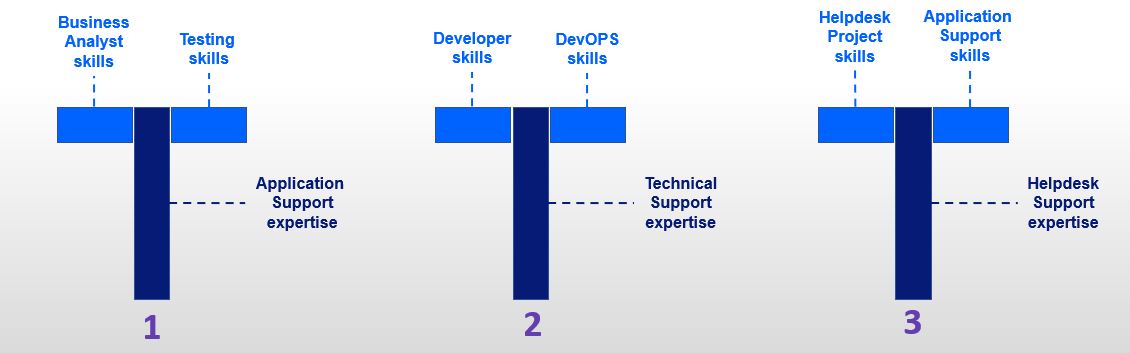
Examples of T-Shaped Talent in Practice. Image courtesy of alenia.co.uk
Their role is not simply to explain additive manufacturing. It is to identify where it creates measurable value and ensure successful implementation. As a result, application expertise is emerging as one of the industry’s most valuable strategic assets.
The Bigger Picture
Viewed individually, these workforce shifts may appear unrelated. Production hiring is increasing. Software salaries are rising. Application expertise is becoming more valuable. Taken together, however, they tell a much larger story. The strongest workforce signals are emerging in the areas that connect AM to wider manufacturing outcomes. That means building organizations that are:
- reliable
- repeatable
- application-driven
These themes are becoming increasingly visible across the broader manufacturing landscape as defense investment accelerates, industrial automation expands, and AI begins reshaping how businesses operate.
The AM industry is no longer developing in isolation. It is becoming increasingly embedded within a much larger manufacturing ecosystem, where success is measured by productivity, quality, reliability, and commercial impact.
Looking Ahead
What is changing is not the relevance of additive manufacturing, but the context in which it is being adopted.
Much of the investment now flowing into the market is being driven by broader initiatives around defense capability, supply chain resilience, digital manufacturing, and industrial automation. In these environments, AM is not being evaluated as a standalone technology. It is being evaluated as one component within a wider manufacturing strategy.
That has important implications for the workforce.
Companies do not simply need people who understand additive manufacturing. They need people who understand how additive manufacturing integrates with production systems, quality frameworks, software platforms, customer requirements, and industrial operations. The challenge is becoming less about finding AM specialists and more about building teams capable of delivering manufacturing outcomes.
The workforce signals highlighted in this year’s survey suggest that this shift is already underway. Production talent is becoming more valuable. Software expertise is becoming more important. Application knowledge is becoming a competitive advantage.
Viewed together, these trends point to an industry increasingly measured by the same standards as manufacturing more broadly.
In many respects, additive manufacturing is becoming manufacturing – with a different toolset.
In July, the next AM Salary Survey will open for participation, giving professionals and employers the opportunity to share how these market dynamics are affecting their organizations. The insights gathered will help build a clearer picture of how workforce priorities, hiring demand, and talent requirements are evolving as additive manufacturing becomes further embedded within the wider manufacturing landscape.
Subscribe to Our Email Newsletter
Stay up-to-date on all the latest news from the 3D printing industry and receive information and offers from third party vendors.
Print Services
Upload your 3D Models and get them printed quickly and efficiently.













You May Also Like
3DPOD 317: 3D Printing at ORNL, Part I – Alexander Plotkowski
Alexander Plotkowski is all about developing new alloys. At Oak Ridge National Laboratory (ORNL), he’s the Group Leader for Computational Coupled Physics within the Computational Sciences and Engineering Division. He’s...
3DPOD 316: Beehive’s Gordie Follin on 3D Printed Engines and More
Gordie Folin had deep experience in engineering at Pratt & Whitney, GE, and GE Aviation before becoming the Chief Product Officer at Beehive Industries. Among his achievements, he served as the...
3DPOD 315: Dirk Simon, from BASF to Farsoon to FKM, and now Square New Business
Dirk Simon had already spent years in the chemicals industry before joining and pioneering BASF‘s 3D printing effort. We get to hear how that firm looked at 3D printing and...
Printing Money Episode 42: Q2 2026 Public Markets 3D Printing Earnings Analysis with Troy Jensen, Cantor
Welcome to Printing Money Episode 42. Troy Jensen (Managing Director, Cantor) returns, joining Danny Piper (Managing Partner, NewCap) to review Q2 2026 publicly traded 3DP/AM company earnings reports. Troy’s quarterly...