amsight & toolcraft Improve AM Quality Control for the Semicap Market

As it is in the habit of doing at least once per generation, the semiconductor capital equipment (semicap) market is currently in the process of reinventing itself. This is too complex a process to delve into here with any real detail, but the relevant point is that the additive manufacturing (AM) industry has more than one way to benefit from that transition.
Perhaps the primary factor involved is the uncertainty surrounding relative demand strength for the most expensive equipment (e.g., High NA EUV from ASML) versus the older generations of systems (DUV, a market that ASML also dominates, but doesn’t exclusively control). It’s highly likely that a much larger proportion of DUV machines will be in the mix for far longer than was anticipated at the beginning of the decade, which is a blindspot that should work to the advantage of AM companies. For instance, as I anticipated in my 2024 AM Research report, “3D Printing for Semiconductors,” the market for refurbished lithography machines continues to grow rapidly, which incentivizes semicap suppliers to turn more towards AM for replacement components that are more difficult to source than they used to be.
The main challenge there is that the semicap market demands a level of precision unmatched by virtually any other industry, so it’s no easy task to bring new suppliers into the fold. The German company amsight, a software provider that spun-out of Fraunhofer and specializes in comprehensive, automated QC solutions for PBF users, is in a unique position to accelerate the onboarding of new suppliers for the semicap market.
amsight demonstrated that earlier this year via a case study on its work with Melotte, a Dutch service bureau, surrounding efforts to reduce the company’s need for CT scanning in its PBF workflow. And amsight just announced similar work for the German digital manufacturing specialist toolcraft. While Melotte and toolcraft aren’t new to semicap, the fact that amsight is streamlining the production processes for companies with existing backgrounds in the market illustrates its potential to help newcomers start from scratch on the right footing.
By cohering all of toolcraft’s AM work into a truly unified digital ecosystem, amsight enables toolcraft to stay ahead of any potential trouble spots. With such demanding customers, manufacturers like toolcraft can’t afford to choose between maintaining quality and scaling up capacity. The incorporation of amsight’s platform prevents them from having to make that choice.
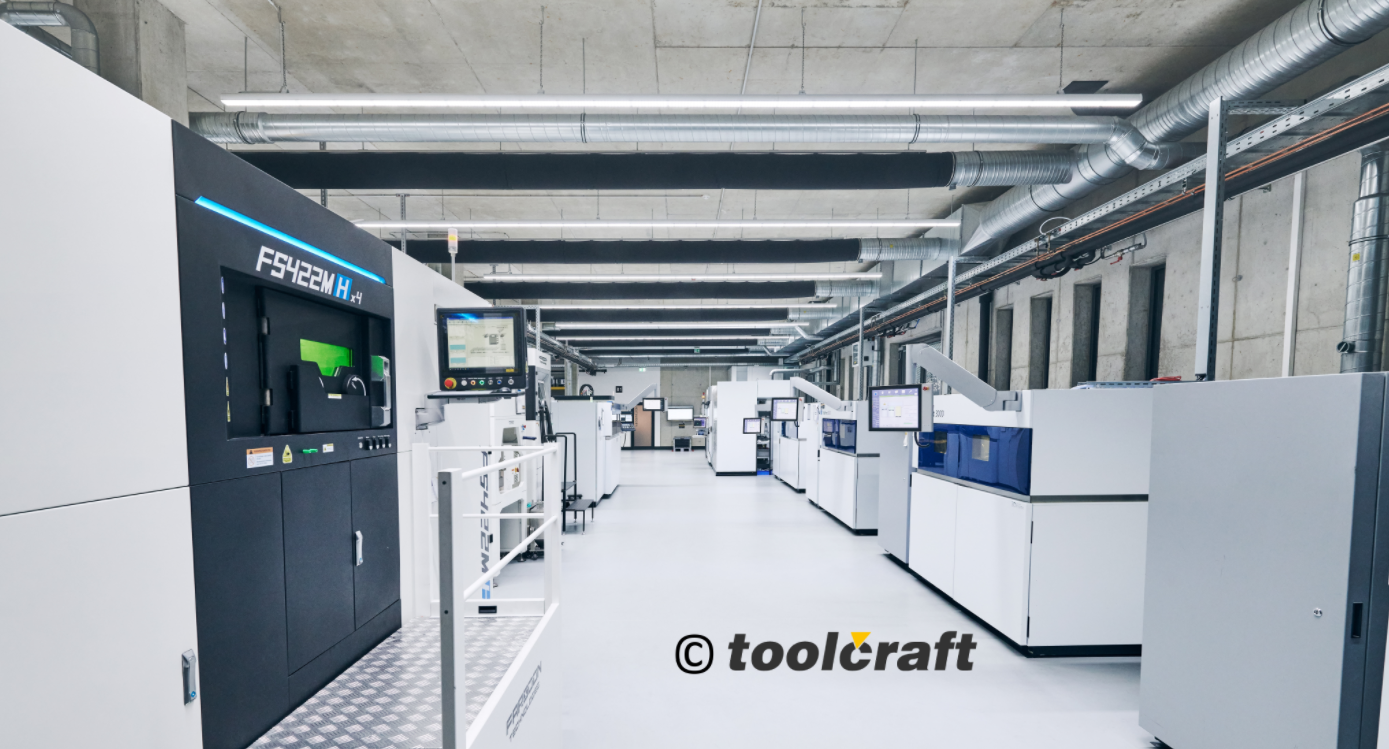
Industrial Additive Manufacturing at toolcraft AG. Image courtesy of toolcraft.
In a press release about toolcraft’s adoption of amsight’s QC platform, Christopher Hauck, Executive Board Member for Technology and Sales at toolcraft said, “Semiconductor-related manufacturing environments demand extremely high levels of consistency, documentation, and process understanding. We see amsight as a partner that understands the realities of industrial AM production and the importance of connecting quality data in a meaningful and scalable way.”
Tim Wischeropp, the CEO of amsight, noted, “As AM scales into highly regulated and precision-critical sectors, quality management can no longer remain fragmented across spreadsheets and disconnected systems. This collaboration with toolcraft demonstrates how manufacturers are moving toward integrated, data-driven quality strategies that support both operational efficiency and long-term scalability. It also shows toolcraft’s commitment to strengthen its leading position as a reliable contract manufacturer for regulated industries.”
Obviously, toolcraft’s opportunity to benefit from its amsight adoption isn’t limited to the semicap market. We’re living in a resurgent era of ‘national champion‘ dominance, and the EU, while technically not a nation, desperately needs to ensure the success of what might be called ‘common market champions’ (Airbus is the original example of this).
If there’s one thing European industry is good at, it’s making precision machinery. The continent would do well to cultivate a bunch of mini-ASMLs from its leading machine tool OEMs.
If amsight can automate the QC processes involved in manufacturing high-level semicap parts, there’s no reason it can’t do the same for the machine tool industry broadly. They even have an excellent opportunity to help the AM industry eat its own dog food by providing PBF parts for industrial 3D printers.
In this world of realpolitik-on-steroids, exploiting the pressure points of technological leverage is the best form of self-defense.
Subscribe to Our Email Newsletter
Stay up-to-date on all the latest news from the 3D printing industry and receive information and offers from third party vendors.
Print Services
Upload your 3D Models and get them printed quickly and efficiently.












You May Also Like
DoW Accelerates Drone Readiness with AMTrain Phase 2 Launch at Camp Lejeune
Equipping today’s warfighter with the most advanced technology is paramount, driving increased prioritization and investment in drone development and advanced manufacturing training within the Department of War (DoW). In this...
AM & the Military’s Self-Infliction of Rapid Change
I’ve noted before that the additive manufacturing (AM) market for defense has started to evolve so quickly that it’s impossible to even keep track of all the updates in real...
3D Printing & Drone Dominance: Speed, Performance, and Derisking the Supply Chain
A shift is underway in drone manufacturing. Government programs like the U.S. Department of War’s Drone Dominance, a $1.1 billion effort to deliver low-cost, one-way attack (OWA) sUAS at scale,...
A Hilux for the Seas
With the US turning its back on exquisite, expensive military goods in favor of volume manufacturing of less expensive items, new strategies should come to the fore. But attritable $250,000...