3D Printing Prosthetic Nests to Help Endangered Birds Stretch Their Wings


On the grounds of Blenheim Palace, a UNESCO World Heritage Site near Oxford, England surrounded by roughly 12,000 acres of forest and gardens, researchers from Australia and the UK are using 3D printed prosthetics to help save endangered birds. But, rather than prosthetics beaks or limbs, they’ve engineered 3D printed prosthetic nests out of biodegradable plastic and mushrooms.
The experiment, led by designer Dan Parker, a researcher with University of Oxford and the Deep Design Lab at University of Melbourne, is meant to help improve typical bird boxes. These are used worldwide as nesting shelters but don’t often attract large species of endangered birds, and can even end up killing chicks due to poor conditions inside.
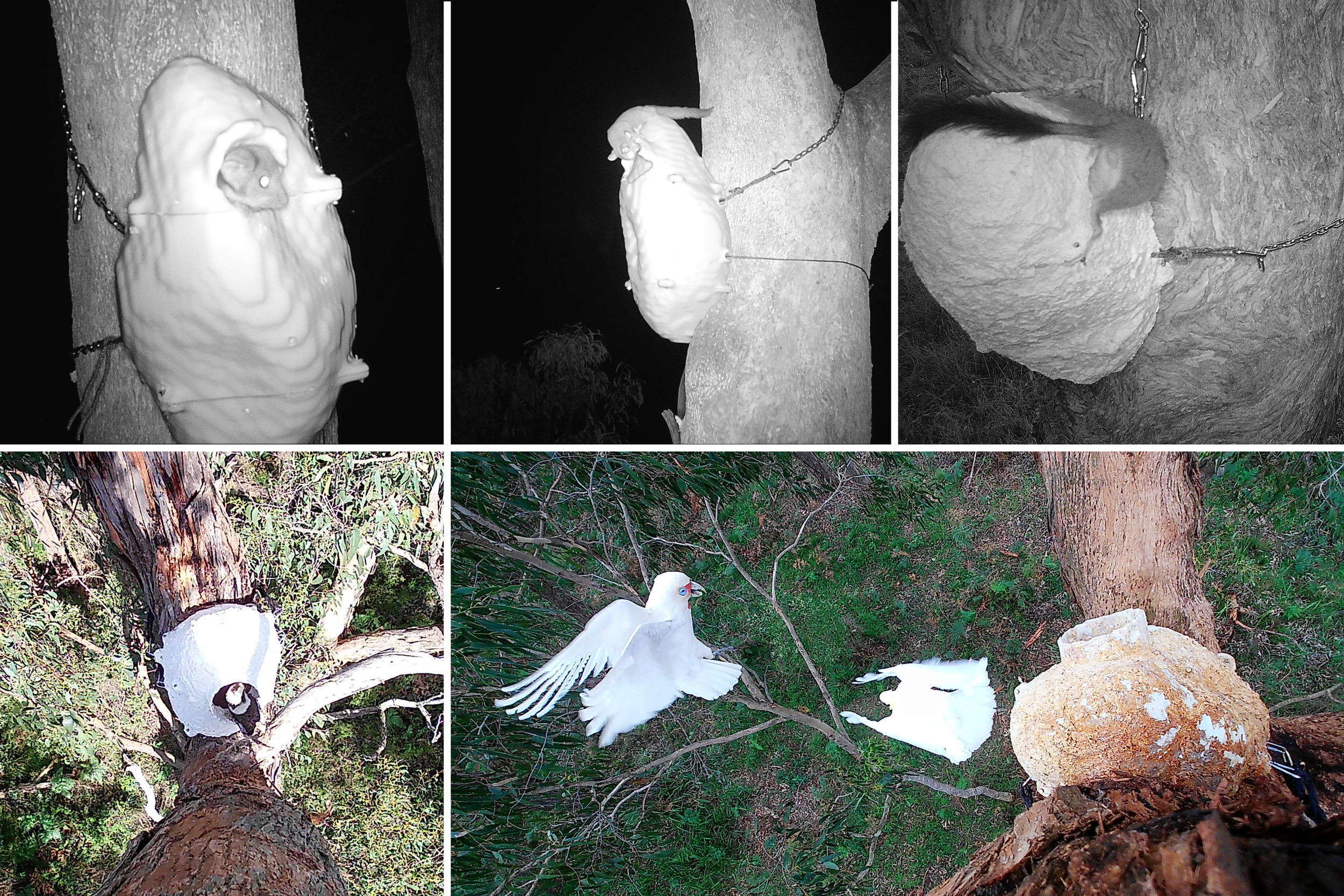
Innovative artificial hollows made from mycelium (top-left), 3D printed wood (top-middle), and hempcrete (bottom/right) at test sites in south Australia. Image: Deep Design Lab.
People make bird houses all the time, building them with kits and sometimes even 3D printing them. I’m pretty sure there’s even a Girl Scout badge you can earn for building a bird house. However, these are often more decorative than useful. Bird boxes are more functional, designed specifically for cavity-nesting birds to raise their young, but even these avian shelters can have issues. Research has shown that the temperatures in these boxes can fluctuate much more than in natural hollows. If it was built poorly out of cheap materials, cold air and rain can blow in the bird box, and kill the young birds inside before they even have a chance to stretch their wings.
Since the 1970s, the population of rare marsh tits in England has dropped by half, and other common songbirds, like nuthatches and sparrows, have also been in population decline. This is widely due to the fact that agricultural intensification has caused their natural habitat of ancient, hollowed trees to nearly vanish. Conservationists have tried to help by building nesting shelters, but they haven’t been attracting many birds.
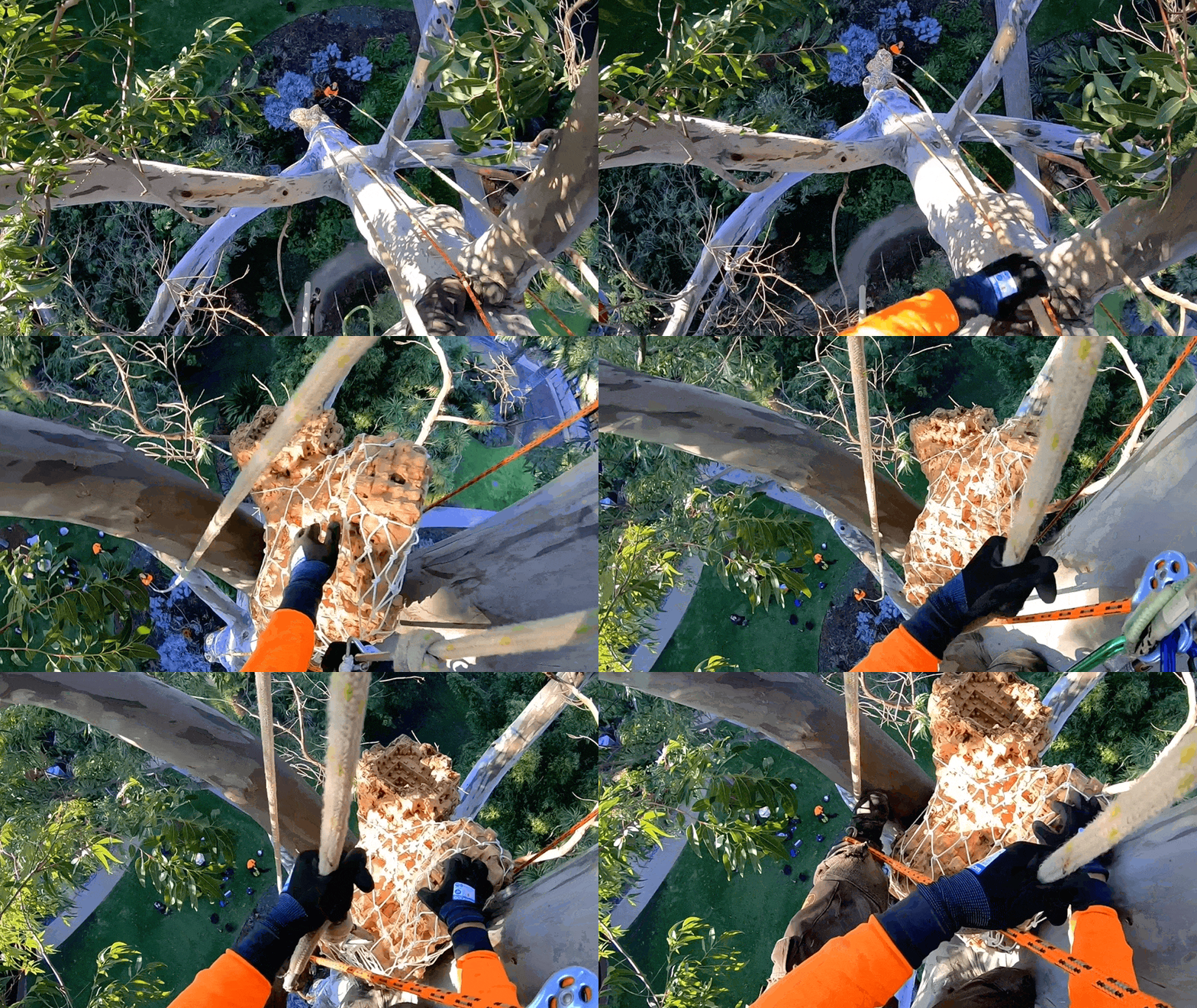
Prosthetic Nests for the Powerful Owl: Excerpt from video showing installation of prototype in System Garden at the University of Melbourne in Melbourne, Australia. Video by Dan Parker and Dr Stanislav Roudavski, Deep Design Lab.
A few years ago, Parker and his team used 3D scanners to map the hollowed-out old trees in which endangered powerful owls often reside. They used tools like generative algorithms and VR goggles to build nesting boxes for the owls that better fit their needs. They’re trying something similar at Blenheim Palace now with the 3D printed nests, which Parker referred to as prosthetic hollows.
Reishi is a type of mushroom that grows in this particular region of England. Parker 3D printed the basic bird box shape out of sawdust and plant-based biodegradable plastic. Then, he cultivated the rootlike structure of fungi, called mycelium, to slowly grow over the sides of the boxes, giving them a ripple effect. This material is carbon-neutral, lightweight yet insulating, biodegradable, and easy to shape so that it mimics natural tree hollows, like the ones in which marsh tits prefer to nest.
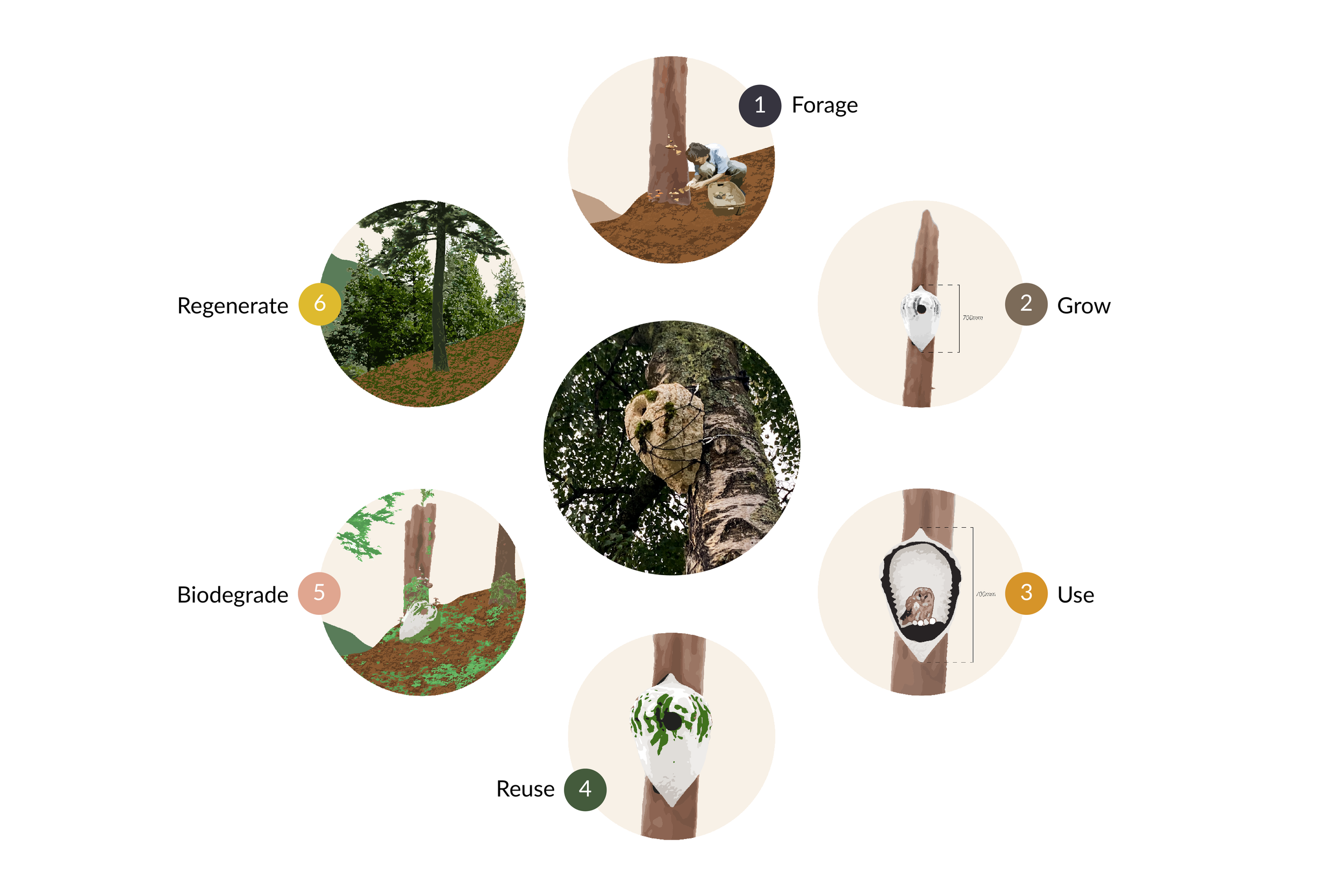
Design for a complete lifecycle of a mycelium hollow in Italy. Image by Deep Design Lab in Conservation Science in Practice.
The experiment, which is being funded by the Birds on the Brink charity, will compare 10 mycelium 3D printed prosthetic nests against 10 conventional bird boxes; the control is a popular box certified by the Royal Society for the Protection of Birds (RSPB) charity. All 20 boxes have been hung in trees around Blenheim Palace, and over the 2026 breeding season, researchers will track which design birds like better, which species are visiting them, and how many chicks grow and fledge (grow their feathers for flight).
Other researchers working on this experiment with Park include Dr Stanislav Roudavski, University of Melbourne and Deep Design Lab; and Dr Joanna Bagniewska, Dr Thomas Hesselberg, Filipe Salbany, and Dr Ada Grabowska-Zhang, University of Oxford.
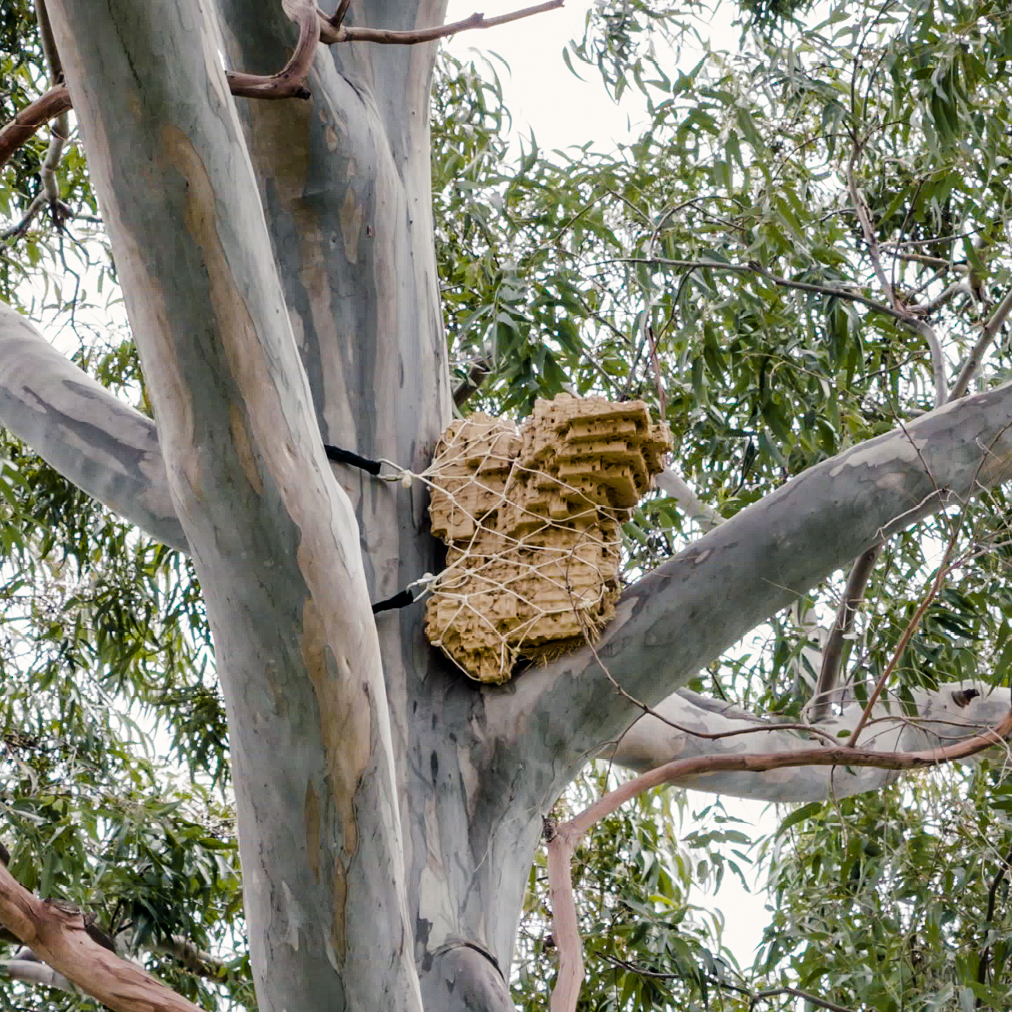
Prosthetic Nests for the Powerful Owl: Prototype installed at System Garden, Melbourne, Australia. Image courtesy of Dan Parker and Dr Stanislav Roudavski, Deep Design Lab.
Subscribe to Our Email Newsletter
Stay up-to-date on all the latest news from the 3D printing industry and receive information and offers from third party vendors.
Print Services
Upload your 3D Models and get them printed quickly and efficiently.













You May Also Like
Creality K3 Opens for Pre-Order at $849, Advancing Multi-Color 3D Printing
Creality has officially opened pre-orders for the Creality K3, its latest flagship K Series 3D printer, starting at $849 in the United States. Recognized as an IFA Innovation Awards 2026...
Prusa Core One L+: A Worthy Upgrade?
Disclosure: The Core One L+ was provided to me by Prusa3d free of charge for the purpose of this review. I have not received any other compensation. All opinions expressed...
Prusa Upgrades Its Lineup with CORE One+ (Gen 2), CORE One L+, and XL+
Prusa Research has updated its high-end desktop 3D printer lineup. The company is offering new and improved versions of the machines it targets at industrial and power users, with the...
Zaha Hadid Architects Print 6M Model with WASP’s Robotic Arm Solutions
Zaha Hadid Architects (ZHA) have successfully used WASP 3D printers to make a 6-meter-tall model of an aircraft control tower. Zaha Hadid Architects’ Tech Lab made the tower in-house for the ZHAviation...