6K Wins $1.95M DLA Award to Recycle Defense Metals

6K will receive $1.95 million from the Defense Logistics Agency under the Recovering Strategic Value project. The Phase II award aims to reduce the US’ dependence on Nickel, Titanium, Tungsten, and Niobium powders from overseas. This is a significant win for 6K because it puts them on a path to being a key supplier in these high-value 3D printing powders for years to come. We expect demand for niobium to see an especially precipitous rise over the coming years, while there will be much more interest in tungsten and sustained growth in nickel alloys and titanium. Tungsten is a key material for missile components and munitions, and the market is dominated by Chinese producers. Likewise, niobium is entirely imported currently and will be a key material going forward in hypersonics and also as an alloying material for many of the cutting-edge materials being created at the moment for additive manufacturing. Rather famously, the US surreptitiously bought titanium from the Soviet Union for use on the SR-71 Blackbird spy plane. This rather colorful example showcases how important such self-reliance can be.
Most titanium comes from Ukraine, Russia, China, Mozambique, Canada, and Australia. Notably, neighboring Canada is a leading nickel producer while also supplying titanium and niobium. Australia is inconveniently far away, but it also supplies nickel and titanium, while niobium supplies could be realized from there in a few years. This policy, therefore, goes beyond moving away from reliance on difficult or unstable countries and extends to moving away from supplies from America’s erstwhile closest allies.
6K Additive CEO Frank Roberts stated,
“The U.S. Government has made it clear that to advance our defense readiness we cannot rely on geopolitically sensitive regions for the materials essential to our most advanced weapon systems. By upcycling domestic scrap from DoD stockpiles and maintenance centers, we are creating a circular, secure, and sustainable supply chain for the US defense sector. This Award enables us and the DoD to further identify end-of-life parts and scrap to convert back into high-value powder ultimately leading to strategic components for the military.”
The company said the scope of work will include identifying and collecting material from DLA depots, to use DoD scrap as a source for domestic critical metals; developing a proof of concept for a robotic system to automate scrap identification and sorting; converting end-of-life parts made from nickel, titanium, tungsten, and C103 (a niobium alloy) into high-value powder; and conducting cold spray trials to investigate the mechanical properties of upcycled nickel and titanium for use in repair applications.
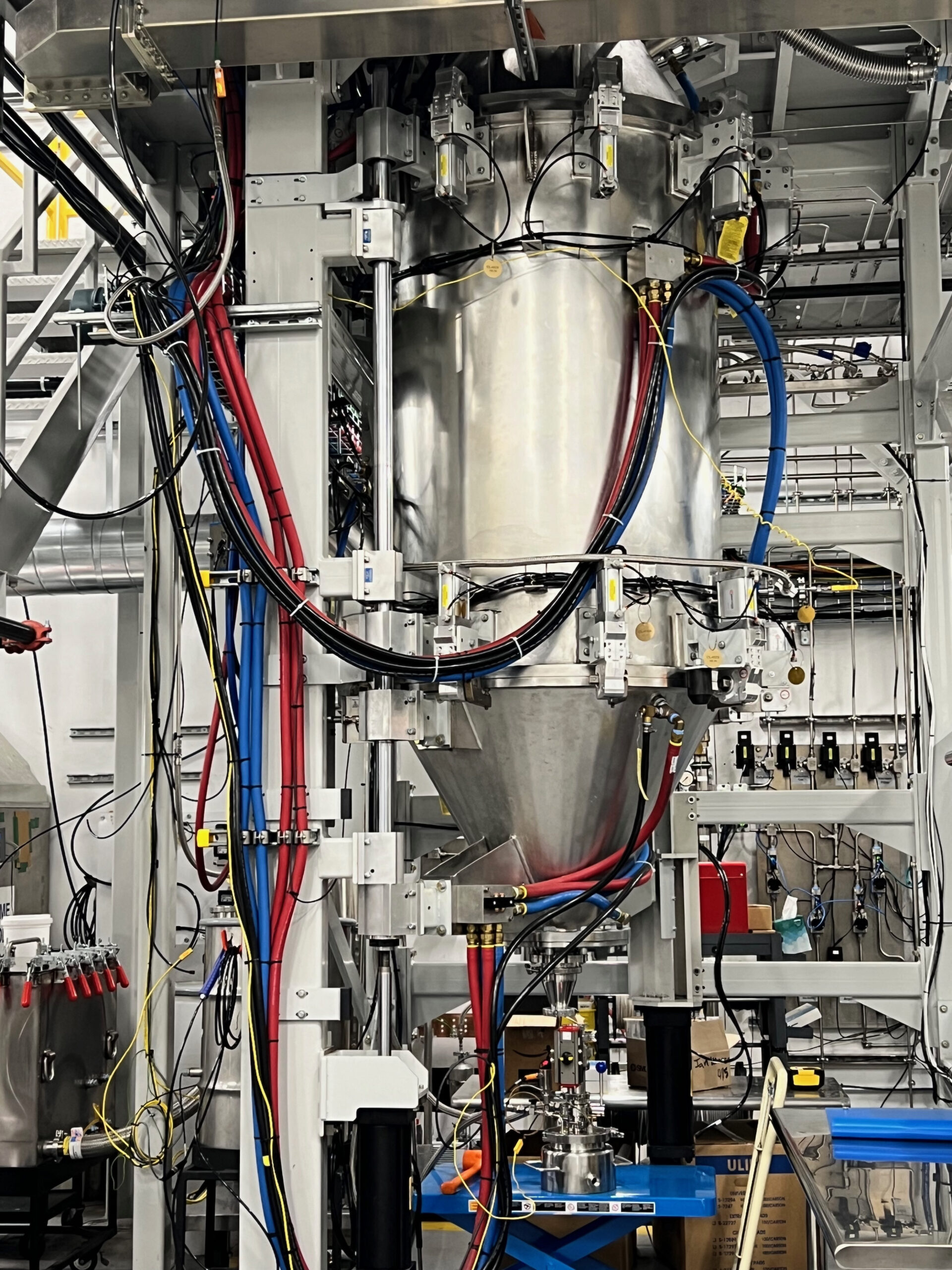
6Ks UniMelt. Image courtesy of 3DPrint.com.
There’s a lot to unpack there, but some significant things seem like they could point to breakthroughs. I’ve been telling people for years to buy aircraft boneyards, please do this now, this could be an amazing source of revenue in the future, especially if energy costs rise. Then scrap could, for a time, be a cheaper way to obtain some materials in powder form. Given the DLA Depot’s focus, this seems like a sound idea. There are many of these worldwide; two dozen or so are immense and significant centers for US military logistics. These depots are located worldwide and handle millions of parts and millions of tonnes of goods. One depot, the Defense Distribution Depot Tracy, is 448 acres in size, employs 1,500 people, and handles the logistics for the Western US. One large site ships 350 seavans and nearly 150 air pallets to 4,000 sites per month. Seavan is another term for a shipping container. Napoleon famously said that an Army marches on its stomach, so the DLA and its depots are integral to the US military.
The idea of using scrap that the US already has in its possession is convenient, cost-effective, and easier to trace. We would expect less contamination if the material comes from known sources. Also, the US military is big on labels, serial numbers, and things. Many items may have a unique item identifier (UII), a national stock number, or a contract number. This will make tracing what’s in these items and making sure that there are no nasty surprises much easier.
6K says that 60,000 pounds of scrap come from certain aviation depots. So this could be very sustainable as well, but I’m thinking that not many niobium-containing turbine parts are being thrown away every week. Some artillery barrels contain titanium, so this could be useful, while tungsten could perhaps be collected from firing ranges, as it is used in some munitions. It’s unclear whether the DLA will reverse scrap from many other sites or actively collect firing range materials.
By using a robotic scrap sorting and ID system, 6K can gain a real advantage over rivals here. If it could do this well, then the company could really build a significant business just off the back of this. The mention of cold spray for Nickel and Titanium is sure to make the folks at Titomic and Spee3D happy. Cold spray is cheap, fast, and could be used for repair. DED machines already repair thousands of turbine blisks. So an alternative, perhaps locally deployable cold spray, could be a very welcome addition.
The project will last 18 months, and the company hopes to produce a tested, certified powder at the end. Given the US’s isolationism and its growing rift with its allies, this seems like an especially timely move. If the US is to rely on additive manufacturing for missile defense, hypersonics, and key aerospace components, then establishing its own supply chain is a very good idea indeed.
Subscribe to Our Email Newsletter
Stay up-to-date on all the latest news from the 3D printing industry and receive information and offers from third party vendors.
Print Services
Upload your 3D Models and get them printed quickly and efficiently.











You May Also Like
The AM Workforce Is Entering a New Phase — and the Industry Is Starting to Feel It
Across the additive manufacturing industry, a shift is underway. One that is becoming increasingly visible in both strategic discussions and day-to-day hiring realities. At this year’s Additive Manufacturing Strategies (AMS...
3D Printing Financials: Velo3D Sees Rising Demand and Defense Growth, but Losses Persist
Velo3D (Nasdaq: VELO) is moving further into production-focused 3D printing, with growing demand from defense and aerospace customers shaping its strategy. The company is shifting beyond selling machines toward producing...
At RAPID + TCT 2026, Executive Keynotes Break Down What’s Next for AM
While AI is expected to be a major focus at RAPID + TCT 2026, the event is also putting the spotlight on something just as important: leadership. This year’s Executive...
Sintavia Taps NVIDIA Blackwell for AI-Driven Additive Manufacturing Pipeline
Investors have become increasingly anxious about the sustainability of NVIDIA‘s growth trajectory, which is a rather natural outcome when a stock goes up infinity percent or so over the course...