At RAPID + TCT 2026, Executive Keynotes Break Down What’s Next for AM


While AI is expected to be a major focus at RAPID + TCT 2026, the event is also putting the spotlight on something just as important: leadership.
This year’s Executive Perspectives Keynote Series brings together top voices from across additive manufacturing (AM) to talk about where the industry is heading next. The sessions span aerospace and defense, healthcare, and the broader future of manufacturing, giving attendees a look at how companies are thinking about scaling, adoption, and real-world use.
A Focus on Scaling in Aerospace and Defense
The first keynote session centers on one of the most active areas in AM today: aerospace and defense.
With speakers from Stratasys, Velo3D, Siemens, and the U.S. Army, the discussion is expected to focus on a key challenge: how to move from promising technology to reliable, repeatable production.
AM already works well in this area, but scaling is still hard. Certification, supply chains, and consistency are still major challenges.
With both industry and military voices involved, the focus is likely to shift from what AM can do to how it’s being qualified, integrated, and scaled in real programs.

Healthcare Moves Closer to the Point of Care
The second keynote shifts to healthcare, where additive manufacturing is increasingly being used closer to patients.
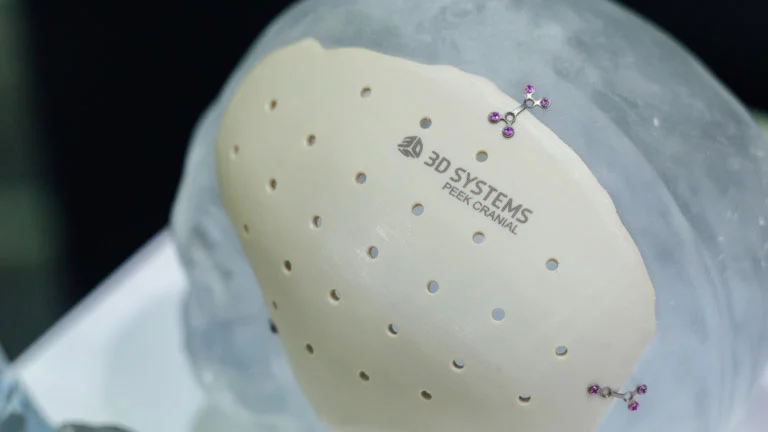
With leaders from HP, Materialise, 3D Systems, and Carbon, the session will explore how 3D printing is enabling point-of-care applications, from personalized devices to hospital-based manufacturing.
This is one of the areas where AM has seen steady progress. But like in aerospace, the question is not just what is possible, but how to make it scalable and reliable in clinical settings.
The focus on “life-saving” applications shows a broader shift as AM moves beyond prototyping into areas where performance and consistency matter more.
From MIT to Mainstream
The final keynote takes a broader view of where manufacturing is heading. Featuring Dr. Neil Gershenfeld from MIT’s Center for Bits and Atoms and Formlabs co-founder Maxim Lobovsky, the session looks at how digital manufacturing is evolving and what comes next.
This is less about one industry and more about the bigger picture. The focus is on how technologies like 3D printing move out of labs and research centers and into everyday production.
That shift is already starting, but it is not fully solved. Companies are still working out how to scale these technologies, integrate them into existing workflows, and make them reliable enough for daily use. So this session is likely to explore what it will take to make that transition happen at scale.

RAPID + TCT main stage.
Taken together, these sessions show where additive manufacturing really stands today. There is a lot of progress. The technology works, and new applications keep coming. But that is no longer the main question. A lot of experts are focusing now on how to actually use it. How to scale it, fit it into existing processes, and make it part of everyday manufacturing.
That is the common thread across all three sessions and is likely one of the key themes at RAPID + TCT 2026, which takes place April 13–16 at the Thomas M. Menino Convention and Exhibition Center in Boston. The Executive Perspectives Keynotes will be held each morning from 8:30 to 10:00 AM on the SME Main Stage.
Images courtesy of RAPID + TCT
Subscribe to Our Email Newsletter
Stay up-to-date on all the latest news from the 3D printing industry and receive information and offers from third party vendors.
Print Services
Upload your 3D Models and get them printed quickly and efficiently.













You May Also Like
South Korea’s Lincsolution Lands Hanwha Defense Deal as Hanwha Invests Billions in US
I recently wrote about how the South Korean additive manufacturing (AM) firm Lincsolution is building an aerospace and defense hub, part of the company’s construction of “the largest AM facility in...
Bambu Lab and SUSAN FANG 3D Print for London Fashion Week
At London Fashion Week, some of the more unusual pieces on the runway came from 3D printers. Chinese fashion designer SUSAN FANG presented her Spring/Summer 2027 Air-Illusion collection at the...
Why Cross-Border 3D Printing Is Closing the Speed Gap with Local Manufacturing
The fastest 3D printing supplier in your shortlist may no longer be the one closest to your office. That sounds unlikely to many engineers. For years, overseas 3D printing carried...
Arridex Expands 3D Printing Network to Ghana
Nigeria-based Arridex has deep experience in oil and gas additive manufacturing. Previously known as RusselSmith, the firm has in-house metal and polymer additive technology. The company is making 3D printed...