Titanium 3D Printing Powders to Reach $1.4B by 2032


Additive Manufacturing Research (AM Research), the leading authority in additive manufacturing (AM) market data and analysis, has released its latest report titled “Titanium Powder for Additive Manufacturing in 2024.” This comprehensive study highlights substantial growth in the titanium 3D printing powder market, projecting a rise from $214 million in 2023 to $1.4 billion by 2032.
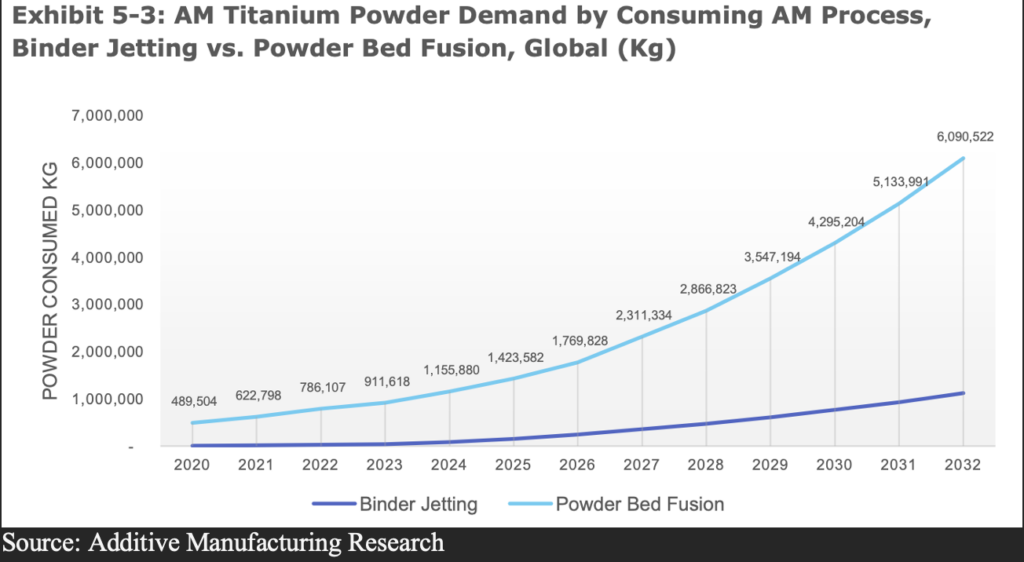
The report provides in-depth data and analysis of the titanium AM powder market, outlining trends, key players, and projections for various industries relying on titanium 3D printing. Powder bed fusion (PBF) remains the dominant AM process for titanium, far outpacing other methods such as directed energy deposition (DED) and metal binder jetting (MBJ). In 2023, PBF consumed significantly more titanium powder than other technologies, and this trend is expected to continue through the decade, with MBJ projected to gain market share.
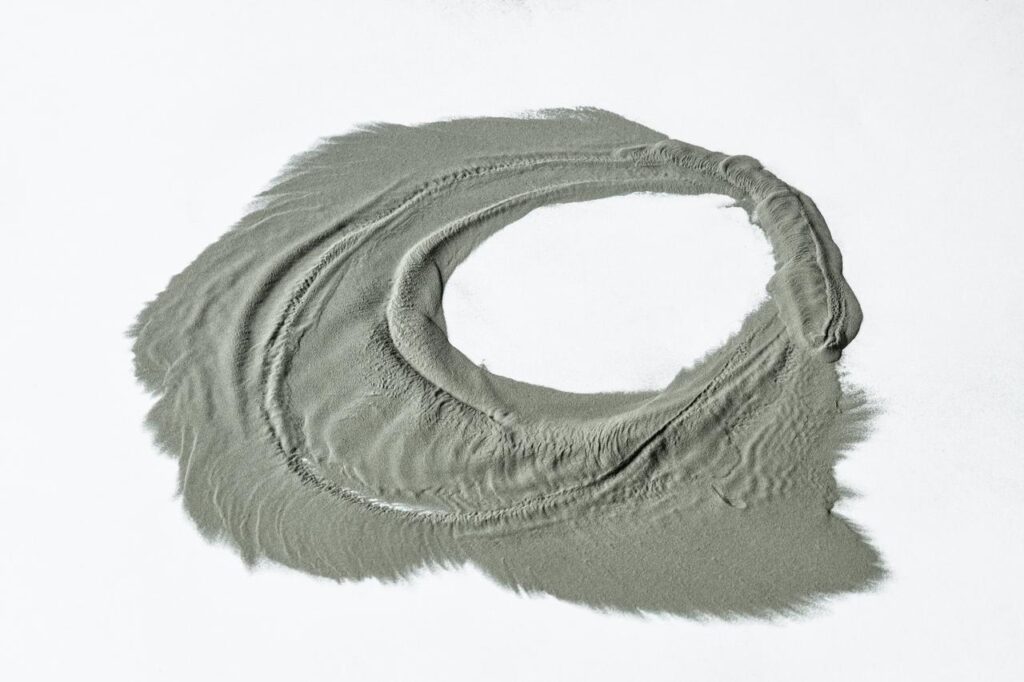
EOS titanium PBF powder. Image courtesy of EOS.
The aerospace and medical sectors have long been the key drivers of titanium AM demand, and AM Research’s report reaffirms their leading roles in the market. Titanium’s unique properties—strength, biocompatibility, and corrosion resistance—make it ideal for high-performance applications such as aircraft components and medical implants. Additionally, the report discusses emerging opportunities in other sectors, such as automotive and jewelry, further expanding the demand for titanium powders.
One of the key highlights of the report is the accelerating growth of MBJ in the titanium market. Although smaller in scale compared to PBF, MBJ is projected to gain substantial ground over the next decade. By 2032, AM Research forecasts that MBJ will grow its market share to nearly equal that of DED.
AM Research’s report tracks a wide range of companies operating within the titanium AM powder market, from powder producers to machine manufacturers. Major players include AP&C, Carpenter, Tekna, Osaka Titanium, Oerlikon, Avimetal, Praxair, and Sandvik, among others. Equipment manufacturers like EOS, Colibrium (GE Additive), Renishaw, and Nikon SLM Solutions are also pivotal in driving the adoption of titanium AM technology.
The report offers extensive data on material shipments, revenues, and technology adoption by geographic region and end-user industry. This detailed analysis provides stakeholders with the insights needed to navigate the rapidly evolving titanium AM market. The research also covers select areas of titanium metal injection molding markets as they intersect with 3D printing, offering a comprehensive view of titanium’s potential across different manufacturing methods.
As industries continue to embrace 3D printing for its efficiency, cost savings, and design flexibility, the demand for titanium powders is set to grow dramatically. The report outlines how this demand is expected to unfold across different AM technologies, with PBF maintaining its dominance. By 2032, powder consumption for PBF is forecasted to reach over 6 million kilograms globally, more than quadrupling from 2023 levels. MBJ is also expected to experience significant growth, with powder consumption increasing steadily over the forecast period. For further details or to request a sample of the report, visit the AM Research website.
Subscribe to Our Email Newsletter
Stay up-to-date on all the latest news from the 3D printing industry and receive information and offers from third party vendors.
Print Services
Upload your 3D Models and get them printed quickly and efficiently.













You May Also Like
Meltio Helps Grow Rubies Inside 3D Printed Platinum
At the University of the West of England (UWE Bristol), the Centre for Print Research (CFPR) is using metal 3D printing to help grow gemstones directly inside platinum structures. The...
3D Printing News Briefs, September 10, 2026: Tax Credits, Polymer Research, Microneedles, & More
We’re starting off this week’s 3D Printing News Briefs with a little business from Axtra3D and Beehive Industries, before moving on to a scientific collaboration agreement between Roboze and a...
3D Printing News Briefs, September 5, 2026: Electronic Skin, Cartilage, Cookies, & More
We’re starting with standards in this weekend’s 3D Printing News Briefs, as ASTM has re-launched its Advanced Manufacturing Division as the Critical and Emerging Technologies (CET) Division. Then we’ll move...
3D Printing News Briefs, August 29, 2026: Prosthetics, Pelvic Implants, Capillaries, & More
In this weekend’s 3D Printing News Briefs, America Makes announced the winner of its GOTHAAM Project Call. Then it’s all about healthcare 3D printing news, with Stratasys and Limbitless Solutions...