DOE Backs DMG Mori AI Tool to Speed Qualification of 3D Printed Parts


Since 2015, the U.S. Department of Energy (DOE) has awarded projects that leverage the high-performance computing (HPC) capabilities of the U.S. national laboratories to optimize manufacturing processes. The High-Performance Computing for Manufacturing (HPC4Mfg), funded through the Office of Critical Minerals and Energy Innovation (CMEI), just announced its latest round of winning proposals, and among them is an effort by DMG Mori to develop a method for automating the optimization of powder bed fusion (PBF) processes with tools including AI.
Specifically, the award went to DMG Mori Federal Services, the division of the global machine tool giant that works directly with the U.S. government, as well as the government’s prime contractors. DMG Mori will collaborate on the HPC4Mfg grant with Oak Ridge National Laboratory (ORNL), which hosts some of the world’s most powerful supercomputing systems, and has long helped facilitate early-stage additive manufacturing (AM) materials science R&D.
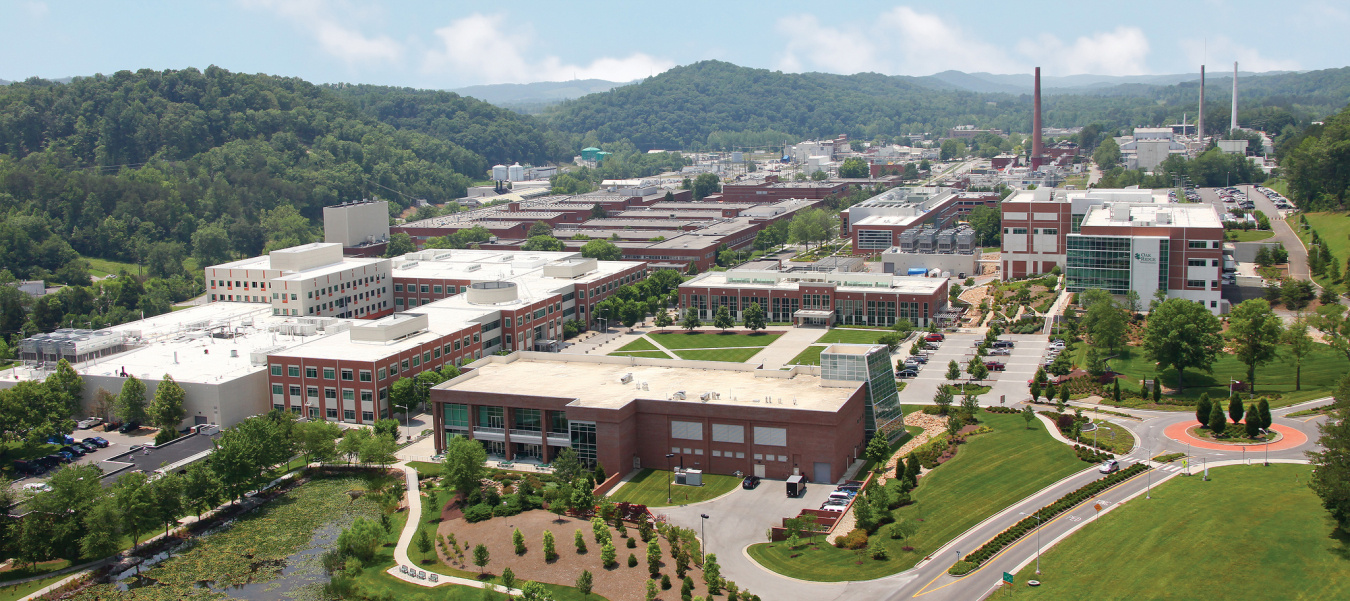
Oak Ridge National Lab. Image courtesy of ORNL.
It’s not clear if the tool that DMG Mori will be working on involves a hardware component or is simply a software program. Still, the broad-sweeping goal of the R&D program is to accelerate the qualification of energy-critical components. DMG Mori’s LASERTEC 30 SLM machines are made in the USA, which should give the company an edge in pursuing further federal contracts, at a time when the U.S. administration is making a renewed push to reassert “American energy dominance.”
Additionally, DMG Mori’s status as one of the largest, if not the largest, machine tool manufacturers in the world means the company has experience at a scale virtually unheard of in the rest of the AM industry. If its early-stage work with ORNL is successful, all that could result in an easier path to commercial viability than would typically be the case.
In a press release about DMG Mori’s HPC4Mfg grant, Fred Carter, the Head of R&D for DMG Mori Federal Services, said, “This collaboration allows us to pair DMG Mori’s advanced laser powder bed fusion platforms with ORNL’s world-class high-performance computing and materials science expertise. Together, we will develop data-driven tools that enhance process control, improve repeatability, and strengthen the competitiveness of U.S. manufacturing.”
I’d love to know if there are any energy-critical components that DMG Mori has in mind, in particular, and if they’re data center components. As I recently wrote, heat exchangers for data centers are an ideal example of how metal AM can be leveraged for sustainability-as-security principles.
In that earlier article, I noted that collaboration on data center hardware could be a driving factor in promoting unity over division between the U.S. and its European trading partners, and the same holds true for the U.S. and Japan, where DMG Mori is, of course, headquartered. Since Japan announced a half-trillion-dollar investment in U.S. infrastructure last year, with data centers as the centerpiece, equipment that can make data centers more energy-efficient would indeed be an all-the-more fitting theme for AM collaboration between the U.S. and Japan.
Meanwhile, DMG Mori also recently received $40 million in funding from the state of Illinois, where the machine tool OEM has its U.S. headquarters. DMG Mori will establish a new R&D facility in the Chicago area, collaborate with the City Colleges of Chicago on workforce development initiatives, and create 74 new full-time jobs. Illinois is a major hub for data centers nationally, so again, speeding up the qualification of 3D printed data center hardware would make a lot of sense as a direction for the ORNL collaboration.
Whatever the precise topic of the R&D project is, we should expect to see even more funding pour into leveraging AI for digital manufacturing process optimization, from both the private and public sectors. A wholly unsurprising development is becoming clear: the most boring-sounding AI use cases are the ones that seem to have the greatest potential for near-term ROI. That might make it harder for chip companies to sell their story to investors, but it has positive implications for the manufacturing sector.
Subscribe to Our Email Newsletter
Stay up-to-date on all the latest news from the 3D printing industry and receive information and offers from third party vendors.
Print Services
Upload your 3D Models and get them printed quickly and efficiently.













You May Also Like
Lufthansa Technik Uses 3D Printed Titanium Latch for Aircraft MRO
Maintenance and interiors aircraft giant Lufthansa Technik is exploring 3D printing at greater depths, hoping to take its customers to the heights they’re accustomed to. A team at Lufthansa Technik...
3D Printing Financials: Creality Posts H1 Loss, Plans $80M AM Headquarters
Creality (HKG: 3388) sold more products in the first half of 2026, but lower margins and higher spending pushed the consumer 3D printing company into the red. At the same...
The Business Case for 3D Printed Stents
A new 3D printed stent developed at New York University (NYU) does not look like the devices doctors typically use today. Instead of a simple tube, the prototype resembles a...
AMS X Puts 3D Printing Business Center Stage; Registration Prices Increase August 26
The additive manufacturing (AM) industry has spent the last few years getting a lot more serious about business. Growth, profitability, consolidation, defense spending, supply chains, and scaling production now matter...