Automation Alley To Compete With Service Bureaus

Automation Alley is a Michigan-based innovation cluster trying to foster collaborative learning and development around technology and manufacturing. Project DIAMOnD (Distributed, Independent, Agile Manufacturing on Demand) is an Automation Alley initiative in on-demand production. Connecting 3D printers and businesses, the project has gotten $22 million from Oakland County and Macomb County. The project has purchased 550 3D printers to date. The project said they cost $20,000 each. The printers seem to be Markforged, but many images show colored objects that can´t be made by these printers, so maybe it’s a bunch of different ones?
I’m a bit confused by this, actually, since for $1 million, you could have funded a filament production line making low-cost materials in Michigan. That could have made parts low-cost and made spools of filament available for less than a $4. Meanwhile, for the rest of the money, they could have set up a production line producing 3D Printers in Michigan. Or they could have bought 13,000 Prusa Core One printers for the remainder of the money?
The project wants to expand access to additive manufacturing across the region is now opening up more broadly its DTC digital 3D printing service. Now, commercial customers can order parts for metal and polymer 3D printing from the service.
Automation Alley COO Pavan Muzumdar said,
“The Digital Transformation Center was built to help companies move from experimentation with additive manufacturing to real production. By opening the DTC to businesses beyond our membership network, we’re removing another barrier to adoption of this powerful technology and giving more companies a low-risk path to validate products, scale production and compete using additive manufacturing. Not every company needs to own a fleet of industrial 3D printers to benefit from additive manufacturing. The DTC allows businesses to access production-grade capabilities on demand, while maintaining control over their designs and process knowledge.”
As well as the initial 3D printers, the network now offers access to large format Material Extrusion, powder bed fusion, and DED. The company may have a SAF machine. The DTC also has post-processing equipment. The unit can prototype and manufacture while offering instant quoting. The prices are meant to be competitive.
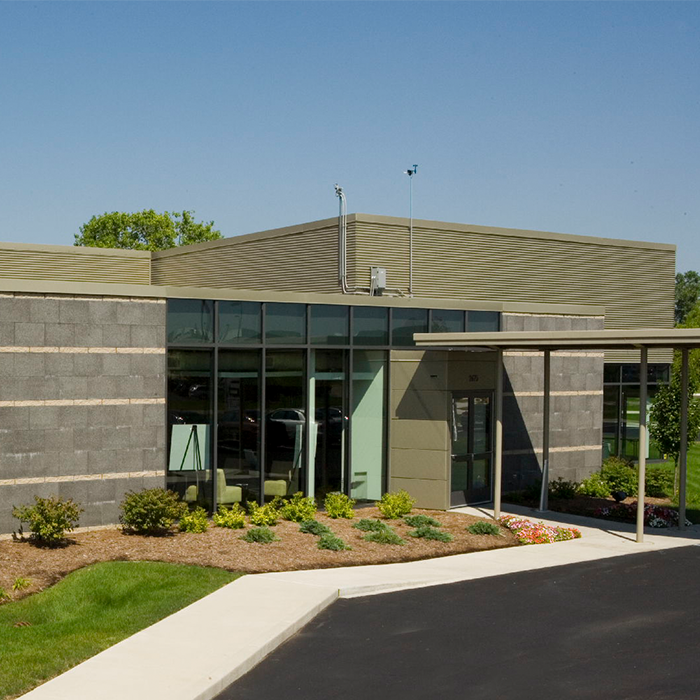
Automation Alley headquarters. Image courtesy of Automation Alley.
I’m thoroughly bewildered by this. A nonprofit receives government funding to set up distributed manufacturing. Now, from a central location, they’re operating like a service bureau. What does this mean to local businesses offering 3D printing as a service in the area? Will increased competition mean that local and regional 3D printing businesses will actually make less money? Or will this somehow make parts cheaper and expand the number of parts being made? How will this drive growth in the region?
I’m going to believe here that Automation Alley has the best intentions, but this just seems like it’s very unfair. If I were a 3D printing service in Michigan and on the hook for leases or loans for my equipment, I wouldn’t be jumping for joy at this advance in manufacturing. There are plenty of service bureaus out there, and some of them aren´t doing too well. I think there could be another solution set that makes sense. If they worked on training, design training, or making some part of the process fundamentally cheaper, it would have a much greater impact. $22 million is an awful lot of money, and this could have fundamentally altered the economics of Material Extrusion for the region. Orders could have been pooled to give local manufacturers huge deals on manufacturing runs, for example. I’d be very curious to see how many parts will be made for $22 million in the end. I’m skeptical that the approach chosen will find diamonds in the rough or put diamonds on the fingers of Michigan manufacturers.
Subscribe to Our Email Newsletter
Stay up-to-date on all the latest news from the 3D printing industry and receive information and offers from third party vendors.
Print Services
Upload your 3D Models and get them printed quickly and efficiently.













You May Also Like
Kickstarter is Testing the Next Wave of Desktop 3D Printing
3D printers are raising serious money again…on Kickstarter, that is. Over the last few months, a new group of 3D printer campaigns has attracted millions of dollars and thousands of...
Stratasys vs. Bambu Lab: What’s Really Behind the $27.6M Patent Verdict?
Editor’s note: This is Part 1 of a two-part series by Xu Fanglei examining the technology and patent issues behind the Stratasys-Bambu Lab dispute. Part 1 looks at the U.S....
Bambu Lab and SUSAN FANG 3D Print for London Fashion Week
At London Fashion Week, some of the more unusual pieces on the runway came from 3D printers. Chinese fashion designer SUSAN FANG presented her Spring/Summer 2027 Air-Illusion collection at the...
Stratasys Wins $27.6M in Patent Case Against Bambu Lab; Bambu Challenges Verdict
Update, September 21, 2026: This article has been updated with a statement from Bambu Lab responding to the verdict, along with additional information about the company’s ongoing patent challenges against...