Italy’s First Certified 3D Printed Home is Alive: WASP Completes the Itaca Project

Additive construction (AC) can’t “solve the housing crisis”: that’s too much to expect from one technology. But AC processes have demonstrated that they’re a promising tool for helping to mitigate the persistent construction labor shortage, which, in the long run, could indeed be a piece of the puzzle in any broad-sweeping effort to significantly increase the global housing supply.
Another advantage of AC — perhaps its most intriguing aspect — is its power to inspire the human imagination, since that quality may attract a growing number of innovators to put their minds to work that can truly benefit society. No company exemplifies that feature better than Italy’s WASP, which just announced that it has completed a project that’s been in the works for years.
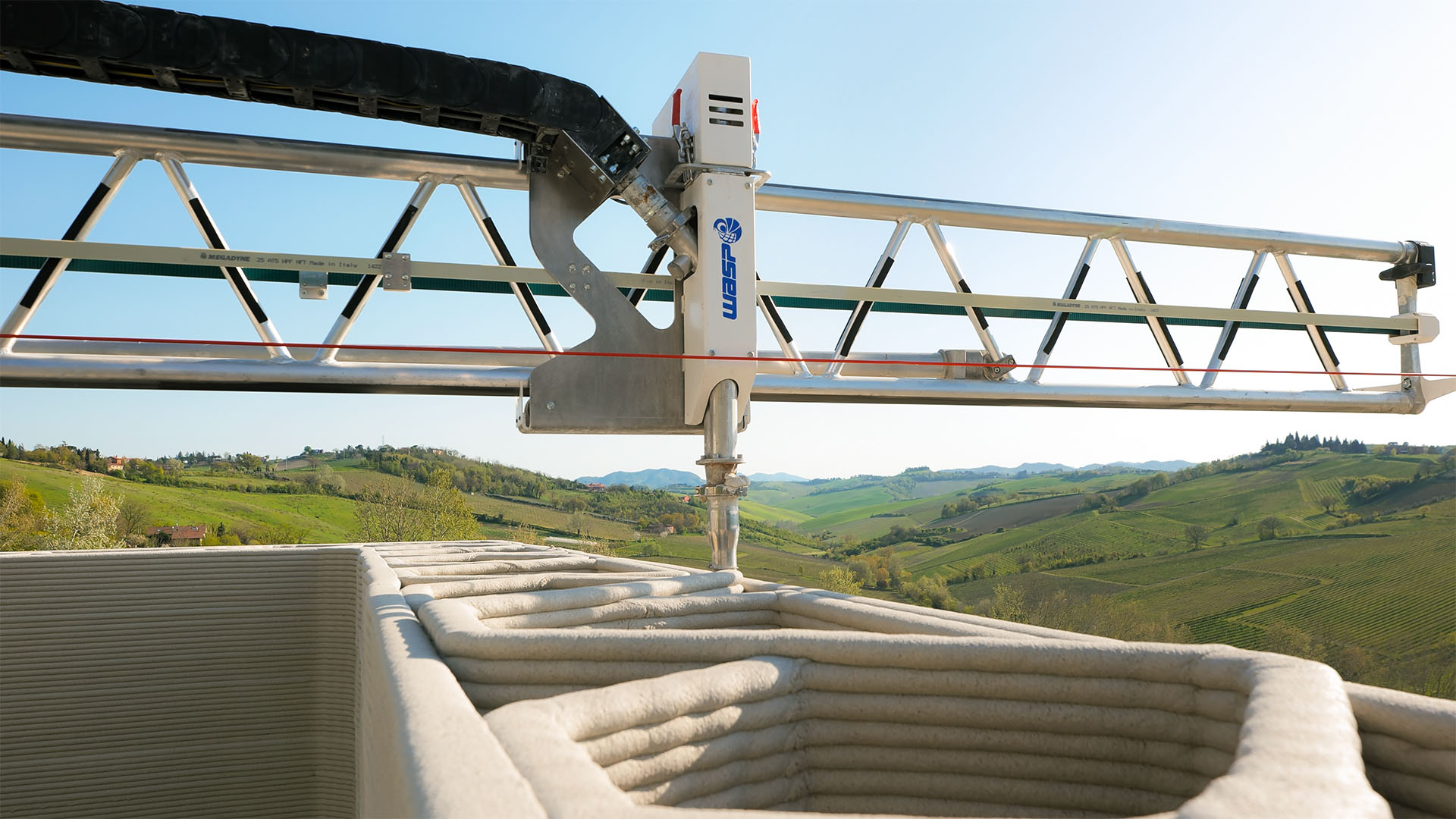
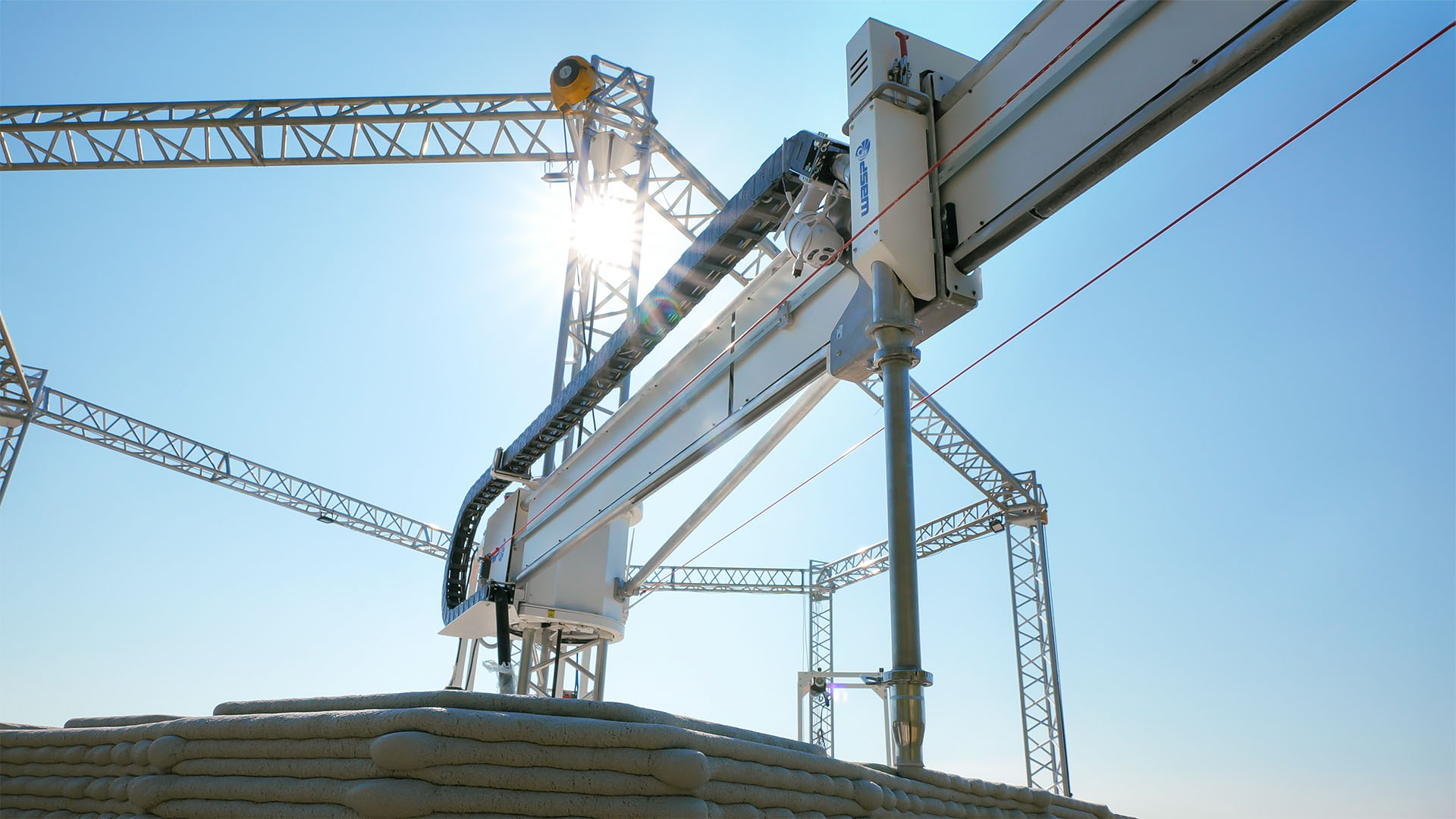
WASP’s Itaca project is now officially Italy’s first certified 3D printed structure, but it’s also a great deal more than that. First announced by the company’s founder and president, Massimo Moretti, back at Italian Tech Week in 2022, the house, built with a lime-based mixture that WASP says has lower carbon emissions than traditional cement, is the centerpiece of what WASP intends to develop into “a 3D-printed farm”.
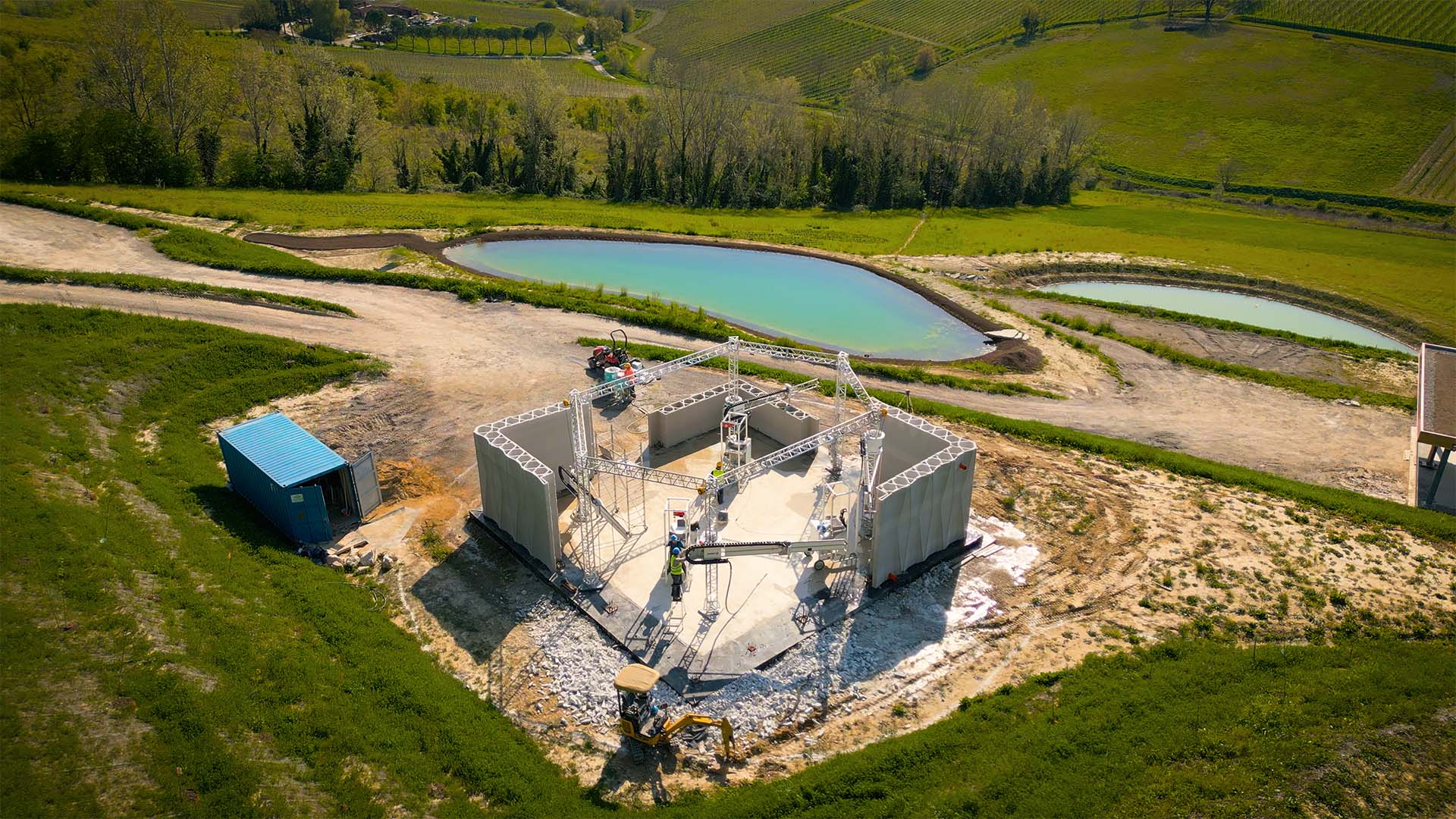
To achieve that objective, the company has printed two multiple rainwater harvesting basins in Itaca’s surroundings, and is in the process of creating an “AI-powered automatic garden” for this “circular micro-economy” in the open air laboratory that WASP has named Shamballa. WASP also plans to install 3D printed vertical hydroponic systems on Itaca, carrying out the company’s long-term vision to create a self-sufficient living space.
Regarding the home itself, components like infills filled with rice husks will equip the home with passive heating and cooling, while a rooftop solar panel system will be attached, giving Itaca low-carbon, low-cost energy. All in all, WASP has threaded a seemingly impossible needle by balancing next-gen technologies with a respect for biodiversity.
Creations like Itaca are important enough in-and-of-themselves, but as I’ve already said, their greatest importance may lie in how they prove that digital technologies and the intangible spirit of human ingenuity can not only coexist, but in fact thrive side by side. The world needs people who can figure out how to use technology to do things other than spread violence and enrich the already-rich.
So WASP needs to be congratulated for not only making something that doesn’t kill anyone, but also encourages new life. With Itaca, the company has also created a monument to the idea that there’s no separating habitat from habit: the only way for humans to eventually build a culture that’s not ecologically destructive is to embed biodiversity into our surroundings from the top-down, and from the ground-up.
While they haven’t created living houses that sit at the center of Edenesque landscapes, companies like Alquist and ICON should be commended for similarly integrating the seemingly polar opposites of 21st-century automation and age-old humanity. Every 3D construction project is an advertisement, showing new generations that they have the potential to use technology to improve the world.
Thus, while 3D printed housing might not solve the housing crisis, at least not on its own, it is a perfect example of the sort of thing that can combat the crisis of human imagination, which is a very big problem in its own right. 3D printing companies don’t have to aim to change the world, but it’s certainly refreshing when they do.
Images courtesy of WASP
Subscribe to Our Email Newsletter
Stay up-to-date on all the latest news from the 3D printing industry and receive information and offers from third party vendors.
Print Services
Upload your 3D Models and get them printed quickly and efficiently.











You May Also Like
Advancing Workforce Development for Industrial Additive Manufacturing
As additive manufacturing (AM) continues its transition from a niche technology to a core element of industrial production, workforce development has emerged as one of the industry’s most pressing issues....
Scaling DLP: How Visitech Moves Production Beyond the “Printer Farm”
With hundreds of light engines shipped in 2025, Visitech is leveraging its new Texas facility and scrolling DLP architecture to redefine industrial throughput. By achieving up to 20 times the...
Reuniting ExOne and voxeljet: An Investor’s View on Building a Global Industrial Sand Printing Leader
Authored by Whitney Haring-Smith, Chair of the Board, ExOne Global Holdings & Managing Partner, Anzu Partners At Anzu Partners, we invest with conviction in industrial technologies that create categories—and then...
Adoption of Advanced Powder Metal Manufacturing in the Global Small Arms Space – SHOT Show 2026 Additive Manufacturing Analysis
Back in 2013, I remember being completely blown away when a company called Solid Concepts reportedly additively manufactured nearly a complete firearm as a proof of concept. Although desktop polymer...