An 18-Year Old Entrepreneur Built a $300,000-a-Month Business 3D Printing Can Holders

An 18-year-old entrepreneur has turned 3D printing into a six-figure e-commerce business, showing how consumer-grade additive manufacturing can scale quickly when paired with social media reach.
Michael Satterlee, the founder behind CruiseCup, a fast-growing online brand selling 3D printed beverage accessories, recently revealed that his company generated around $300,000 in revenue in a single month, mostly thanks to a couple of videos that went viral on Instagram and TikTok, with close to one million views.
The story, first reported by Business Insider, highlights how Satterlee used 3D printers not only for prototyping, but also for full-scale production, relying on speed, iteration, and direct-to-consumer sales rather than traditional manufacturing.
Satterlee’s business centers on a simple but popular product: a 3D printed can holder designed for energy drinks and other beverages. Instead of outsourcing manufacturing, he built his production in-house using desktop 3D printers.
On social media, Satterlee frequently shows rows of printers running nonstop. According to posts shared online, his setup has grown to more than 100 printers, letting him keep up with demand without moving to injection molding or overseas production. This lets him launch new designs quickly, adjust products based on customer feedback, and avoid large upfront tooling costs. In fact, he explains this in several videos, saying how 3D printing gives him flexibility that traditional manufacturing would not, especially at his stage of growth.
A Viral Video Changed Everything
The turning point came when one of Satterlee’s short videos went viral, reaching tens of millions of views. The video showed how it works, and orders jumped almost overnight. And instead of falling behind, Satterlee just added more printers to keep up, something traditional manufacturing can’t do as easily.
His content now shows the print farm behind the scenes, how he packs and ships orders, and what he’s learning as he runs a growing business. That behind-the-scenes focus has helped build trust with customers and keep the momentum going after the viral spike.

Michael Satterlee. Image courtesy of Solefully.
From Side Project to Manufacturing Operation
Satterlee has been 3D printing since he was about 16, when he started another small side business, Solefully, selling 3D printed shoe charms for Crocs. At one point, it brought in around $20,000 a month and taught him to run multiple printers, test new designs, and understand what customers actually want. He carried that experience into his current can-holder business. His main social media account, @cruisecup, now shows the print farm, daily production, and behind-the-scenes work.
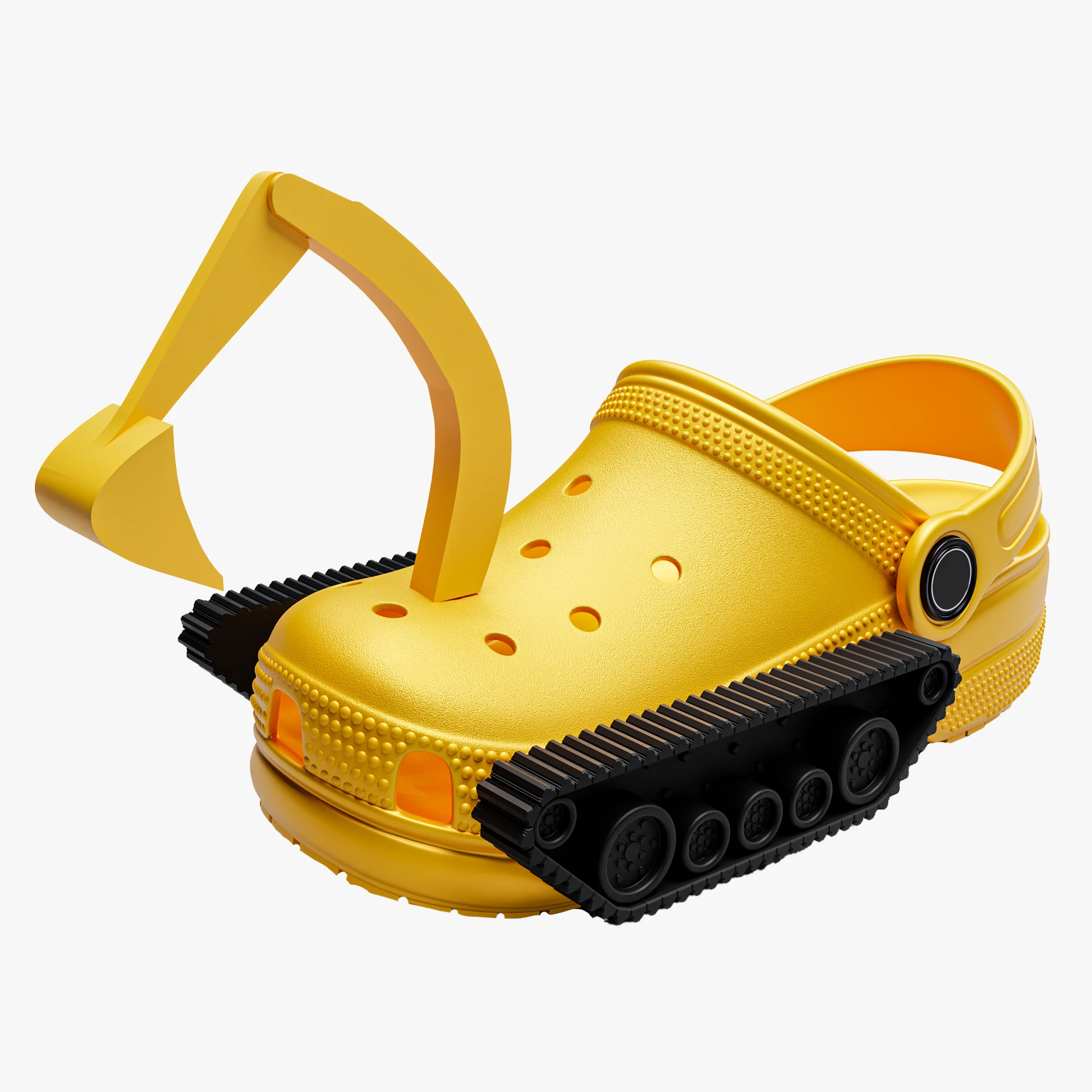
Construction set for Crocs. Image courtesy of Solefully.
What started as a small idea has turned into a full operation, with a warehouse, staff, and nonstop production. According to Business Insider, Satterlee plans to expand in the future, including exploring metal products, but for now, polymer 3D printing is still the backbone of the business.
What makes this story so interesting is that it shows how anyone can use 3D printing for real production. In fact, desktop 3D printers are increasingly used for end-use consumer products, and social media has become a great distribution and validation engine, allowing small operators to scale production without the need for a traditional factory infrastructure.
Subscribe to Our Email Newsletter
Stay up-to-date on all the latest news from the 3D printing industry and receive information and offers from third party vendors.
Print Services
Upload your 3D Models and get them printed quickly and efficiently.













You May Also Like
Solukon Goes Big with New SFM-AT850 Depowdering System
Solukon has released the SFM-AT850 depowdering system. The German depowdering specialist has updated its product line, and this machine replaces the SFM-AT800-S and SFM-AT1000-S. Rather than many small parts, this...
The Hidden Economics of Powder Bed 3D Printing: Closing the Loop in Powder Management
Automation is a very topical thing in additive manufacturing at the moment. With renewed scale, some clients are fervently looking to automate production. Other business cases only make sense with...
Oerlikon Adds ATLIX’s xBUILD 5000, Plans More for 2027
Oerlikon has installed a new ATLIX xBUILD 5000 metal 3D printer at its facility in Huntersville, North Carolina, marking the first production deployment of the system worldwide. The machine will...
The Science Lab You Can 3D Print
Researchers at Sweden’s Umeå University have shown how desktop 3D printers can be used to make lab equipment, giving scientists a cheaper way to build tools for their research. The...