EWI and The Barnes Global Advisors Partner to Strengthen Additive Manufacturing Consortium

In 2010, the nonprofit engineering consultancy EWI, based in Columbus, Ohio, established the Additive Manufacturing Consortium (AMC), an organization that today includes over 50 members globally, from academic institutions to private enterprises to U.S. federal laboratories. Thanks to a new strategic partnership between EWI and The Barnes Global Advisors (TBGA), the AM and advanced manufacturing engineering consultancy based in Pittsburgh, the AMC will now get an additional boost from TBGA’s comprehensive expertise across the AM value chain.
In addition to facilitating collaboration on pre-competitive research projects — joint work on early-stage knowledge and process development, between enterprises that otherwise typically compete — the AMC’s main activities include four meetings per year, hosted by members at locations around the U.S. According to EWI, AMC members contribute over $2 million per year in cash and in-kind investments to fund projects like general R&D into AM post-processing techniques as well as narrower topics like evaluation of specific metal alloys commonly used in AM.
TBGA engages in similar work, with its mission strongly supported by the consultancy’s involvement with the Neighborhood 91 ecosystem, a unique innovation hub located on 200 acres at the Pittsburgh International Airport. So far, residents of Neighborhood 91 include materials testing firms such as HAMR Industries and AM contract manufacturer Cumberland Additive.
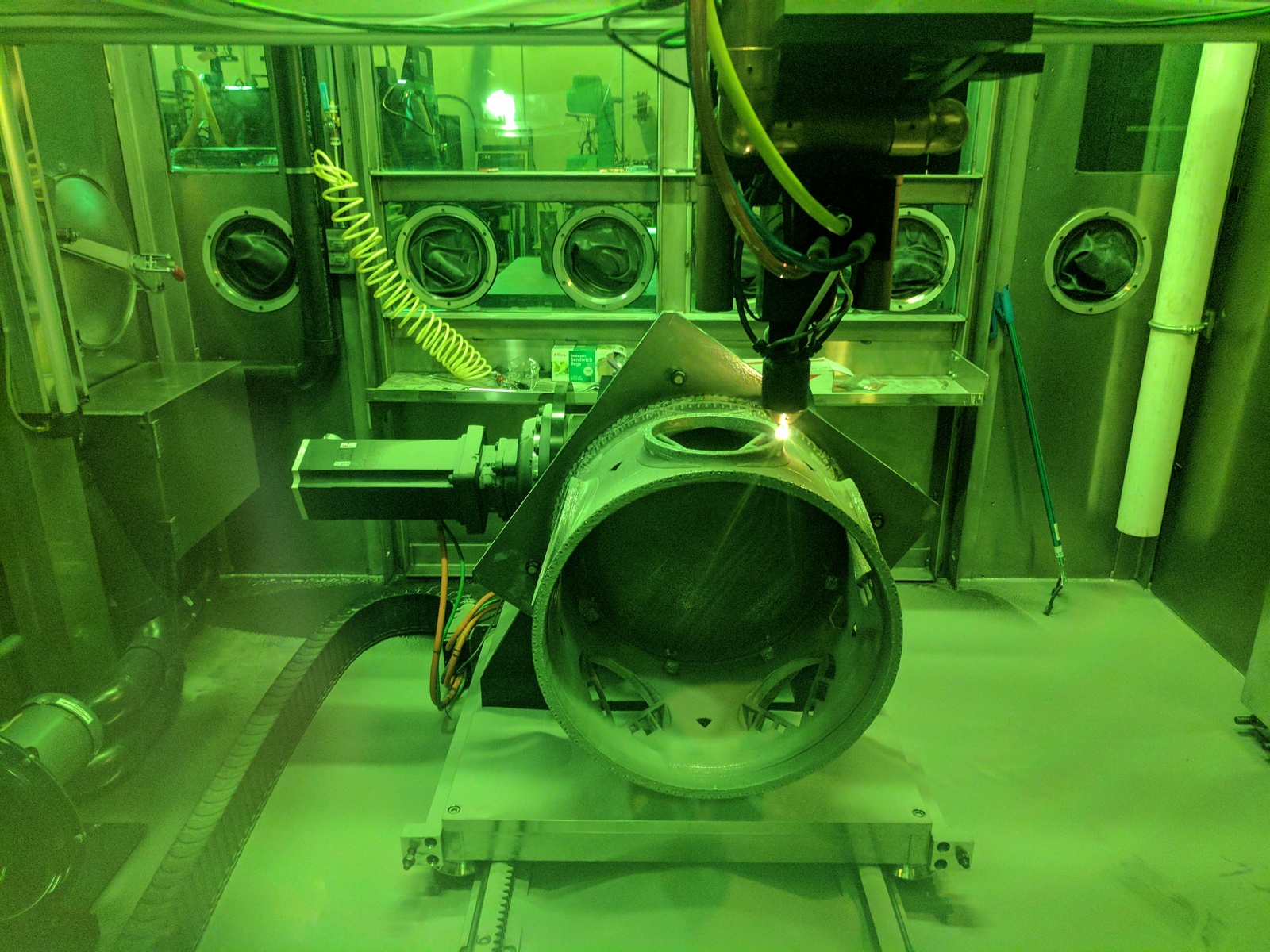
Via EWI’s partnership with TBGA, AMC members will be able to access TBGA’s expertise at the four annual members meetings and throughout the year.
In a press release about EWI’s strategic partnership with TBGA, VP of strategic technologies at EWI, Blake McAllister, said, “This partnership allows us to provide our consortium members with expanded technical support for their projects while ensuring the work is still directed by members. We remain committed to fostering collaboration and innovation in [AM], and TBGA brings specialized expertise that will enhance the value we deliver to our members.”
John Barnes, the founder and president of TBGA, said, “The value of consortiums like AMC is the high ROI that comes from pooling funding for pre-competitive development. It benefits the entire group, and everyone in the consortium wins with good outcomes. Our goal is to help shape projects to have a maximum commercial outcome for the members.”
I’m a big believer that consortiums are the key to moving AM to its next maturity phase, and this partnership exemplifies that concept perfectly. Through just one new partnership, all the organizations associated with both EWI and TBGA that weren’t previously in contact with one another now have a streamlined path towards any potential joint efforts.
TBGA’s exploration into expanding the Neighborhood 91 model elsewhere is one of the ways that potential could manifest, down the road. The AMC member list is a solid starting point for gauging the best locations for future iterations of the Resilient Manufacturing Ecosystem.
As cutthroat as the competition in the AM industry sometimes seems, it’s important to keep in mind that collaboration between competitors is a hallmark of any mature industry. The epitome of this dynamic is the semiconductor industry, most notably through its International Technology Roadmap for Semiconductors (ITRS) and the International Roadmap for Devices and Systems (IRDS).
I think the AM industry would greatly benefit from studying what semiconductor manufacturers did in the late 20th and early 21st centuries and adopting any relevant general principles. The growth of partnerships between organizations like EWI and TBGA seems like a good first step towards making that sort of thing a reality.
Images courtesy of EWI
Subscribe to Our Email Newsletter
Stay up-to-date on all the latest news from the 3D printing industry and receive information and offers from third party vendors.
Print Services
Upload your 3D Models and get them printed quickly and efficiently.












You May Also Like
The Manufacturing Race Behind the Drone Revolution
We are in the middle of a major manufacturing shift focused on the production speed and payload capacity of uncrewed aerial systems (UAS), or drones. A recent Manufacturing Dive article...
ADDMAN to Buy Up to $10.8M in Nickel 718 Powder from 6K Additive Over 30 Months
After years of buildup, we’re finally starting to see what the US metal additive manufacturing (AM) market could look like at scale. To be sure, it’s still not quite there,...
Metal AM in a Multipolar World, Part 2: How PBF and DED Could Change by 2035
The first decades of PBF development were heavily shaped by machine capability: more power, more lasers, larger build volumes, better recoating, and improved process monitoring. These developments will continue, but...
Advanced Manufacturing at IMTS 2026: 3D Printing and AI and Drones, Oh My!
Last week’s International Manufacturing Technology Snow (IMTS) in Chicago welcomed over 90,000 attendees to the jungle that is McCormick Place. With over 1.17 million square feet of exhibit space, and...