Ukraine’s New 3D Printed Bomb Points to a Fabless Future for Weapons

On Ukrainian Independence Day (August 24), the Defence Cooperation Forum. Future Warfare was held in Kyiv, which was attended by defense ministers and other leaders from across the Western world. ‘Digitalization of the military sphere’ was one of the main themes of the event, which showcased a range of cutting-edge defense tech Ukrainians are producing to sustain their war effort.
As expected, hardware produced using additive manufacturing (AM) was heavily on display at the event, including one precision-guided bomb that the Ukrainian website Defense Express noted “closely resembles” the MAM-L, a bomb manufactured by Turkish defense contractor Roketsan. The MAM-L is designed for use with the TB2, a drone that is produced by another Turkish company, Baykar. The TB2 was a big part of Ukraine’s war effort in 2022, then more or less disappeared, returning just as suddenly early this summer.
Perhaps the most intriguing angle to the 3D printed munition resembling the MAM-L is the replacement of metal with polymer in the bomb’s body and stabilizer. One rationale behind that approach could be to enable Ukraine to produce the weapons system more easily domestically, with Ukraine reportedly now making almost 40 percent of its own defense equipment.
It’s also possible that the goal was to make the MAM-L substitute more lightweight. If that’s the case, it could allow the munition to be used with the smaller, cheaper drones that have proliferated on the frontlines in Eastern Europe.
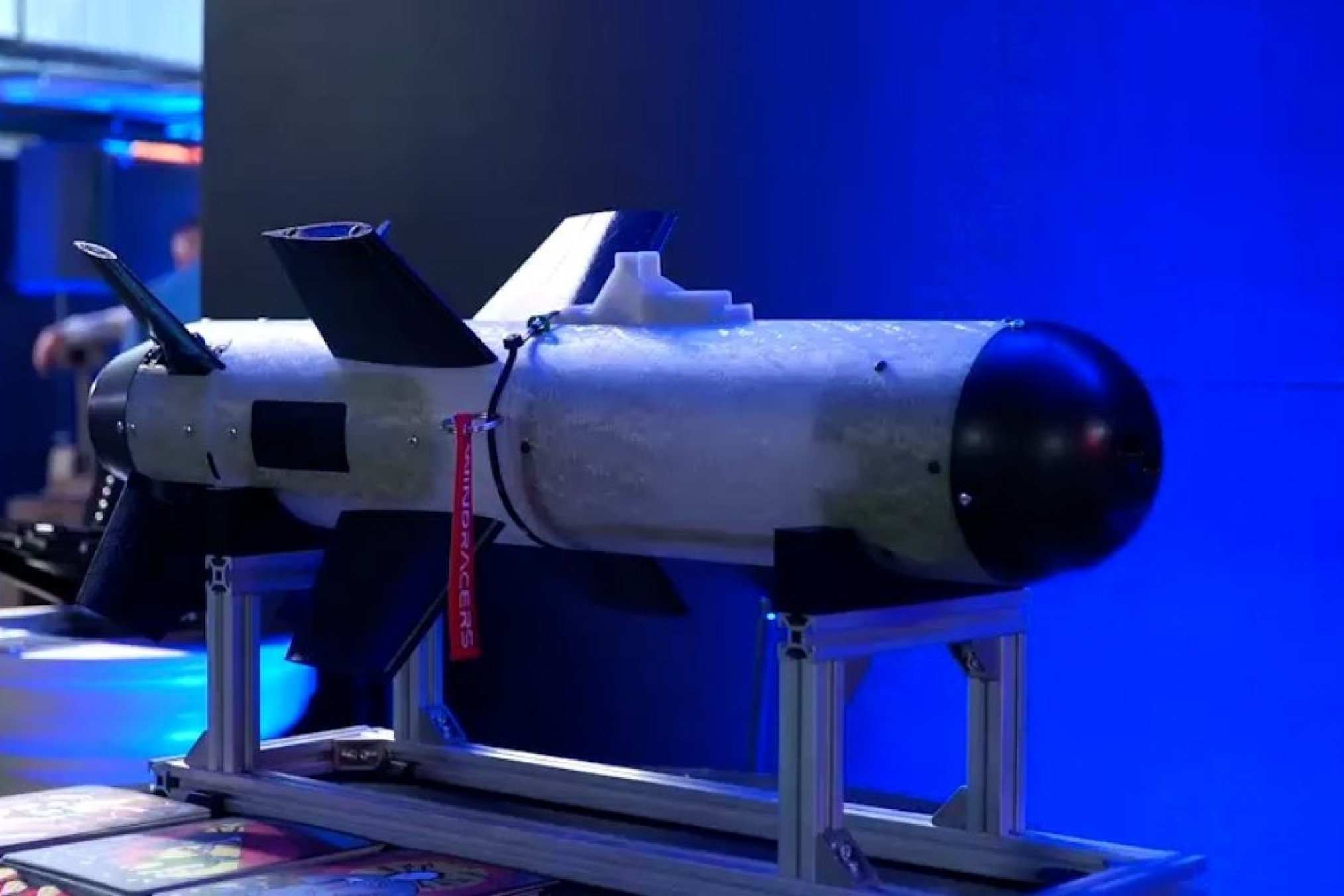
Snapshot of a new Ukrainian 3D-printed precision-guided bomb, displayed at a defense exhibition. Image courtesy of Defense Express, via United24Media/Volodymyr Zelensky via X.
Beyond whatever the immediate purpose of the particular weapons system is, the concept at play brings to mind a topic I discussed with Nikon AM CEO Hamid Zarringhalam in a recent interview: the possibility that greater AM adoption by the defense sector could lead to the greater incorporation of fabless manufacturing principles into the production of military hardware.
Fabless manufacturing is a semiconductor sector practice whereby firms, such as NVIDIA, design chips that are exclusively produced by third-party contract manufacturers. While this way of doing things didn’t exist until the late ’80s, it quickly became the norm for chipmakers, and it’s now impossible to imagine the semiconductor sector without fabless manufacturing.
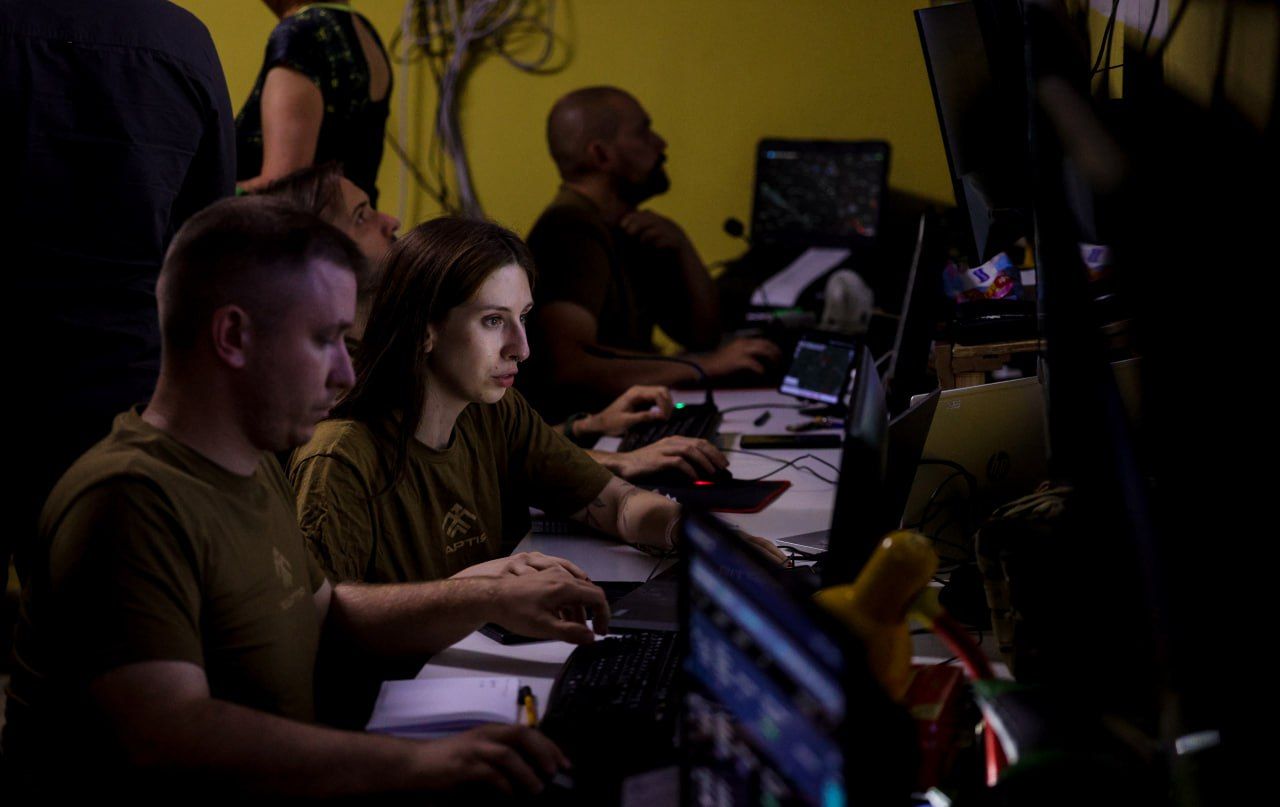
Ukrainian service members at a command center in Kharkiv. Image courtesy of Ukraine’s Ministry of Defence.
In this case, if Ukraine can indeed 3D print feasible substitutes for armaments produced elsewhere, more or less the same dynamic could arguably take hold in the Ukrainian defense industrial base — except deliberately, as opposed to whatever is going on in the case of the MAM-L lookalike. That is, weapons systems could be designed in the U.S., for instance, then produced on the ground in Ukraine.
And, beyond defense, there’s no reason why the same principles couldn’t extend to the manufacturing sector at large. Principles akin to fabless manufacturing indeed already exist in every high-volume manufacturing industry.
The difference with chipmakers is that they’ve perfected the concept to the point of making it the core of their business model, driven by a unique need to balance rapid innovation with high capital investment. But as the cost of major capital investment in general seems to constantly increase, in a business environment where consumer preferences make rapid innovation evermore necessary, the separation between design and production may eventually become as strict in all other industries as it is for semiconductor manufacturers.
Featured image courtesy of Ukraine’s Ministry of Defence
Subscribe to Our Email Newsletter
Stay up-to-date on all the latest news from the 3D printing industry and receive information and offers from third party vendors.
Print Services
Upload your 3D Models and get them printed quickly and efficiently.













You May Also Like
3DPOD 312: RLP’s Gravity-Free Silicone Manufacturing with Schendy Kernizan
Schendy Kernizan worked as a professor and researcher before co-founding RLP (Rapid Liquid Print), a company that extrudes silicone into a hydrogel. RLP allows for pure silicone to be made...
3DPOD 311: Thingiverse and MyMiniFactory, with CEO Romain Kidd
Romain Kidd was MyMiniFactory‘s CEO and helped that company grow in a crowded market of people sitting between “the cloud,” communities, and 3D printing. We talk about how MyMiniFactory was...
3D Printing News Briefs, August 8, 2026: Seawall Funding, Defense Capabilities, Supports, & More
We’re starting with business in this weekend’s 3D Printing News Briefs, then moving on to defense. We’ll move on to young 3D printing entrepreneurs, and finish with some research out...
Red, White, and Blue: Star-Spangled 3D Prints to Celebrate America’s 250th Birthday
I often do roundups of free 3D printed models for holidays, like Christmas, Halloween, and even the 4th of July, which all of America will celebrate tomorrow. Because I’ve written...