HP Dives Deeper Into Orthopedic 3D Printing at AOPA 2025 With New PA 11


HP is announcing that it will have a new generation of PA 11. With the 3D HR PA 11 Gen2 material, the company will offer up to 80% material reusability, which, it says, will lead to a 40% lower part cost. That should be a welcome advance for HP users. More parts could be made with the new material, and business cases will be better. PA 11 is not easy to process, but the properties the material delivers, as well as part performance, make it a widely desired choice.
Michael Rosicky, Global Production Manager at Invent Medical, stated,
“We know that mechanical durability is the key to delivering high-quality, reliable medical devices. The new HP 3D HR PA 11 Gen2 material shows strong potential to further enhance performance, repeatability, and robustness in next-generation custom O&P devices produced with HP MJF technology.”
HP will showcase the new material at the American Orthotic and Prosthetic Association (AOPA) 2025 event (Booth #1231), the leading prosthetics and orthotics trade show. Additionally, HP has partnered with the Limb Kind Foundation. The two conducted a pilot in Kenya where local patients were 3D scanned there, design work was done in the US, sockets were then 3D printed in the US, and then shipped to Kenya. The second phase is currently underway in Sri Lanka. The company says that its approach is faster and delivers lighter prosthetics that are breathable.
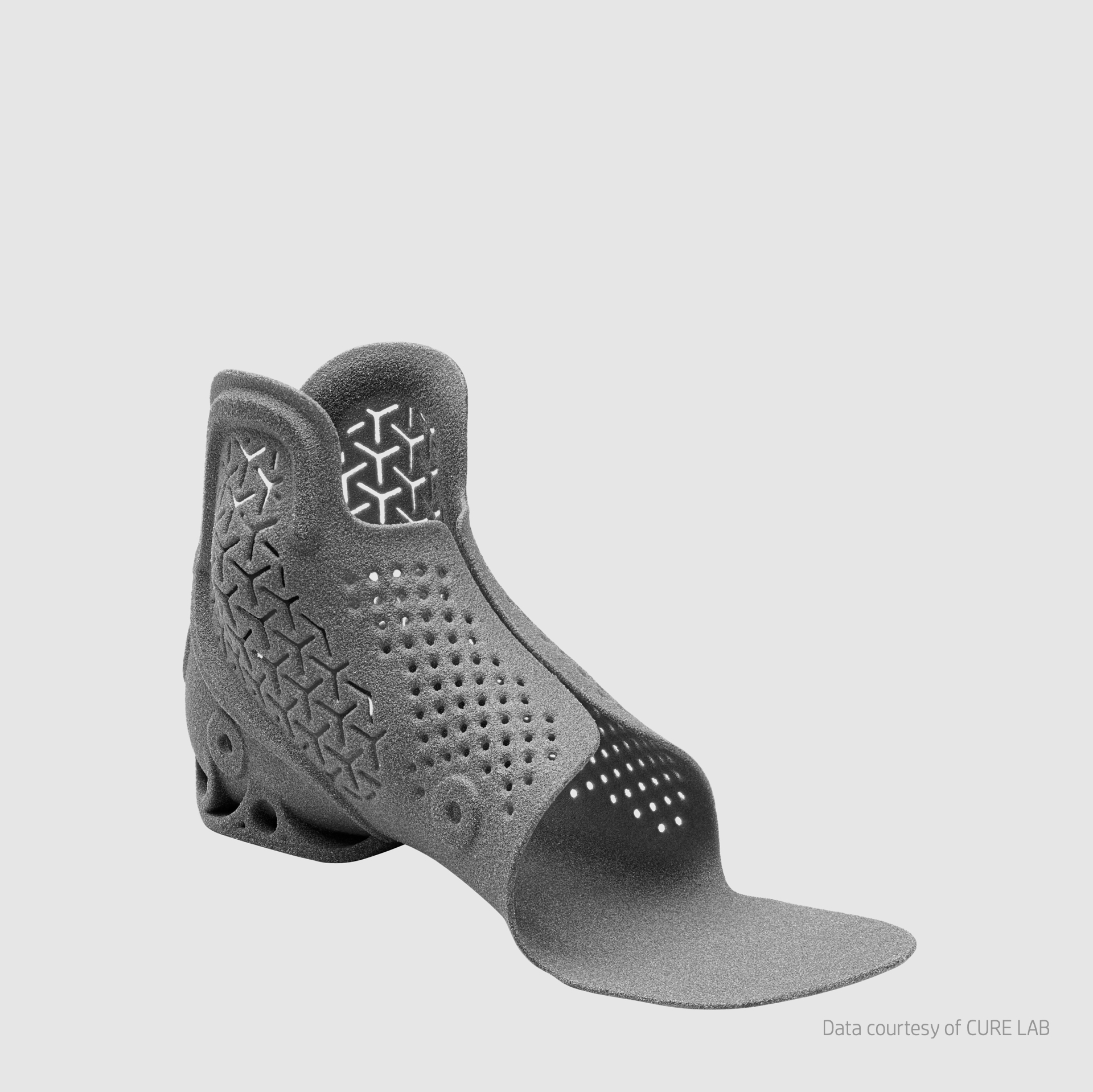
HP’s 3D HR PA 11 Gen2
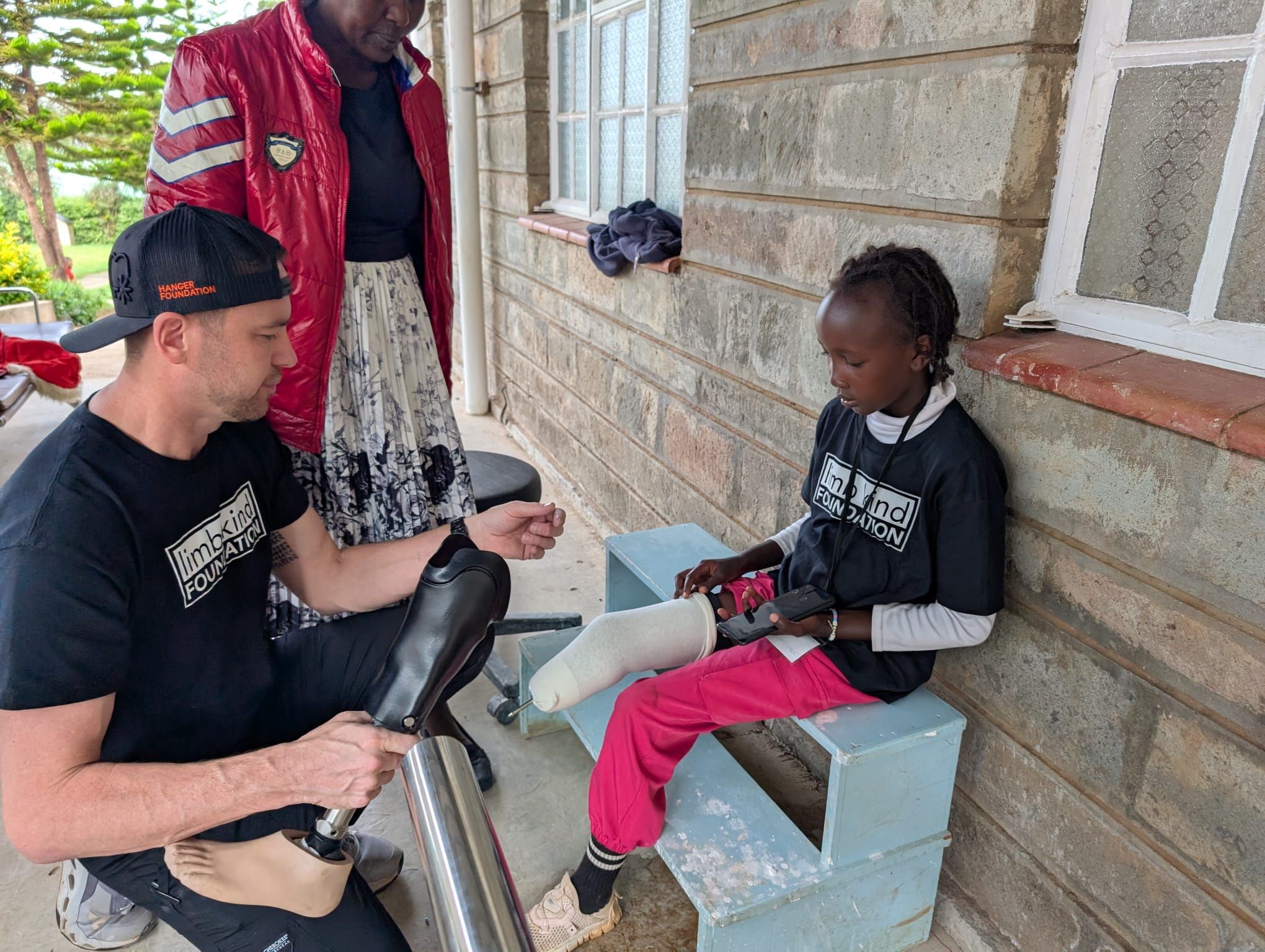
Delivering prostheses to children in Kenya. Image courtesy of HP.
The Founder of Limb Kind Foundation, Robert Schulman, said,
“This project showed us what’s possible when compassion meets innovation. With HP’s technology and support, we were able to design and deliver five custom prosthetic devices to children in Kenya. What excites us most is the potential to produce a significantly greater number of prostheses in a much shorter time frame, allowing us to help more children than ever before. It’s more than just speed, it’s about restoring mobility, dignity, and joy.”
A part of the project is local training, which could be good. Generally, local manufacturing would be far superior, of course. Let’s hope that phase three involves local capacity building to work with the people and build devices that meet their actual needs in their local environment.
HP has also been used by the US Department of Veterans Affairs (VA) Puget Sound Health Care System and Radii Devices to make an in-house developed transtibial socket. Done in cooperation with the VA’s X Labs innovation program, the VA is making its very own software workflow, which is an interesting development that would see them potentially save a lot of money. In addition, the VA has made its own post-processing workflow as well. The VA has a note of volume in orthotics and prosthetics. Not only in battlefield trauma, but also veterans with diabetes and other injuries would need orthotics and prosthetics. Rather than just keep things as they were with a lot of manual labor, they’re really innovating here in terms of cost and functionality. The solution is said to be extended to other VA hospitals soon.

Invent medical helmet. Image courtesy of DyeMansion/HP.
At AOPA, HP will carry out workshops showcasing another digital workflow, this one using Structure 3D scanning and Leopoly. HP will also showcase its work with Endeavor3D, DyeMansion, and Hanger Clinic. HP’s commitment and growth in orthotics and prosthetics are notable. Through its presence at AOPA, it’s reinforcing its role in the O&P industry. Such commitment is appreciated and will result in sales for HP. O&P is digitizing, transitioning to 3D printing for many components, and experiencing increased competition. HP’s role in this industry could be outsized and one that lets it dominate high-volume part production for many years to come.
Subscribe to Our Email Newsletter
Stay up-to-date on all the latest news from the 3D printing industry and receive information and offers from third party vendors.
Print Services
Upload your 3D Models and get them printed quickly and efficiently.













You May Also Like
3D Printing News Briefs, October 21, 2026: Digital Twins, AI CAD Service, AR Smart Glasses, & More
In today’s 3D Printing News Briefs, America Makes announced the winners of its MIAMI Project Call, and AM Europe released a new report. Artec 3D launched its new Artec Twins...
3D Printing News Briefs: October 17, 2026: Affordable Housing, Bone Implants, Rubber Gloves, & More
In this weekend’s 3D Printing News Briefs, we’re starting off with quality assurance in metal additive manufacturing (AM), a new 3D printer, and 3D printed housing. We’ll finish up with...
3D Printing News Briefs, October 14, 2026: Bolus, Aerospace Tooling, Water Filter, & More
In today’s 3D Printing News Briefs, we’re starting with medical news, as Myrava has received FDA 510(k) clearance for its 3D printed bolus. Moving on to aerospace and metals, AML3D...
Can India’s AM Push Help Make it a Viable Supplement to China?
Diversifying manufacturing supply chains to locales outside of China has nothing to do with actually cultivating “substitutes” to the Chinese economy. The real stakes are these: China is an irreplaceable...