Scaling Impact Through Innovation: How 3D Printing Is Transforming Pediatric Prosthetics



Around the world, thousands of children live with limb loss and limited access to proper prosthetic care. In many low-resource settings, these children go without the mobility they deserve, constrained by cost, geography, and lack of trained specialists. The Limb Kind Foundation, a U.S.-based nonprofit, is working to change that—bringing compassionate prosthetic care to underserved communities. In a recent pilot project, they teamed up with HP Additive Manufacturing Solutions, ABCorp, and Macy O&P to explore how digital workflows and 3D printing could scale their impact.
In April, the collaboration delivered 3D printed prosthetic sockets to children in Kenya as part of a broader humanitarian mission. Of the 53 prostheses delivered on that trip, five were manufactured using HP’s Multi Jet Fusion (MJF) technology. The results were remarkable: the sockets fit comfortably, performed reliably, and were produced in a fraction of the time typically required with traditional methods.

Delivering prostheses to children in Kenya.
A New Digital Workflow for Humanitarian Care
The goal was to prove that 3D printing could enable high-quality, functional, and scalable prosthetic care—even from thousands of miles away.
The workflow started with volunteers in Kenya scanning children’s limbs using iPhones, converting the data into 3D models within minutes. Those scans were uploaded to the cloud and accessed by certified prosthetist Paul Macy in Connecticut. Using Geomagic Freeform, Paul digitally designed custom sockets based on the scans and accompanying clinical notes. He then sent the files to ABCorp, a Boston-based manufacturing partner with FDA-registered and ISO-certified facilities.
There, the sockets were printed overnight using HP’s MJF technology—producing strong, lightweight parts with precise tolerances. After post-processing, including dyeing and vapor smoothing, the sockets were hand-delivered by a volunteer to Kenya for final fitting. From scan to delivery: just 36 hours.
“We were essentially doing everything we would in a traditional workflow, but digitally—and at three times the speed,” said Paul Macy. “With the right CAD tools and information from the field, we were able to deliver sockets that were comfortable, durable, and ready for immediate use.”
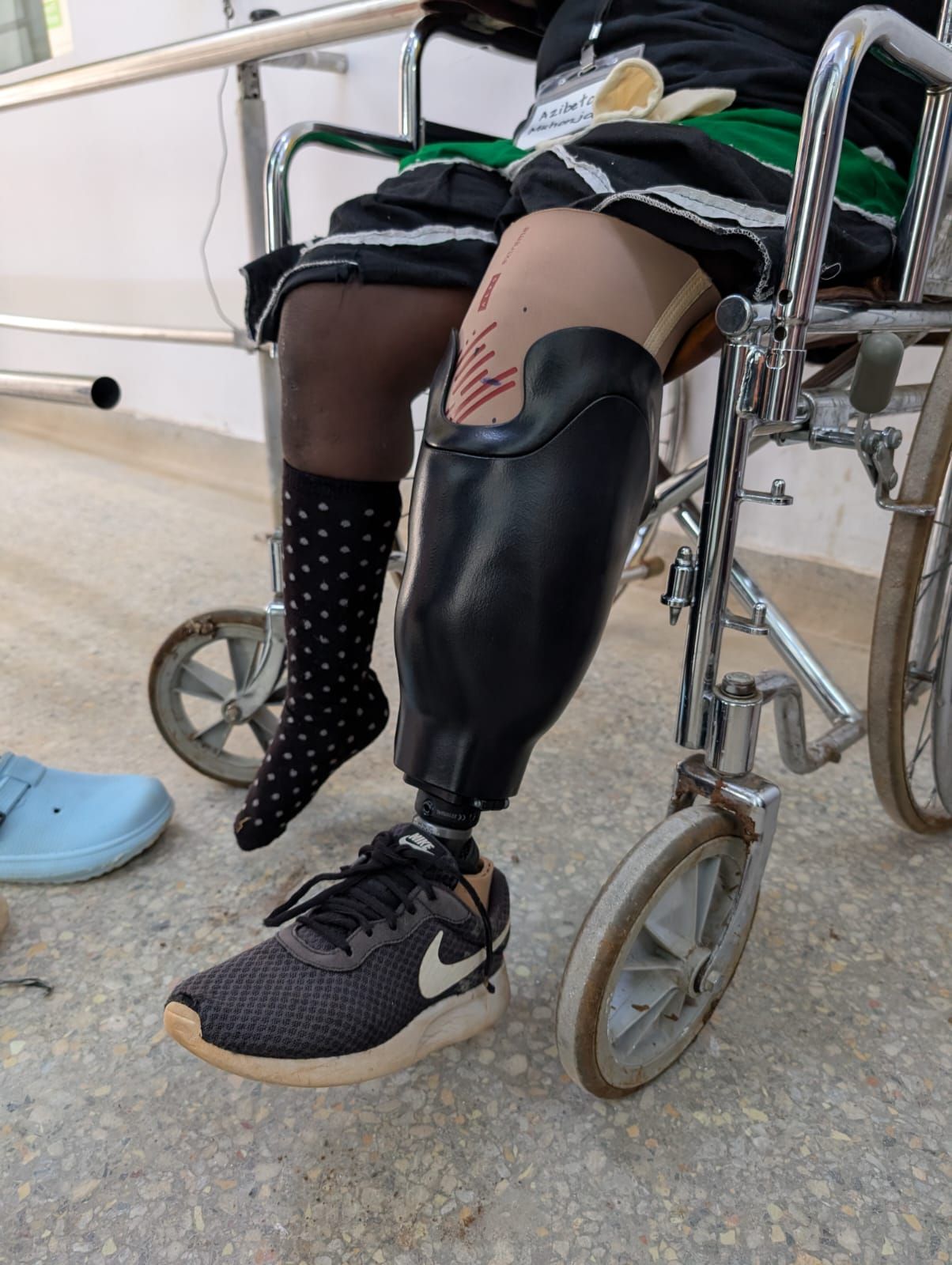
Delivering prostheses to children in Kenya.
Meeting Real-World Challenges
The field test was more than just a technical success—it was a deeply human one. Children who could not walk before stood up with smiles. Parents looked on in awe. And local hospital staff were inspired by the possibilities.
Still, the pilot surfaced important insights. One child, for instance, was initially upset that her socket wasn’t brown like the others—it was jet black, the default color for MJF parts. That feedback was quickly addressed, and future sockets will be color-matched to better align with cultural and aesthetic expectations.
“This is more than just about delivering devices,” said Rob Schulman, founder of Limb Kind and a certified prosthetist. “It’s about dignity, inclusion, and giving kids the chance to thrive. If we can train local staff to scan, design, and print on-site, we can make this kind of care available 52 weeks a year—not just during one-week missions.”
From Pilot to Scalable Model
Encouraged by the success in Kenya, the team is expanding their efforts. Their next trip—to Sri Lanka in August—will include 10 digitally produced prostheses, including above and below-the-knee designs. The ultimate goal is to establish in-country printing hubs staffed by local technicians trained in 3D scanning and CAD design.
“We see additive manufacturing not as a replacement for traditional prosthetics, but as a powerful complement,” said David Soriano, O&P Segment Manager at HP. “By combining clinical expertise, local partnerships, and digital tools, we can scale solutions that were once impossible.”
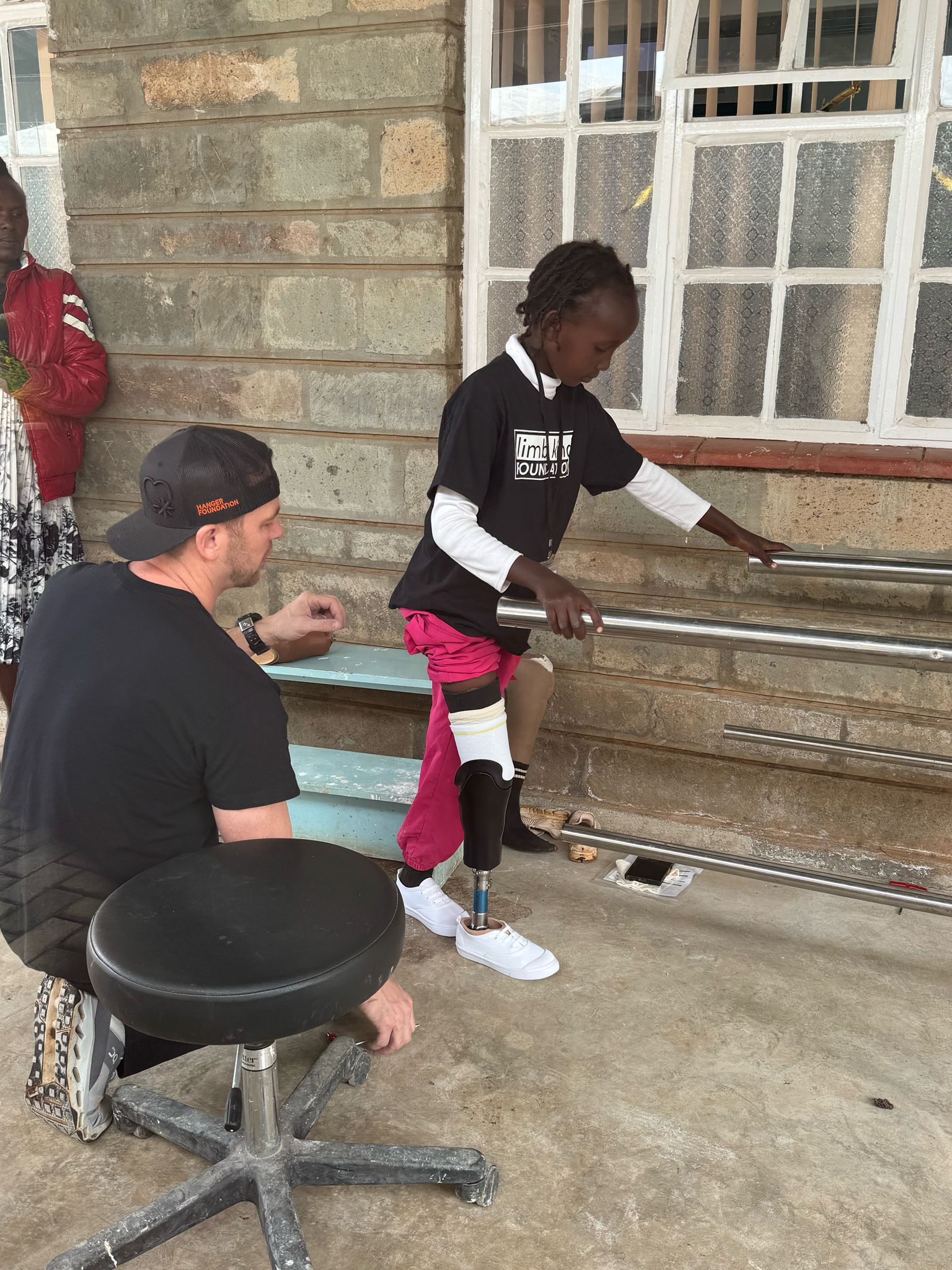
Delivering prostheses to children in Kenya.
Lessons for the Industry
This project underscores the potential of additive manufacturing in global health applications—especially for custom-fit devices like prosthetics. It also illustrates the importance of cross-sector collaboration, where nonprofit vision meets industrial capability.
From material selection to post-processing, every decision in the workflow was made with end-user needs in mind. For instance, the sockets featured a flexible TPU inner liner and a rigid PA12 outer frame—balancing comfort with durability. Wall thicknesses were fine-tuned to withstand the wear and tear of childhood. And production processes were adapted to meet medical-grade quality standards.
“We’ve gone from making a few prostheses per month to hundreds,” said Neil Glazebrook of ABCorp. “And that’s just the beginning.”
As additive technology continues to evolve, its ability to enable decentralized, personalized, and high-impact healthcare will only grow. For the children served by Limb Kind—and millions more waiting—this partnership offers a glimpse of what’s possible when innovation meets compassion.
All images courtesy of HP
Subscribe to Our Email Newsletter
Stay up-to-date on all the latest news from the 3D printing industry and receive information and offers from third party vendors.
Print Services
Upload your 3D Models and get them printed quickly and efficiently.












You May Also Like
AM Demand Signals: the Tungsten Harbinger
Most everyone who’s concerned with the scarcity of industrial materials is focused on rare earths, and rightfully so. But aside from the direct impact resulting from tighter supplies of rare...
WASP Mixes Earth and Plastic to Make Recyclable 3D Printed Composites
WASP has an eco-friendly ethos. Indeed, the firm wants to build houses and communities using local, environmentally friendly, and sustainable materials. WASP works with ceramics, biocement, and earth. The company...
3DPOD 318: 3D Printing at ORNL, Part II – Thomas Feldhausen
Thomas Feldhausen works at Oak Ridge National Laboratory (ORNL) on hybrid manufacturing, DED, digital twins, and new manufacturing solutions. For years, he’s tried to marry traditional subtractive manufacturing with additive...
The First Million’s the Hardest: Carbon’s Achievement with 3D Printed Bike Saddles
Last month I wrote an ode to 3D printed football helmet liners, as well as a brief overview of some of the biggest additive manufacturing (AM) success stories for the...