Helio Additive’s Industrial-Grade Simulation & Optimization Technology Integrated into Bambu Studio Software


Software startup Helio Additive, based in Changshu, China, wants to take the guesswork out of extrusion-based 3D printing, and make it more reliable and scalable through simulation. Its intelligent software pairs physics with real-time optimization for consistent production of defect-free parts. Now, the deep tech company has announced the official launch of its Dragon technology, integrated directly into Bambu Studio slicing software. This will make industrial-grade simulation and optimization available to hundreds of thousands of Bambu Lab users around the world.
Simulation and optimization tools are used to help users achieve the best possible prints. Simulation enables the manual tuning of parameters to achieve the best performance by simulating what those parameters will do for the final print. Optimization has the same end goal, allowing for what Bambu Lab calls “auto-tuning” to deliver great prints in one click. For its mission of making high-performance 3D printing accessible, reliable, fast, and scalable, Helio Additive’s Dragon uses both.
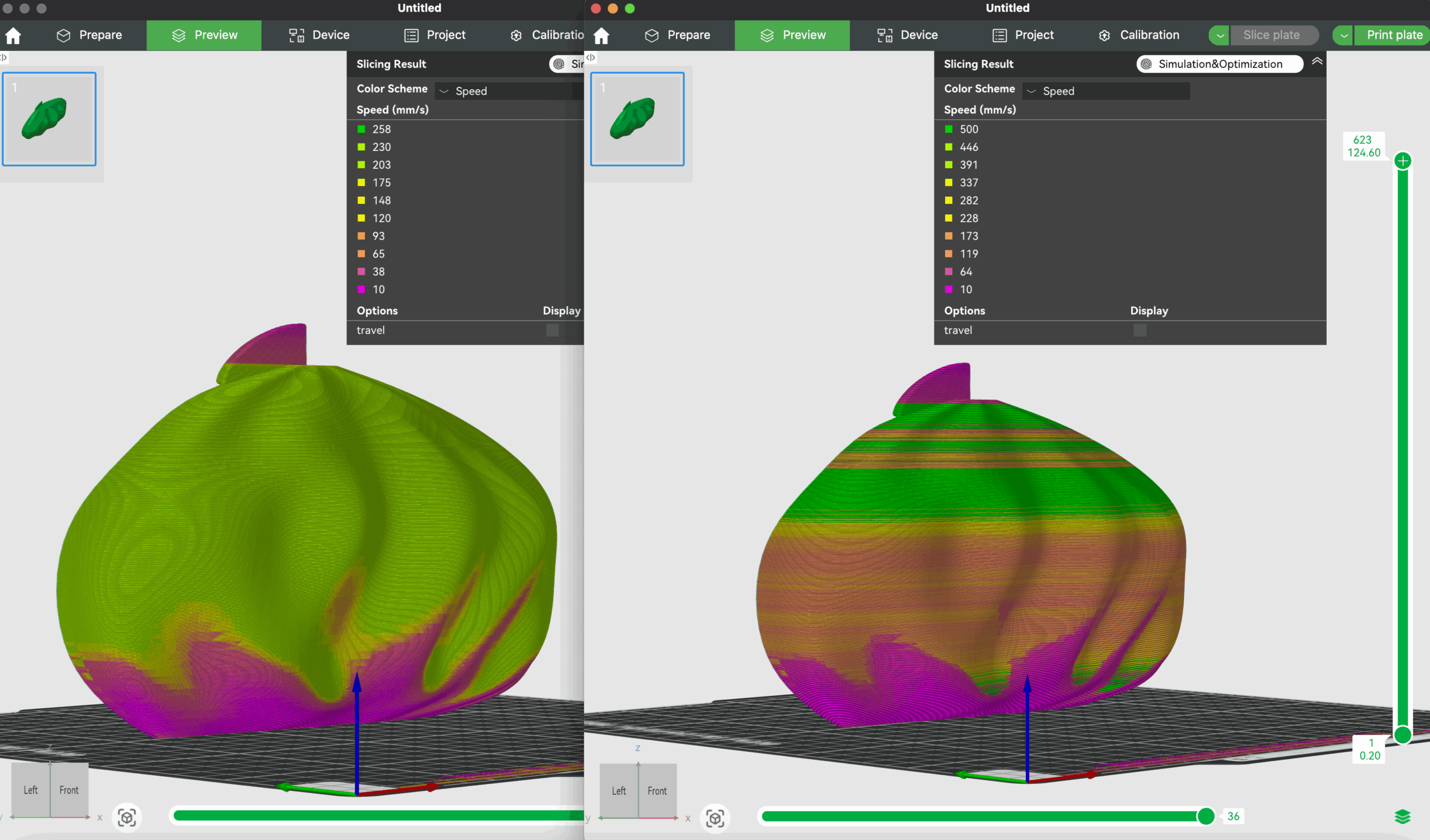
Before and after optimization: shows intelligent speed adjustments in safe regions while leaving sensitive regions like overhangs safe.
Dragon is Helio Additive’s core product. It was already trusted by aerospace, automotive, and consumer manufacturers before entering the desktop printing world through its Bambu integration, which bodes well for the level of quality it offers.
Any number of issues can arise during 3D design and printing, from unpredictable material behavior to not knowing how a new part will behave. Failed prints waste time and money, which is why simulation and optimization are so important. If you can visualize a problem ahead of time, you can fix it before your part ever gets to the print bed.
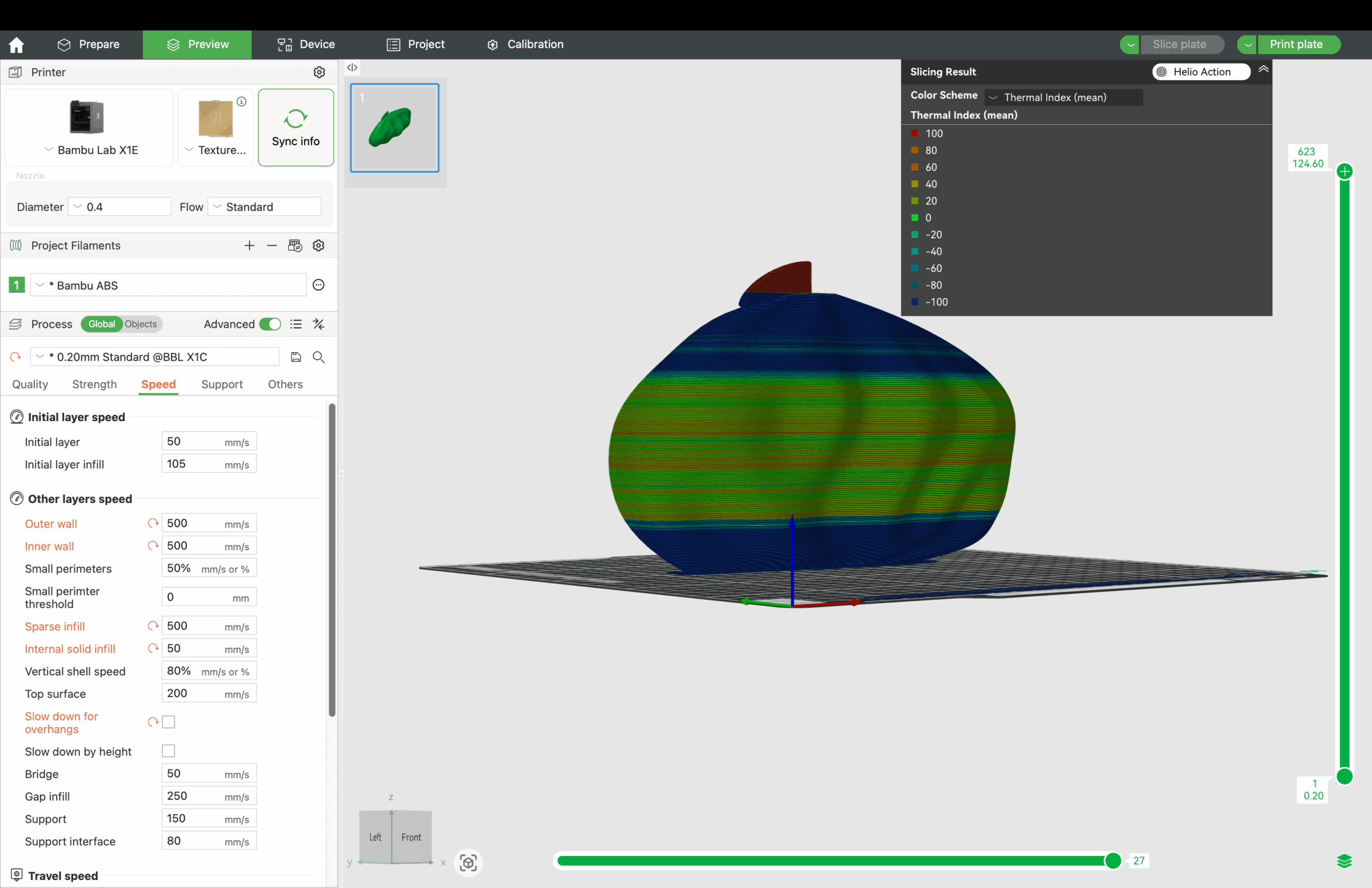
BambuStudio screenshot showing thermal quality index after simulation with Helio Additive.
Through this integration with Helio Additive, Bambu Lab users can use Dragon’s physics-based engine inside their standard Bambu Studio slicing workflow to simulate and optimize their prints. The technology can rapidly simulate thermal quality, and automatically optimize the thermal print process. Plus, users have access to a large library of pre-tuned materials. As of the official launch, Dragon currently supports a curated set of 20 high-performance materials.
With this native integration into Bambu Studio, which is compatible with Bambu’s H-Series and X-Series desktop 3D printers (including the new H2D Pro), users can rest easy knowing that they should be able to reliably reduce their material waste, increase their print speeds, and design stronger parts.
“This is a turning point. We created Dragon to eliminate uncertainty in 3D printing. Now, thanks to our partnership with Bambu Lab, desktop users everywhere can access the same intelligent simulation and optimization once reserved for industrial platforms,” said David Hartmann, CEO of Helio Additive. “Whether you’re prototyping or scaling up production, you can print faster, stronger, and more reliably.”
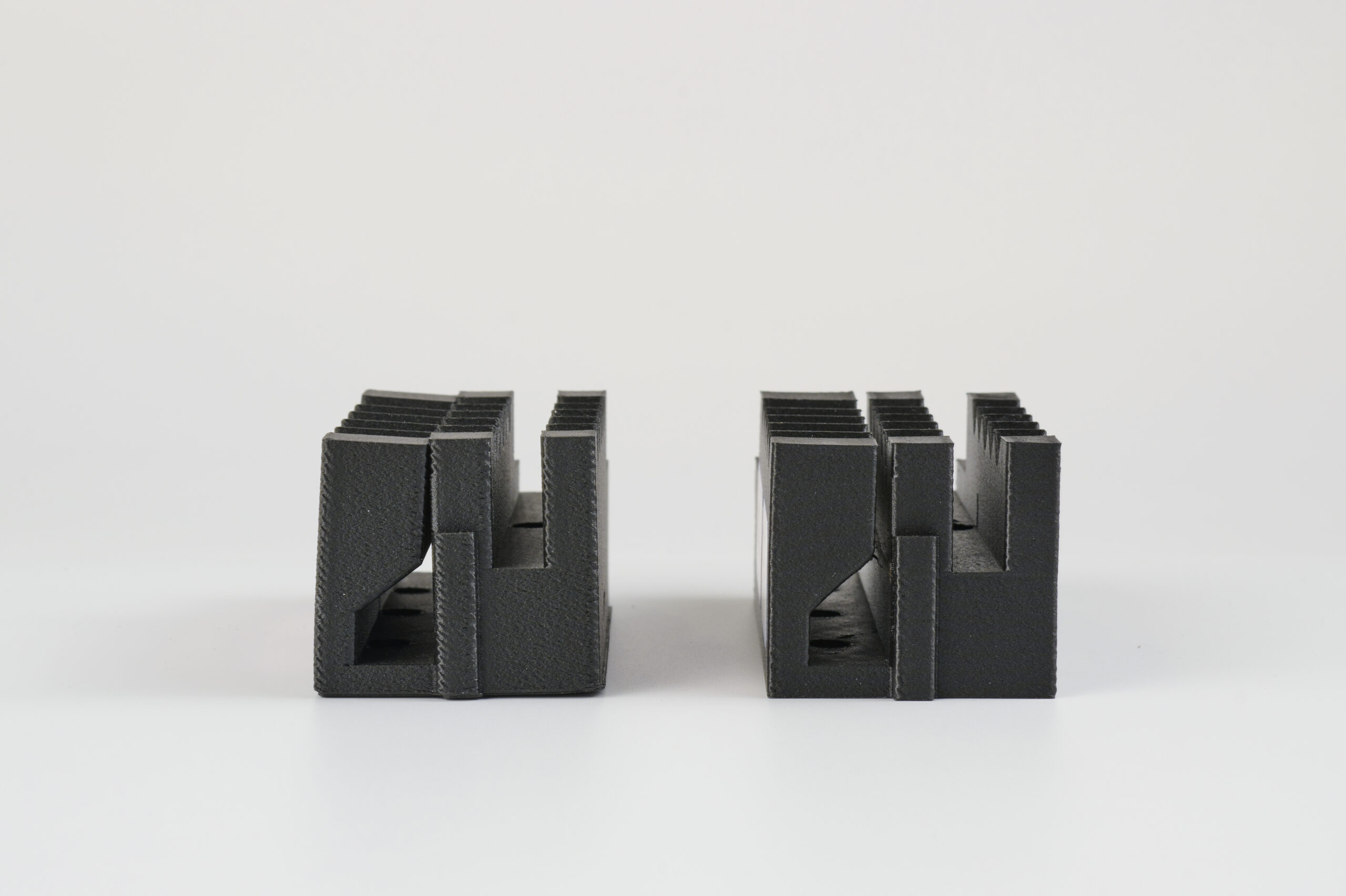
Fiber filled engineering part part before (left) and after (right) optimization with warping reduction.
As part of the Dragon integration launch, all BambuStudio users with H-Series and X-Series printers will receive 25 free simulations per month. Plus, for use cases that are a little more demanding, users can upgrade to a $15/month subscription managed directly by Helio Additive. This will be available starting August 26th, and will make available up to 35 ‘one-click’ optimizations per month. To support these advanced simulation capabilities, data for this service is hosted on Helio’s servers.
Bambu users can activate Dragon by opening the latest version of BambuStudio and enabling Helio in the settings menu. You can also visit wiki.helioadditive.com.
Subscribe to Our Email Newsletter
Stay up-to-date on all the latest news from the 3D printing industry and receive information and offers from third party vendors.
Print Services
Upload your 3D Models and get them printed quickly and efficiently.













You May Also Like
AM Investment Strategies 2026 Sets the Stage for AMS 2027
AM Investment Strategies 2026 Nov. 5 · 12 p.m. ET · Free online event RESERVE YOUR SPOT ↗ A one-hour online discussion featuring some of the biggest names in 3D...
With Its Latest $200M Round, ICON May Be Running Away With the 3D Printed Construction Market
I used to view ICON, the Austin-based additive construction (AC) firm, as one of a handful of companies that could realistically consider itself the leader of the 3D printed construction...
How Should Businesses Build New Business? Dirk Simon Weighs In — Part 1
Dirk Simon had deep experience in materials and chemistry before joining the 3D printing industry. Instrumental in BASF and Farsoon’s market introduction, Dirk has spent a lot of time thinking...
3D Printing Services Near $2.5B as AM Market Shifts Beyond Hardware
The additive manufacturing market may be growing again, but one of the more interesting numbers behind that recovery has little to do with selling 3D printers. AM services generated nearly...