Life3D — Sending a Camera Up in a Weather Ballon in a 3D Printed Capsule


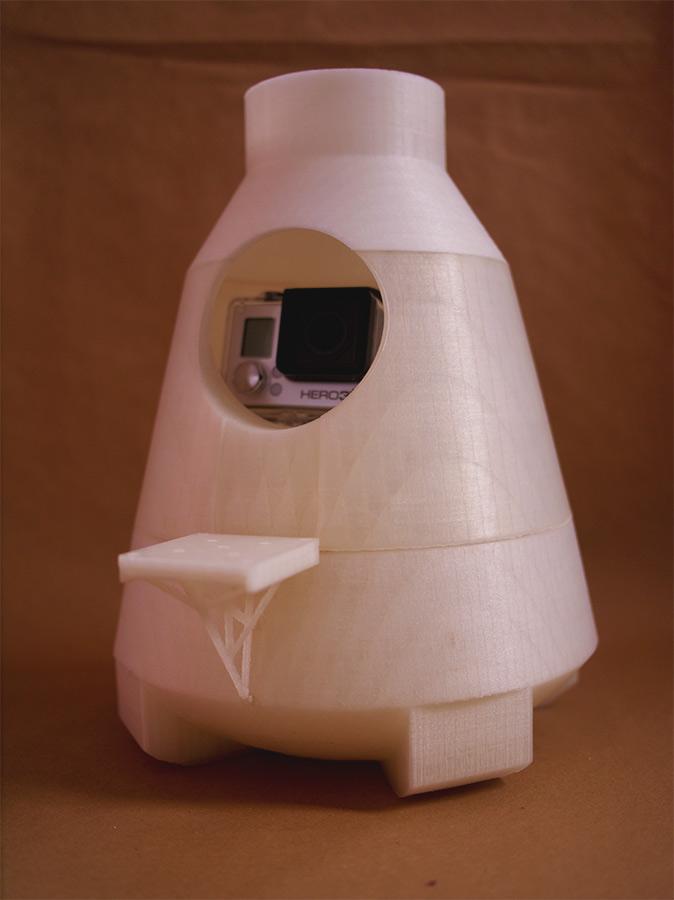
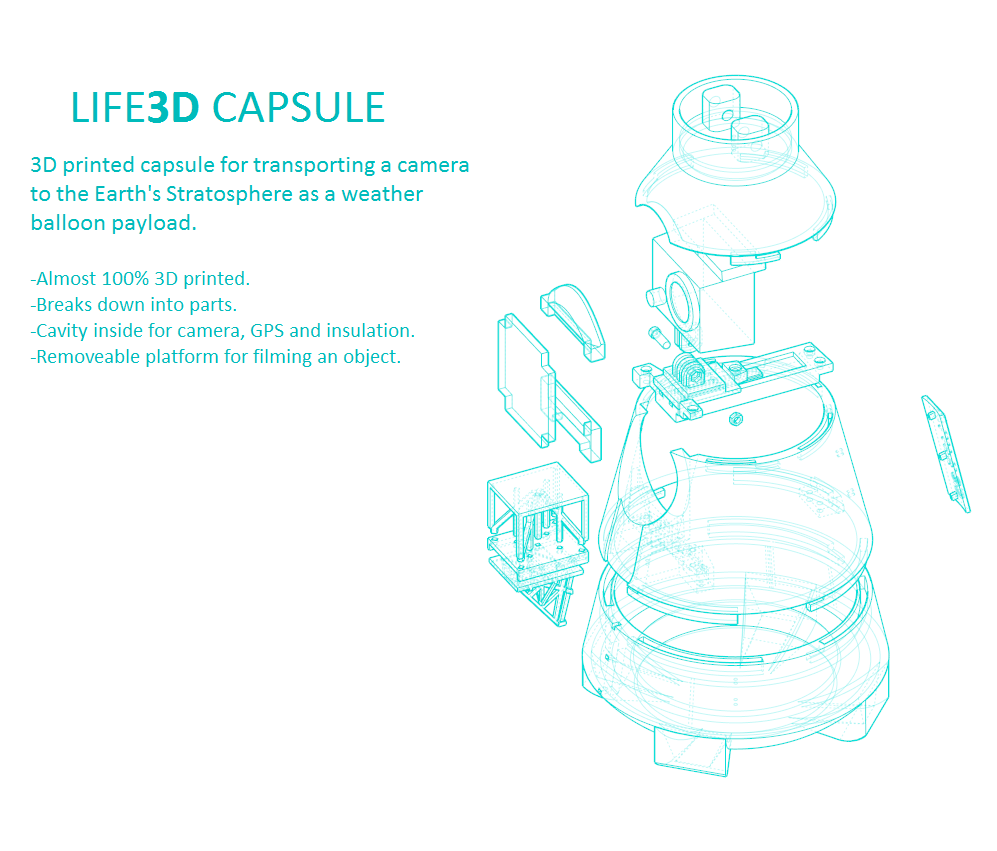
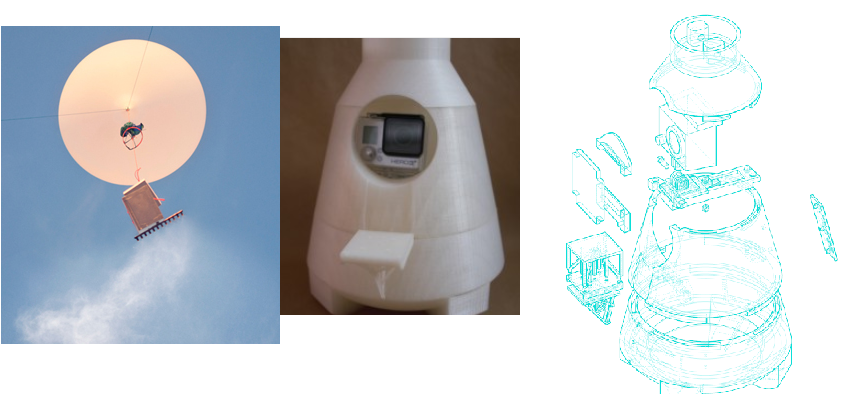
Life3D has released a design for a 3D printed capsule capable of carrying a camera as a payload attached to a weather balloon. All of this, of course, assumes that you have access to a weather balloon — which, until I read this article, I had always sort of assumed were the property of governments and evil geniuses, but apparently are quite readily available. The capsule is designed to hold what is known as an ‘action sized’ camera (such as the GoPro) and a GPS device (important if you ever want it back) and still has enough room to be insulated. Once assembled, the capsule is watertight and buoyant so it won’t simply disappear to a muddy depth if it lands on the water.
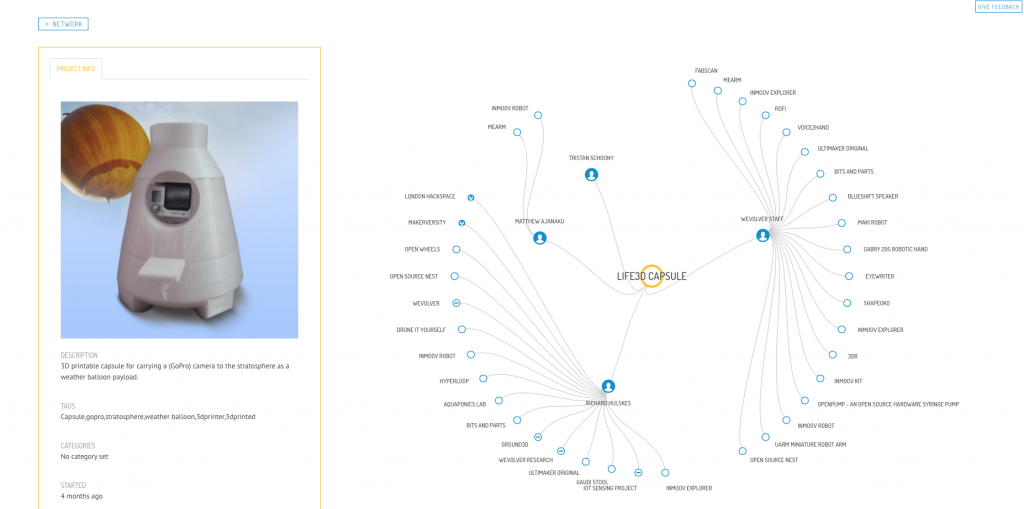
 Life3D is a business dedicated to the application of scanning technology to anything that will sit still long enough to be scanned from sculpture to movie stars. Their work is based in Elstree Studios, near London, in the UK and they are the sister company to Lifecast.
The designer of the capsule is Life3D’s Director, Tristan Schoonraad, who is based on London and lists his profession as ‘work in the movie industry.’ Schoonraad brings two decades of experience in the film industry in the area of special effects, make-up, and props in a number of high profile films. He has cast and molded everything from humans to monsters and is an acclaimed artist who goes by the name ‘Schoony’ in that persona.
On Wevolver, a website almost too cool to understand, you can either download the capsule’s STL files for your own printer. You can also have Shapeways print the pieces for you. Then, all you need to do is check with your local regulations regarding the launching of weather balloons and, assuming the regulations aren’t in the nature of ‘never launch a weather balloon’ you are all set to begin your high altitude film making.
 To understand the history of high-altitude photography, you can reflect on the experience of MIT students Justin Lee and Oliver Yeh who wanted to launch a camera that they had stuffed into a cooler and tied to a helium balloon. They launched their hopes into the air, with the approval of the FAA of course, and tracked it with a GPS-enabled cell phone. The balloon popped at 90,000 feet but not before it captured a number of amazing photographs and travelled over 20 miles away from the launch site. All this for only $150 but, I have to admit, the 3D printed capsule does feel a lot more sophisticated than a cooler.
Are you interested in this sort of project? Let us know if you think Life3D’s capsule is a good way of launching this idea over at the Life3D Weather Balloon Photography forum thread at 3DPB.com.
Subscribe to Our Email Newsletter
Stay up-to-date on all the latest news from the 3D printing industry and receive information and offers from third party vendors.
Print Services
Upload your 3D Models and get them printed quickly and efficiently.













You May Also Like
50,000 Orders and Counting: EPlus3D & Chinese AM Services Provider Are Scaling Liquid Cooling Solutions for AI Servers
An under-appreciated story driving the additive manufacturing (AM) industry this year has been the divergence between what’s driving the market in China and what’s driving it everywhere else. Let’s start...
Seven Trends Reveal What’s Next for 3D Printing at TCT Shenzhen 2026
TCT Shenzhen 2026 opened on October 14 in Hall 15 of the Shenzhen World Exhibition & Convention Center in Bao’an, and ran through October 16. The event brought together equipment...
With Increased Aerospace & Defense Focus, CORE Industrial Partners Buys More Manufacturing Firms
Private equity’s march into manufacturing continues with CORE Industrial Partners’ latest acquisitions. CORE purchased Fathom a few years ago, and later bought 3DXTECH LLC, Triton 3D LLC, and Gearbox3D. It...
Can India’s AM Push Help Make it a Viable Supplement to China?
Diversifying manufacturing supply chains to locales outside of China has nothing to do with actually cultivating “substitutes” to the Chinese economy. The real stakes are these: China is an irreplaceable...