3D Printing Financials: AML3D and Titomic Bet Big on U.S. Growth

Australia’s leading metal 3D printing companies, AML3D and Titomic, are expanding fast, but their financial results show different paths. AML3D (ASX: AL3) delivered a 206% revenue increase, crossing the AUD 4.6 million ($2.9 million) mark for the first half of the fiscal year 2025, which ended on December 31, 2024. Meanwhile, Titomic (ASX: TTT) also saw strong momentum for the same period, securing over AUD 30 million ($18.6 million) in capital to drive its U.S. expansion, and its revenue of AUD 3.7 million ($2.3 million) represented a 61% year-over-year growth.
Both companies are looking to the U.S. defense sector for growth. AML3D is progressing with its ARCEMY metal 3D printers, while Titomic focuses on cold spray technology to stand out. With investments, strategic partnerships, and evolving business models, these two Australian players intend to be at the forefront of global additive manufacturing (AM).
AML3D’s Revenue Surge
AML3D has been growing fast, moving from making large metal parts to selling and leasing its ARCEMY 3D printers. The result was a big jump in revenue, from AUD 1.5 million ($930.997) last half-year to AUD 4.63 million ($2.9 million). But the real highlight is that 80% of that revenue came from U.S. customers, proving that its push into the American market is paying off.
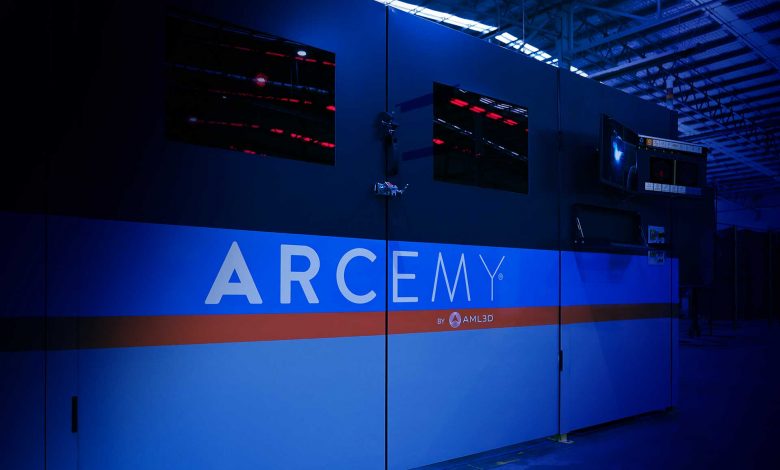
AML3D Arcemy printer. Image courtesy of AML3D
Several big deals fueled this growth. AML3D secured a $2.27 million contract with the Tennessee Valley Authority (TVA), the largest U.S. public utility, to help repair power plants. It also partnered with the BlueForge Alliance, which supports advanced manufacturing for the U.S. Navy‘s submarine program. On top of that, the company sold an AUD 1.1 million ($682.731) ARCEMY system to Laser Welding Solutions, a U.S. Navy supplier, and delivered two more leased systems.
AML3D has doubled its U.S. presence to keep up with demand, investing $12 million in scale manufacturing and establishing a second site for ARCEMY system production. This move helps the company pursue valuable defense contracts that must follow U.S. regulations, including ITAR (International Traffic in Arms Regulations).
Despite its record-breaking revenue, AML3D still posted a net loss of AUD 3 million, representing a 12% improvement compared to last year’s AUD 3.42 million ($1.9 million) loss. However, with an extremely strong cash position of AUD 32 million ($19.9 million), thanks to a major capital raise, AML3D is ready to continue its expansion in the U.S. and Europe, where it plans to establish a technology center in 2025.
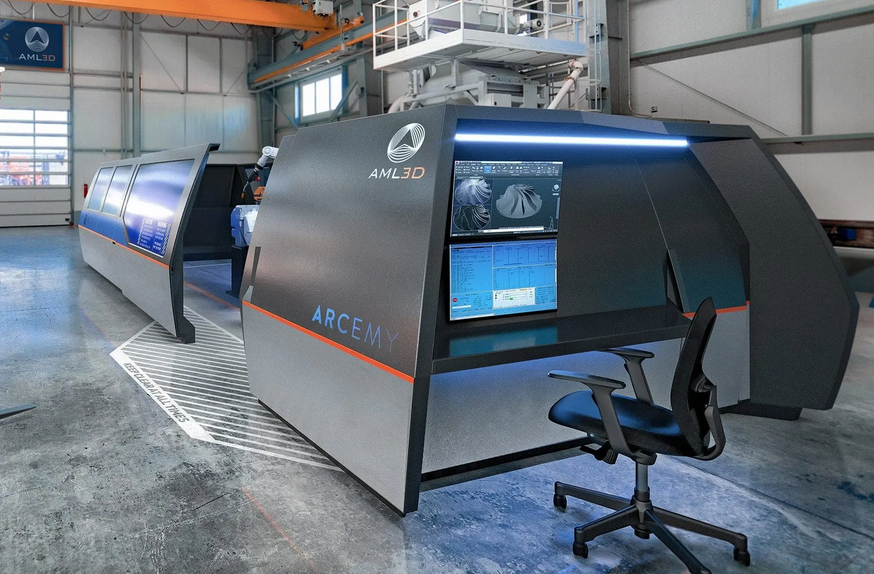
The large-scale ARCEMY WAAM 3D printer from AML3D. Image courtesy of AML3D
Titomic’s Cold Spray Ambitions
While AML3D’s ARCEMY systems dominate the wire-arc additive manufacturing space, Titomic is betting on cold spray technology, which allows high-speed deposition of metal powders without melting them. The company’s half-year results show strong revenue growth of 61% year-over-year, reaching AUD 3.7 million. What’s more, Titomic secured a crucial foothold in the U.S. by establishing its headquarters in Huntsville, Alabama.
With an AUD 30 million capital raise fueling its expansion, Titomic is making big moves. The company secured $577,000 in aerospace and defense purchase orders, with total project orders surpassing AUD 1 million ($620.665). Among its high-profile deals are collaborations with the U.S. Navy’s Naval Sea Systems Command (NAVSEA), the University of North Texas, and hydraulic solutions provider Hydraulex. Titomic is also helping set new cold spray manufacturing standards for aerospace and the oil and gas industries, showing its long-term goals.
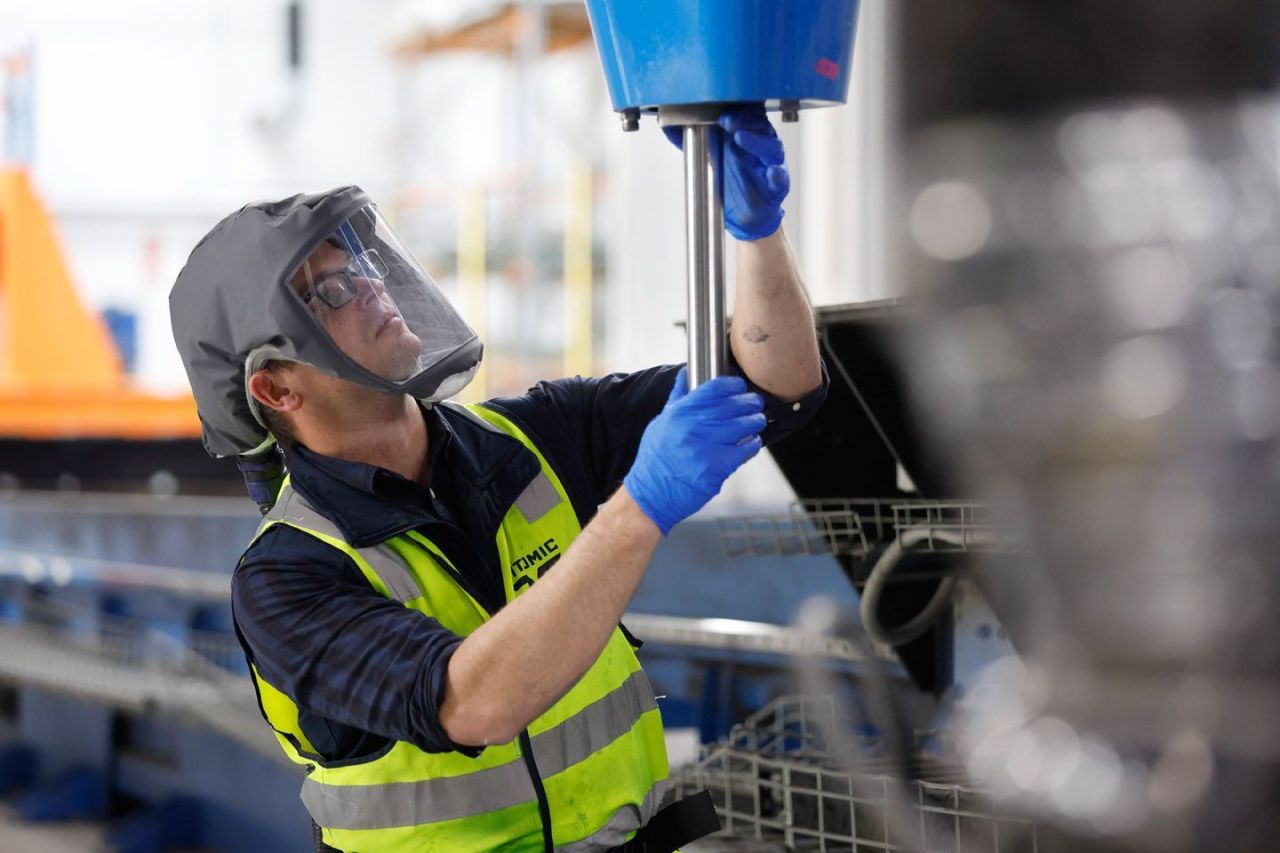
Titomic’s cold spray technology. Image courtesy of Titomic.
Titomic is shifting from just selling equipment to offering ongoing services, creating a steady revenue stream instead of relying on one-time sales, explains CEO Jim Simpson. The executive has also noted that 2025 will be a transformational year for the company, focusing on direct sales, industrial sustainment, and deeper engagement with defense primes.
Titomic’s new leadership marks a fresh start. The company appointed industry veterans, including Dr. Patricia Dare—who has over thirty years of experience in the defense industry with roles at Raytheon, Boeing, Lockheed Martin, and Honeywell International—as President of U.S. operations and Sarah Neeley—who has held significant positions at Boeing and Raytheon Technologies—as Chief Operating Officer.
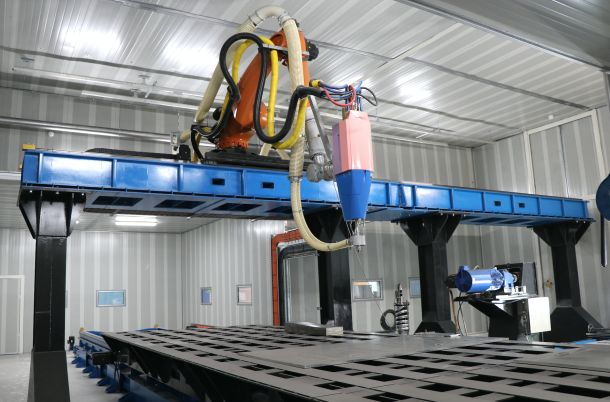
Titomic’s cold spray machines. Image courtesy of Titomic.
Both AML3D and Titomic have secured major funding rounds, strategically positioned themselves within the U.S. defense sector, and are rapidly expanding their manufacturing capabilities. Now, they’re aiming to compete on the global stage, proving that Australian 3D printing technology can stand alongside the world’s best.
Subscribe to Our Email Newsletter
Stay up-to-date on all the latest news from the 3D printing industry and receive information and offers from third party vendors.
Print Services
Upload your 3D Models and get them printed quickly and efficiently.













You May Also Like
EOS Joins the MAT‑H2 Consortium
EOS is joining the MAT‑H2 consortium. MAT is an EU-funded group that aims to do research into a hydrogen-led economy. The thinking is that hydrogen will be a clean energy...
Where the Money is Going, Part Two: Why All Roads Lead to AI
In Part One of this article, Vanesa Listek expertly described the major themes driving infrastructure investment so far this decade, illustrating how the same concerns are driving both public and...
DTU 3D Prints New Fuel Cell Design With 5x Power Boost
Technical University of Denmark (DTU) researchers have used Lithoz ceramics 3D printing to make more efficient hydrogen fuel cells. With a part made from Lithoz Yttria Fully Stabilized Zirconia (8YSZ),...
Fraunhofer ILT Tests 3D Printed Titanium Reactors to Generate Hydrogen Onboard Heavy Vehicles
The Aachen-based Fraunhofer Institute for Laser Technology (Fraunhofer ILT) is to research titanium aluminide hydrogen reactors and heat exchangers. The hope is that lightweight, better-performing 3D printed components will make...