OPPO Find N5: World’s Thinnest Foldable Smartphone Hinges on 3D Printed Hinges

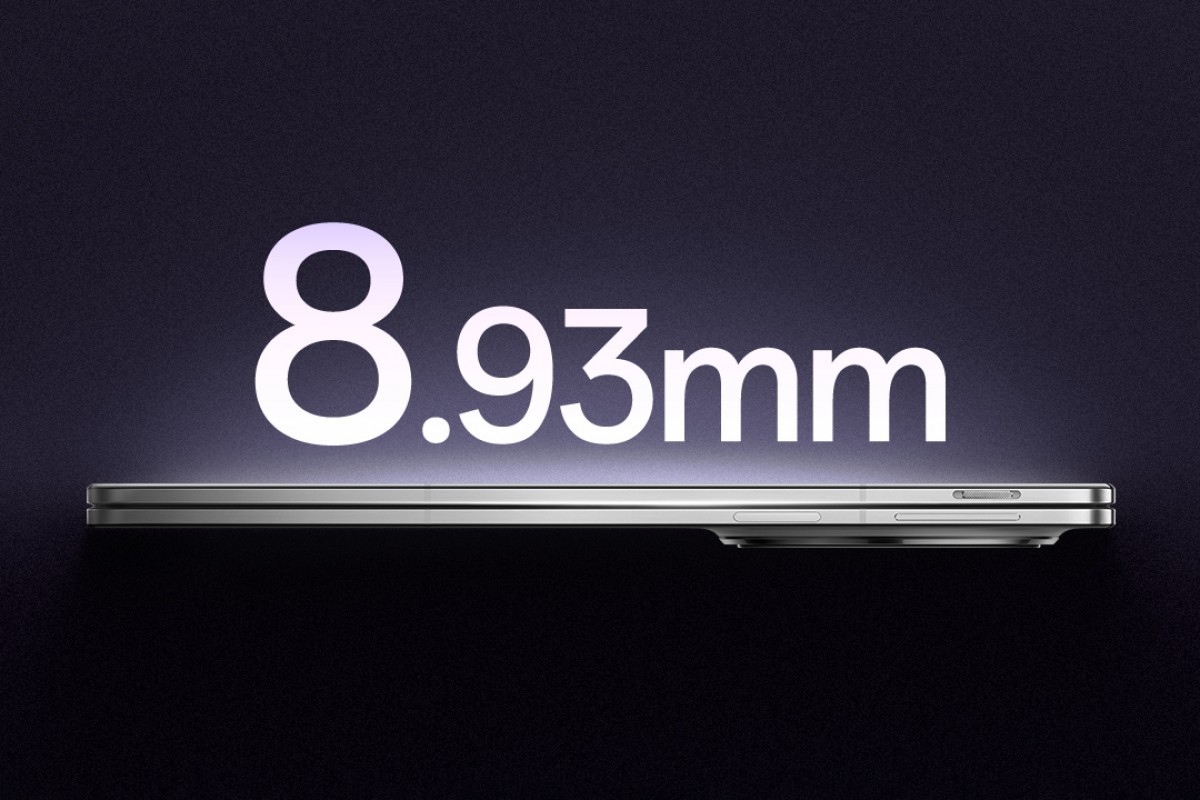
OPPO has unveiled its latest foldable smartphone, the Find N5, demonstrating a significant step forward in the ongoing push for slimmer, more durable foldable devices. With a folded thickness of 8.93mm and an unfolded profile of just 4.21mm, the Find N5 now stands as the slimmest book-style foldable smartphone on the market. A key contributor to this achievement is OPPO’s implementation of a 3D-printed titanium hinge, a sign of an emerging trend in the use of 3D printed hinges in the consumer electronics sector.
3D Printing a Foldable Hinge
The Find N5’s Titanium Flexion Hinge is 26% smaller than its predecessor, contributing to a more compact and lightweight design while maintaining structural rigidity. OPPO utilized a 3D-printed titanium wing panel in conjunction with carbon fiber elements to reduce weight, allowing the device to come in at just 229 grams.

A rendering of the hinge mechanics.
This move follows the earlier adoption of 3D printing in foldable smartphones by Honor, which used metal powder bed fusion (PBF) technology to manufacture titanium hinges for its Magic V2 and V3 models. Honor’s approach leveraged 3D printing to achieve a 9.9mm folded thickness in the Magic V2 while maintaining high durability, with the hinge capable of withstanding 400,000 folding cycles. The use of titanium in both OPPO and Honor’s devices highlights the material’s strength-to-weight advantages, though OPPO has further reduced the hinge’s component count from 92 parts to just four, showcasing an advantage that only additive manufacturing (AM) can offer.
AM’s Expanding Presence in Consumer Electronics
OPPO’s use of 3D printing for its foldable hinge is part of a broader trend in consumer electronics manufacturing. Apple has also begun incorporating 3D-printed metal components into its devices, with reports indicating that the Apple Watch Series 10 will feature 3D-printed titanium parts manufactured by Bright Laser Technologies (BLT). Beyond hinges and smartwatch components, Apple is also reportedly testing the use of binder jetting to 3D print the steel chassis of future smartwatches. While details remain scarce, speculation suggests Apple may be working with HP’s Metal Jet S100 or another major binder jetting provider.

The OPPO Find N5.
As discussed in “The State of Chinese Additive Manufacturing: Market Opportunity Brief” from AM Research, the Chinese 3D printing sector is more publicly focused on electronics than those outside of the country. This is in large part due to the historic role of China in electronics manufacturing, but there may also be a level of secrecy around the market for Western firms to maintain a competitive advantage.
With this in mind, it is possible that electronics outside of China have 3D-printed components, like hinges, but that the companies are not letting on. Meanwhile, Chinese manufacturers are publicly advertising the use of 3D printing because the practice is openly acknowledged there. The OPPO Find N5 is set to debut in China first, followed by a phased rollout in select global markets. Pricing is expected to range between $1,499 and $1,799, depending on the configuration.
All images courtesy of OPPO.
Subscribe to Our Email Newsletter
Stay up-to-date on all the latest news from the 3D printing industry and receive information and offers from third party vendors.
Print Services
Upload your 3D Models and get them printed quickly and efficiently.













You May Also Like
The Money Behind AM: What to Watch at AM Investment Strategies 2026
For years, simply being a 3D printing company could attract attention from investors. New machines, new materials, faster speeds, and the promise of mass production were often enough to get...
Metal AM in a Multipolar World: Resilience, Regional Production and a Changing Market
Technology develops in response to forces driving change. That was the starting point for a keynote I presented with Mikael Schuisky at AM Meetup 2026, held in Karlstad, Sweden, on...
EOS Bets on Mexico’s AM Market with Axiomatek Sales Channel Deal
Mexico is one of the biggest beneficiaries of the push to diversify manufacturing out of China. This development is perhaps inevitable given the current global trade environment, but even with...
3D Printing Market Hits $4.48B After Six Straight Quarters of Growth
The additive manufacturing market continued to grow in the second quarter of 2026, adding another quarter to what is becoming a much more consistent expansion for the industry. Worldwide revenue...