
ICON Secures $56M Amid Construction 3D Printing Sector’s Growing Pains

ICON, probably the most well-known firm in the additive construction (AC) sector, has secured $56 million in Series C funding, with investment led by Norwest Venture Partners and Tiger Global. The company plans to raise up to $75 million in additional funding. The investment marks the latest infusion of capital into the Austin-based company, which has raised over $500 million to date. However, ICON has not disclosed its new valuation.
The funding will primarily support the development of Phoenix, ICON’s line of multi-story 3D printers, which the company aims to put into the hands of builders. According to an ICON spokesperson, the new printer incorporates a low-carbon building material, aligning with the company’s ongoing emphasis on sustainability. Despite this shift toward scaling its robotic construction platform, ICON will continue to build homes directly for a range of projects, including residential, hospitality, affordable housing, and military applications.
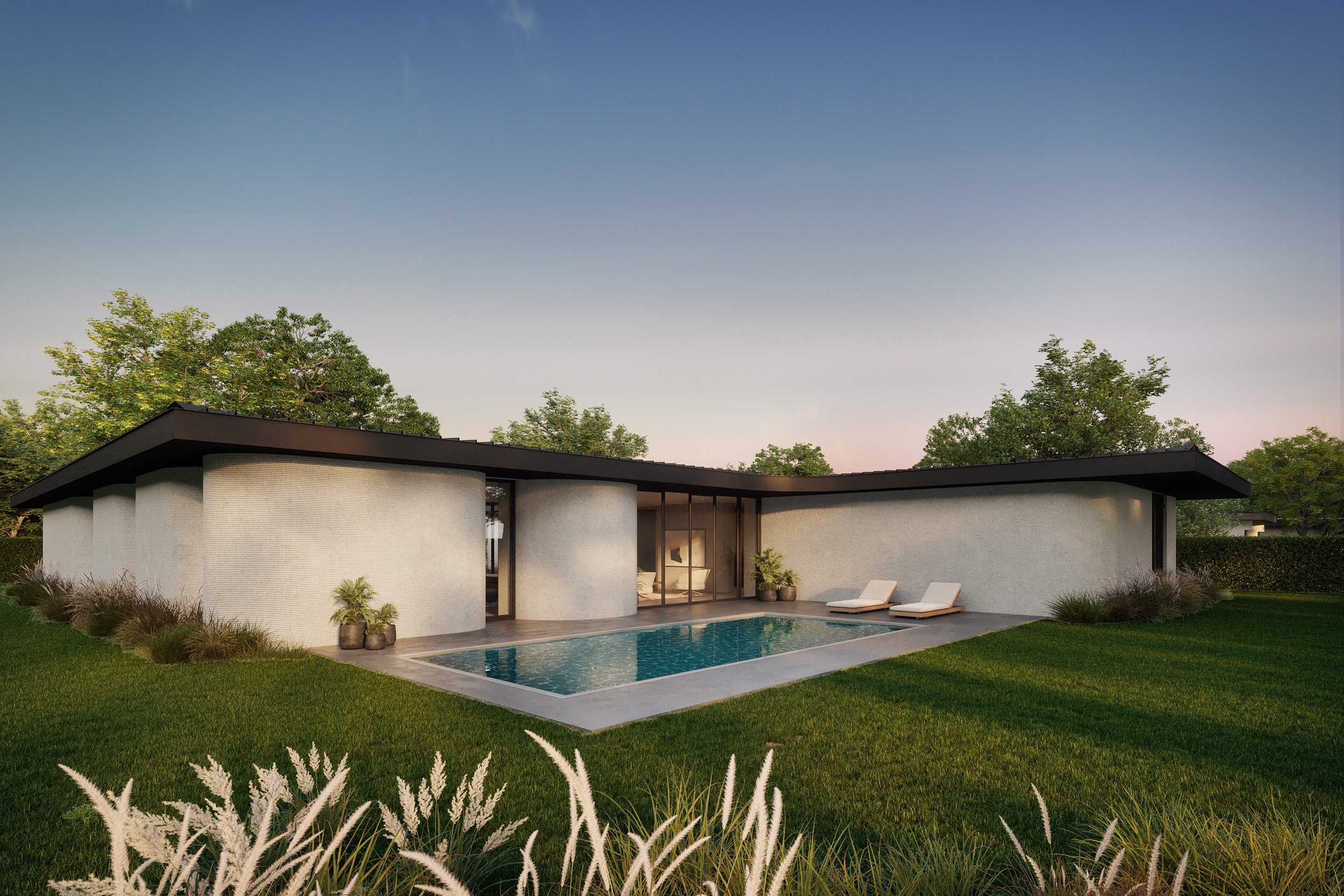
A rendering of an ICON home in Wimberly Springs
The funding round follows a recent announcement of a workforce reduction at ICON. In January 2025, the company said that it would lay off 114 employees by March 8, constituting approximately 25% of its workforce. The layoffs were framed as a strategic realignment to focus on key growth priorities. Prior to this reduction, ICON reportedly had fewer than 400 employees.
ICON’s trajectory in the AC market has been characterized by both technical advancements and strategic shifts. Since its launch at SXSW in 2018, the company has developed 3D-printed structures for various markets, including disaster relief housing, social housing, and military structures. ICON has also expanded into market-rate housing, collaborating with homebuilders such as Lennar on large-scale developments.
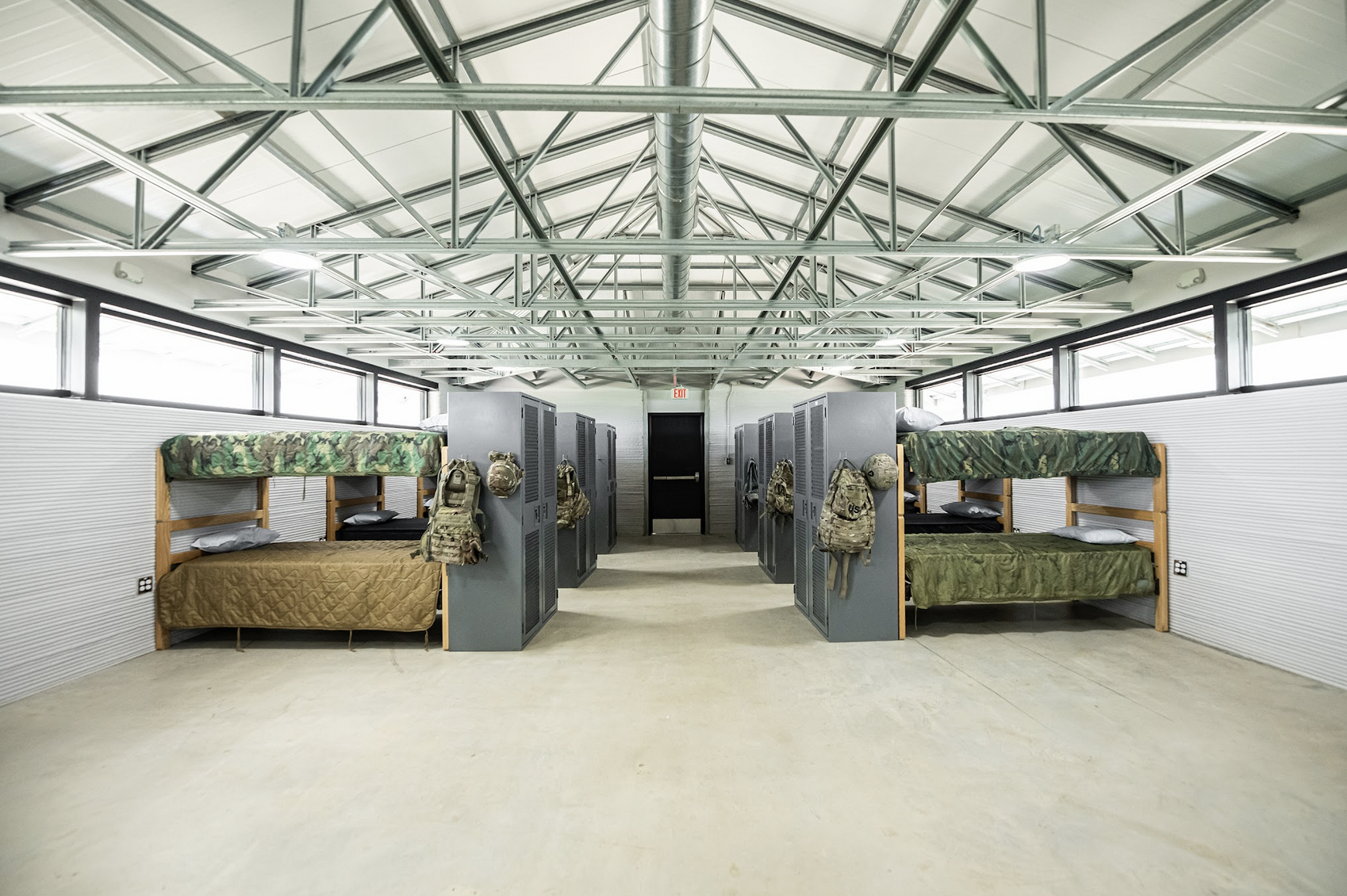
Inside ICON’s 3D printed military barracks for the Texas Military Department. Image courtesy of ICON.
One of its more recent projects, Wimberley Springs, involves the construction of a neighborhood of 3D-printed homes in Texas. The first completed house in the development is a 4,115-square-foot, four-bedroom home, constructed in five months, half the time typically required for traditional builds in the region, according to ICON. The house was built using CarbonX, the company’s proprietary low-carbon cementitious material, which it claims offers improved energy efficiency.
ICON’s latest funding round comes financial woes in the AC sector. Mighty Buildings, another startup darling in the space, announced in January 2025 that it is seeking a buyer. The company, which has a novel process for 3D printing walls using an ultraviolet curing process, is working with Rock Creek Advisors to facilitate the sale. Mighty Buildings’ restructuring resulted in layoffs across multiple departments, highlighting the financial challenges AC firms face despite the sector’s promise.
Other companies in the space have faced similar struggles. Diamond Age, an Arizona-based startup that was developing robotic homebuilding technology, has entered liquidation. This comes despite Diamond Age’s prior partnership with Century Communities, a major homebuilder.
There is no doubt about the value of construction 3D printing, though the nature of that value might not yet be clear. So, as with the gloom associated with the broader additive manufacturing sector, the financial struggles of AC don’t reflect the technology itself or its potential. Unfortunately, the niche has been subject to the same macroeconomic situation as everything else and, because it is such a small niche, suffered more than more mature areas.
Because of the firm’s recent and previous layoffs, we can likely assume that the investment was an essential one to keep the company going. As impressive as the completion of an entire 3D printed community might be, ICON may be finding that its current model as a builder isn’t enough to generate revenues. In turn, it’s hoping that selling hardware could be the best way to go. Additionally, ICON has a very powerful customer in the Department of Defense who may not wish to see the startup disappear so soon.
Subscribe to Our Email Newsletter
Stay up-to-date on all the latest news from the 3D printing industry and receive information and offers from third party vendors.
Print Services
Upload your 3D Models and get them printed quickly and efficiently.













You May Also Like
South Korea’s Lincsolution Lands Hanwha Defense Deal as Hanwha Invests Billions in US
I recently wrote about how the South Korean additive manufacturing (AM) firm Lincsolution is building an aerospace and defense hub, part of the company’s construction of “the largest AM facility in...
Bambu Lab and SUSAN FANG 3D Print for London Fashion Week
At London Fashion Week, some of the more unusual pieces on the runway came from 3D printers. Chinese fashion designer SUSAN FANG presented her Spring/Summer 2027 Air-Illusion collection at the...
Why Cross-Border 3D Printing Is Closing the Speed Gap with Local Manufacturing
The fastest 3D printing supplier in your shortlist may no longer be the one closest to your office. That sounds unlikely to many engineers. For years, overseas 3D printing carried...
Arridex Expands 3D Printing Network to Ghana
Nigeria-based Arridex has deep experience in oil and gas additive manufacturing. Previously known as RusselSmith, the firm has in-house metal and polymer additive technology. The company is making 3D printed...























































