Nikon SLM Hits 1000th 3D Printer Milestone with Bosch Purchase

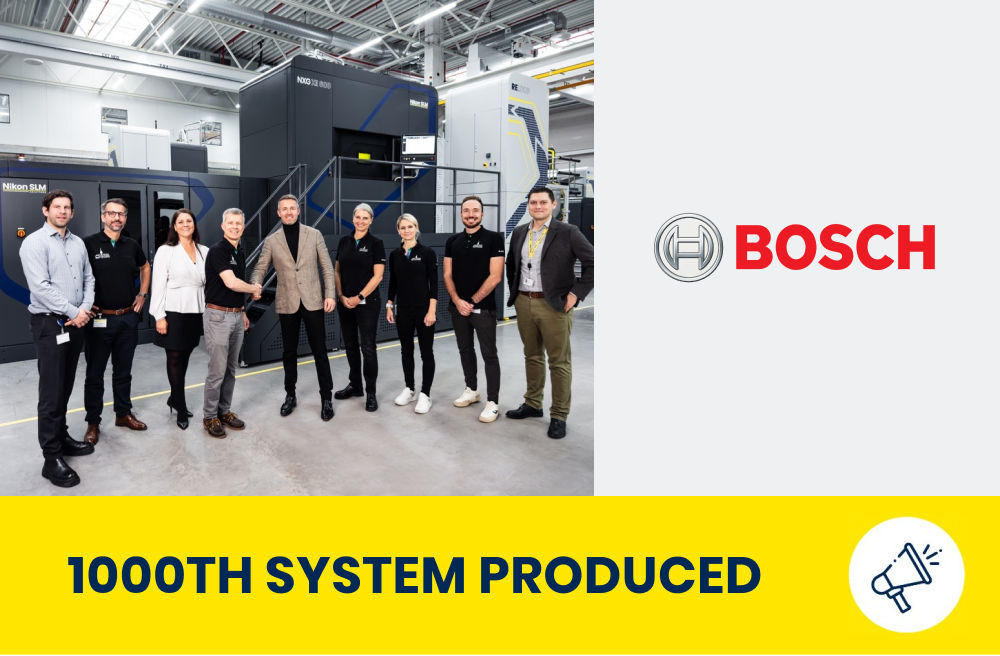
Nikon SLM Solutions has reached a significant milestone with the production of its 1000th NXG XII 600 system, among the most productive metal additive manufacturing (AM) systems in the industry. The printer, known for its 12-laser configuration and large build volume, has been acquired by Robert Bosch GmbH, a long-standing collaborator in additive technology.
Bosch will deploy the NXG XII 600 alongside other SLM Solutions machines at its 3D-Printing Manufacturing and Processing Center in Nuremberg, Germany. The center focuses on AM for prototyping and serial production, particularly in powertrain technology, hydrogen, and electric drive components. Interestingly, Bosch is also working with electric motor 3D printing startup Additive Drives. The NXG XII 600 will serve to enhance the center’s production capacity, supporting Bosch’s ambitions to lead in the development of critical automotive parts for emerging technologies.
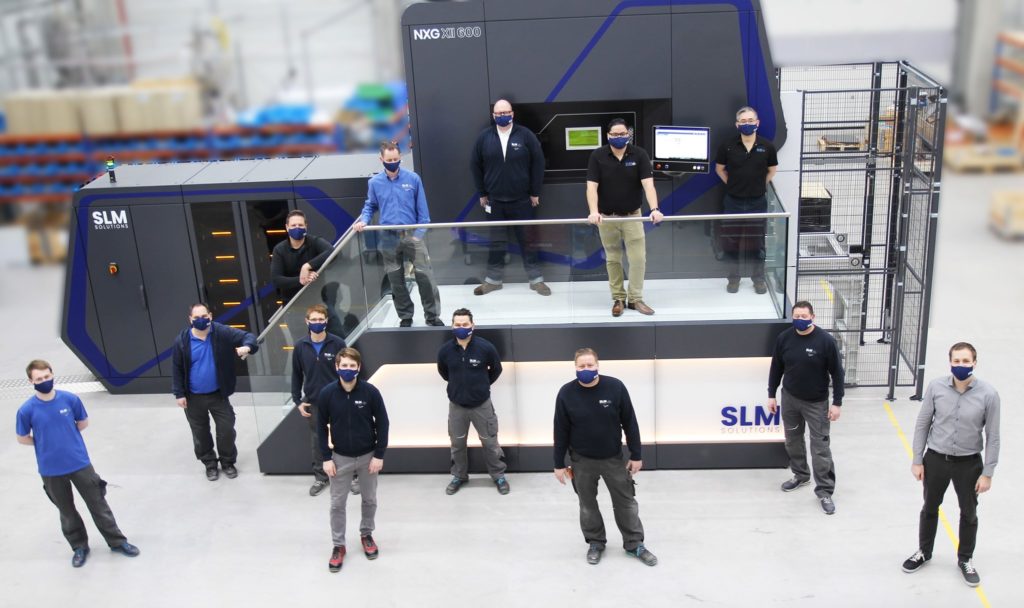
SLM Solutions’ NXG XII 600 system. Image courtesy of SLM Solutions.
The NXG XII 600, featuring a 12-laser setup, is designed to accelerate production times while maintaining high precision, especially with difficult materials like aluminum alloys. The system includes advanced features such as an exchangeable build cylinder to minimize downtime and a closed-loop powder handling system for greater safety and material efficiency. These capabilities make it ideal for Bosch’s requirements, which prioritize both performance and efficiency in a high-demand manufacturing environment.
Nikon SLM Solutions CEO Sam O’Leary commented on the milestone, saying, “We’re honored to celebrate our 1000th system milestone with Bosch, a partner that truly understands the transformative power of additive manufacturing. The NXG XII 600 is crafted for high-output production, and we are excited to see how Bosch will leverage this technology to advance automotive innovation.”
The purchase complements the German giant’s work in the polymer space, which includes investments into ARRIS Composites’ unique carbon fiber reinforcement technology, as well as the development of its own pellet 3D printer. Of course, these activities in the additive space aren’t necessarily related to one another, as Bosch is a roughly $93.1 billion company with diverse activities across a number of business units. However, the synergy between divisions may allow AM expertise and adoption to spill over into one another.
Perhaps most importantly, the adoption of Nikon SLM’s most productive machine signals the fact that Bosch may be moving into serial production of metal parts for automotive applications. If that’s the case, we may not hear about it for some time, but because the company works with a number of OEMs, we may assume 3D printed metal parts may wind up Volkswagen, Daimler, or Fiat Chrysler vehicles.
Subscribe to Our Email Newsletter
Stay up-to-date on all the latest news from the 3D printing industry and receive information and offers from third party vendors.
Print Services
Upload your 3D Models and get them printed quickly and efficiently.













You May Also Like
3D Printing News Briefs, October 10, 2026: Drones, WAAM, Ceramics, & More
We have a packed 3D Printing News Briefs for you this weekend! First, America Makes celebrated the recent National Manufacturing Day with 3D printed drones, and then it’s on to...
10 Years of Multi Jet Fusion: Onsite at HP’s Vancouver, Washington Facility
At this year’s RAPID event in Boston, HP Additive Manufacturing Solutions celebrated ten years in the additive manufacturing (AM) market. The company ushered in the milestone with several innovations, including...
PharmaTher Plans U.S. Network to 3D Print Medicines on Demand
3D printing medicines has often been tied to the idea of personalization, basically making a pill in the right dose, shape, or drug combination for a patient. PharmaTher is now...
3D Printing News Briefs, September 17, 2026: 3D Printed Boat, UAS Development, & More
We’ll start with maritime manufacturing in this week’s 3D Printing News Briefs, and continue on to defense 3D printing. We’ll end with funding for Tripo AI. Read on for all...