WIMBA Opens New In-House 3D Printing Facility to Accelerate Pet Orthotics & Prosthetics


Polish startup WIMBA, which uses artificial intelligence (AI), 3D scanning, and HP’s Multi Jet Fusion 3D printing to create custom, lightweight pet prosthetics and orthotics, has helped over 700 pets in 25 countries regain their mobility since it launched in 2022. Now, the company has announced that it’s opened a new in-house 3D printing facility in its Kraków headquarters, in order to speed up the process of creating and delivering its custom pet devices around the world.
“Opening our own printing facility marks a new chapter in our journey to becoming the global leader in pet orthotic and prosthetic solutions. This development elevates our ability to deliver superior quality products and underscores our commitment to industry-leading innovation,” said WIMBA Co-Founder and COO Franek Kosch.

According to Fortune Business Insights, there about 600 million dogs and 600 million cats in the world’s developed countries. Pet adoption is up, thanks to factors like increased incomes, changing demographics, and the COVID-19 pandemic. My husband and I are certainly doing our part, as we recently adopted a new dog to add to our family, which already consisted of three cats and another dog. Up to 40% of dogs, and 25% of cats, will need orthopedic care at some point. So it shouldn’t come as a shock that the $235 billion global pet market is estimated to reach $360 billion by the year 2030, with veterinary orthopedics alone at nearly $20 billion. Wimba saw a need for quality, customized pet orthotics, and has been working hard to fill it.


The startup’s strategic investment into its new facility will bring production in-house, thus enabling a much faster turnaround time of just 10 working days for its custom orthotics and prosthetics. Having onsite 3D printers will also allow WIMBA to improve its already excellent quality, and deliver more tailored mobility outcomes for pets. In addition, the new 3D printing facility will allow the startup to innovate even further by researching new materials and coming up with better, more precise designs.
In-house 3D printing of its veterinary medical devices also means that WIMBA can ensure excellent quality control throughout the workflow.
“With full control over the manufacturing process, we are able to uphold the highest standards for every orthotic and prosthetic, giving pets the best possible care. Our new facility speeds up production significantly, reducing waiting times for pets that need immediate support,” explained Greg Kosch, CEO and Co-Founder of WIMBA. “With in-house production processes—including printing, cooling, and sandblasting—we’re able to deliver most standard orthotics within just 10 working days. From the moment the order is placed via WimbaAPP to the moment it reaches the clinic. It also enables us to keep innovating—exploring new materials and refining our designs to better serve pets and veterinary professionals worldwide.”
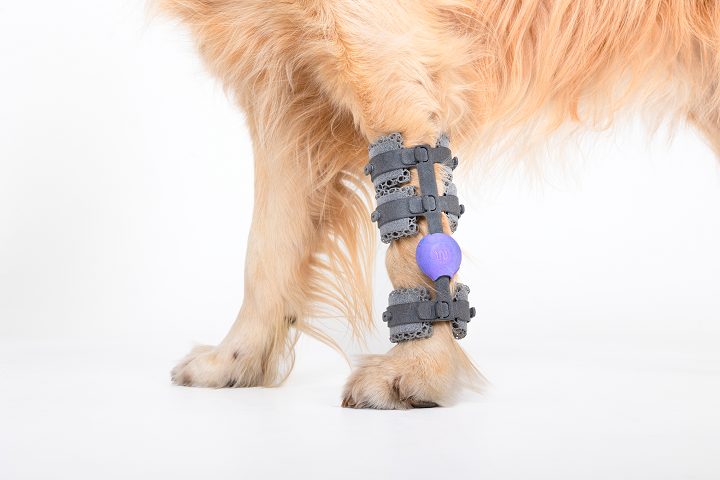

WIMBA already has a pretty good thing going. The WimbaSCAN process uses a smartphone to measure its canine clients in just 15 seconds, which reduces discomfort for pets. By using HP’s MJF technology, WIMBA can print durable, ultra-lightweight, and waterproof pet orthotics. Orthotic mobility is modulated with WimbaTHERAPY, which adjusts the flexibility based on a dog’s specific rehabilitation needs. Finally, the WimbaAPP streamlines the process of data collection and ordering. But opening this new 3D printing facility will improve the startup’s product even further.
Subscribe to Our Email Newsletter
Stay up-to-date on all the latest news from the 3D printing industry and receive information and offers from third party vendors.
Print Services
Upload your 3D Models and get them printed quickly and efficiently.












You May Also Like
Jeff Graves Seeks New 3D Systems CEO, The Company at a Crossroads
Jeff Graves is to step down as 3D Systems‘ CEO once a replacement has been found, the company has announced. He will then retire as CEO and as Director of...
Caracol to Build Large-Format 3D Printing Hub in Milan With Designtech & LAMÁQUINA
In the 1990 classic in economic strategy, The Competitive Advantage of Nations, business theorist Michael Porter wrote, “Most commentators on the Italian economy have persistently underestimated Italy, because they have...
Australian OEM AML3D Closes Record Year, Eyes $54M Global Sales Pipeline
The US Department of Defense (DoD) finally seems to be implementing a strategy it has spent years refining, centered on bringing its international allies and partners more into the fold...
Why Kyle Bass Is Betting on Divergent, and What It Says About the Future of Manufacturing
Kyle Bass has spent much of his career looking at big economic trends before everyone else does. The founder of Hayman Capital Management became famous for betting against the U.S....