DoD Awards $4.5M to Penn State for Ceramics 3D Printing R&D

The US Department of Defense (DoD) has awarded a $4.5 million Multidisciplinary University Research Initiative (MURI) grant to Penn State University (PSU) for R&D into additive manufacturing (AM) with high-performance ceramics. PSU will work on the project, “Photochemical and Photothermal [AM] of Preceramic Polymers”, with three other academic institutions: Michigan State University (MSU), the Massachusetts Institute of Technology (MIT), and the University of Southern California (USC).
The crux of the Office of Naval Research (ONR)-backed project is to develop methods for converting polymer precursors into ceramics with lasers, rather than via the conventional method of bulk heating. The research team believes that the laser method will waste less materials than existing techniques, while also yielding a material that is easier to work with, and speeding up the overall production process.
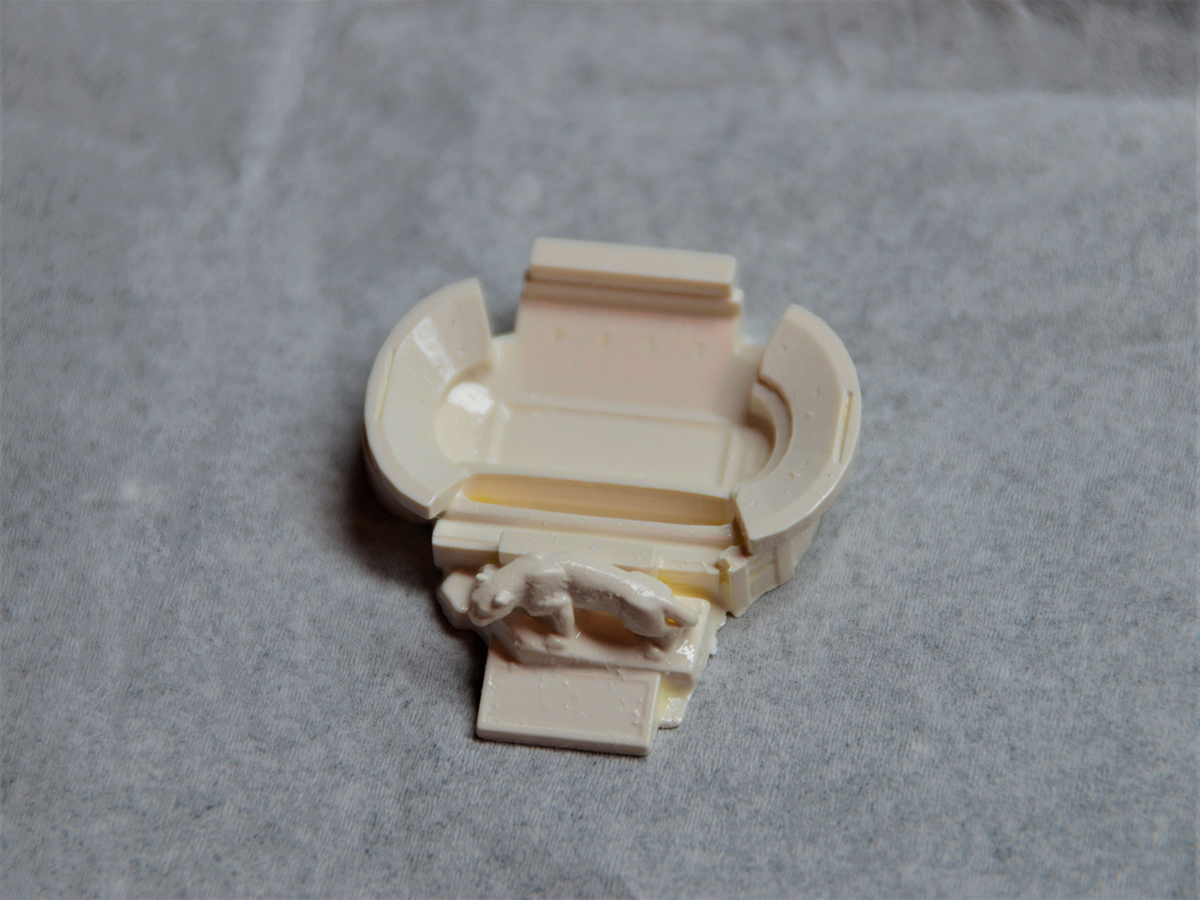
Print of PSU’s Lion Shrine and Beaver Stadium on Lithoz’s CeraFab ceramic 3D printer. Image courtesy of Jamie Oberdick/PSU
As is the case with a growing number of DoD-funded AM projects in recent years, the DoD’s interest in the PSU-led project lies in hypersonic applications. Thus, in addition to the Navy — which is likely most interested here in hypersonic weapons — the research should have implications for the aerospace and space sectors, as well.
In a press release, PSU associate professor of materials science and engineering Robert Hickey, one of the leads on the project, said, “The big problem currently in forming ceramics is the high temperatures and high energy required. That has been a detriment, especially for 3D printing, which is currently very hard to do precisely with these materials. There’s a major need to try to reduce the energy necessary to convert or make these ceramics and to prevent major geometry changes after printing and processing.
“…We will feed our initial results into our simulations, which can then predict new polymer precursors that will provide even better results. And so, this feedback loop where we’re being informed by theory and simulation will help us to redesign new polymer materials. Simulation can also point the way towards chemistries that we haven’t considered experimentally.”
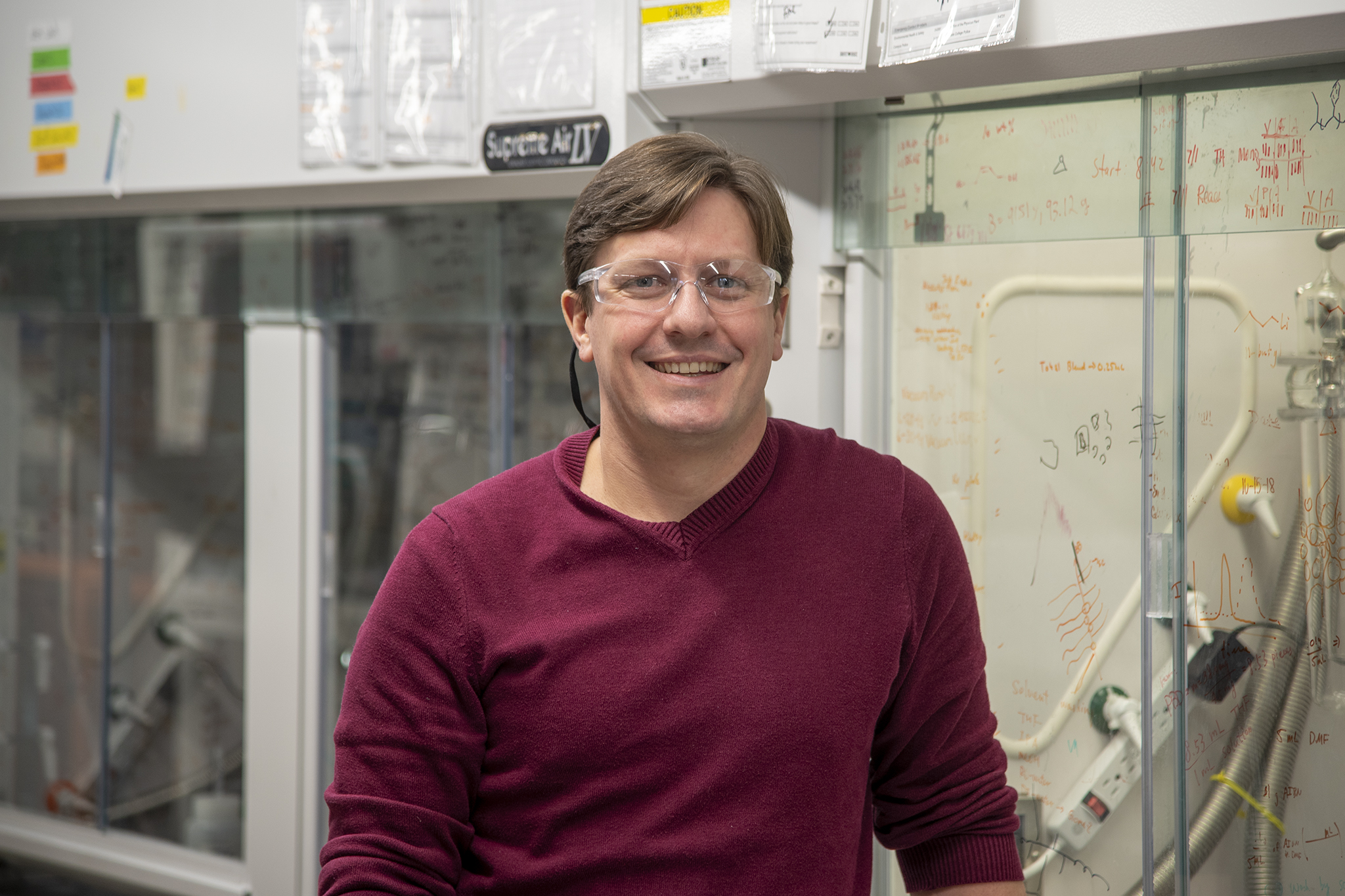
PSU associate professor Robert Hickey. Image courtesy of PSU
Back in February, MIT researchers published an article in Science Advances about using a feedback loops between simulation, machine learning, and real-world experiments to develop AM materials with optimal balances between stiffness and toughness. The similarities between that project and this one illustrates how the synthesis of simulation and physical experiments is gaining steam in the world that intersects material science and AM.
This project also may illustrate the advances that can result from adding just one new machine to your manufacturing arsenal. I don’t know for a fact that PSU’s new R&D grant is directly related to the university’s acquisition in the summer of 2023 of a Lithoz CeraFab printer, but I would be surprised if the two things aren’t connected.
In any case, both developments highlight the growth of the 3D printing market for ceramics, which AM Research projects will reach $1 billion by 2033. The progress of projects like the one led by PSU will be a critical factor in determining how close the ceramics market comes to meeting its most optimistic growth projections.
Subscribe to Our Email Newsletter
Stay up-to-date on all the latest news from the 3D printing industry and receive information and offers from third party vendors.
Print Services
Upload your 3D Models and get them printed quickly and efficiently.













You May Also Like
EOS Joins the MAT‑H2 Consortium
EOS is joining the MAT‑H2 consortium. MAT is an EU-funded group that aims to do research into a hydrogen-led economy. The thinking is that hydrogen will be a clean energy...
Where the Money is Going, Part Two: Why All Roads Lead to AI
In Part One of this article, Vanesa Listek expertly described the major themes driving infrastructure investment so far this decade, illustrating how the same concerns are driving both public and...
DTU 3D Prints New Fuel Cell Design With 5x Power Boost
Technical University of Denmark (DTU) researchers have used Lithoz ceramics 3D printing to make more efficient hydrogen fuel cells. With a part made from Lithoz Yttria Fully Stabilized Zirconia (8YSZ),...
Fraunhofer ILT Tests 3D Printed Titanium Reactors to Generate Hydrogen Onboard Heavy Vehicles
The Aachen-based Fraunhofer Institute for Laser Technology (Fraunhofer ILT) is to research titanium aluminide hydrogen reactors and heat exchangers. The hope is that lightweight, better-performing 3D printed components will make...