3D Printing Full-Sized Dinosaurs for a Museum — Not a problem for Deep in the Heart Art Foundry

There is something about dinosaurs that is fascinating to just about anyone. Whether it’s the fact that these creatures stood so large for so long and then somehow almost all died off, or just that they’re cool, there’s something about dinosaurs that garners the attention of researchers, archaeologists, and even my 3-year-old nephew.
In Texas, a company called Deep in the Heart Art Foundry has been around since 1980. They have taken part in many unique projects which include the sculpting and creation of statues and monuments, as well as topography maps, and more. Recently they began working on one project that will certainly gain the attention of both 3D printing enthusiasts and dinosaur lovers alike.
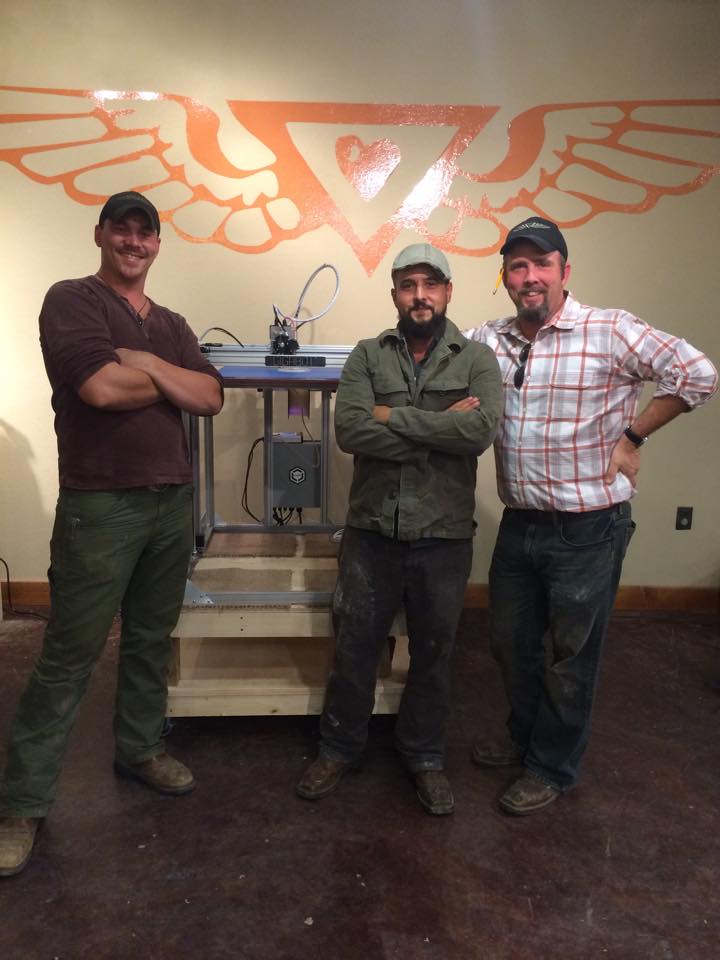 For an installation at the Australian Age of Dinosaurs museum, located in Australia’s outback, Deep in the Heart was asked to create 12 separate 3D printed dinosaurs. The dinosaurs, after being 3D printed, will be cast in bronze and then installed as part of an exhibit at the museum.
Australian Age of Dinosaurs houses the largest collection of Australian dinosaur fossils, and they are currently working on building a natural history museum to house them.
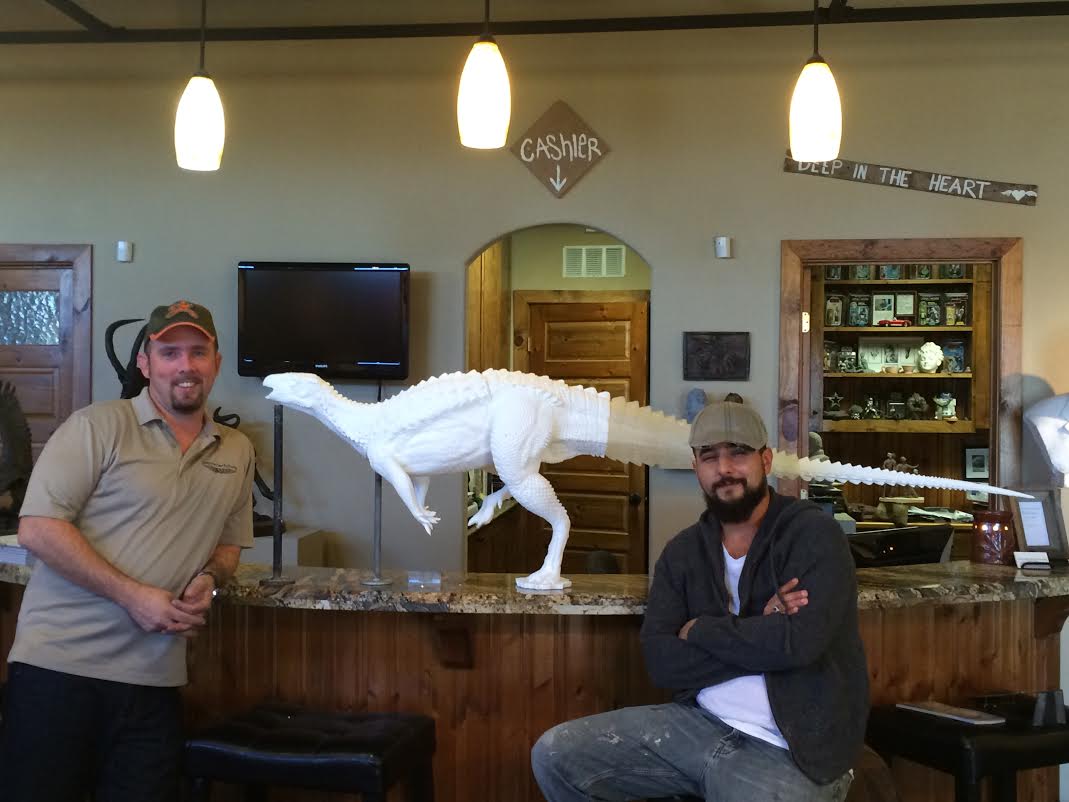
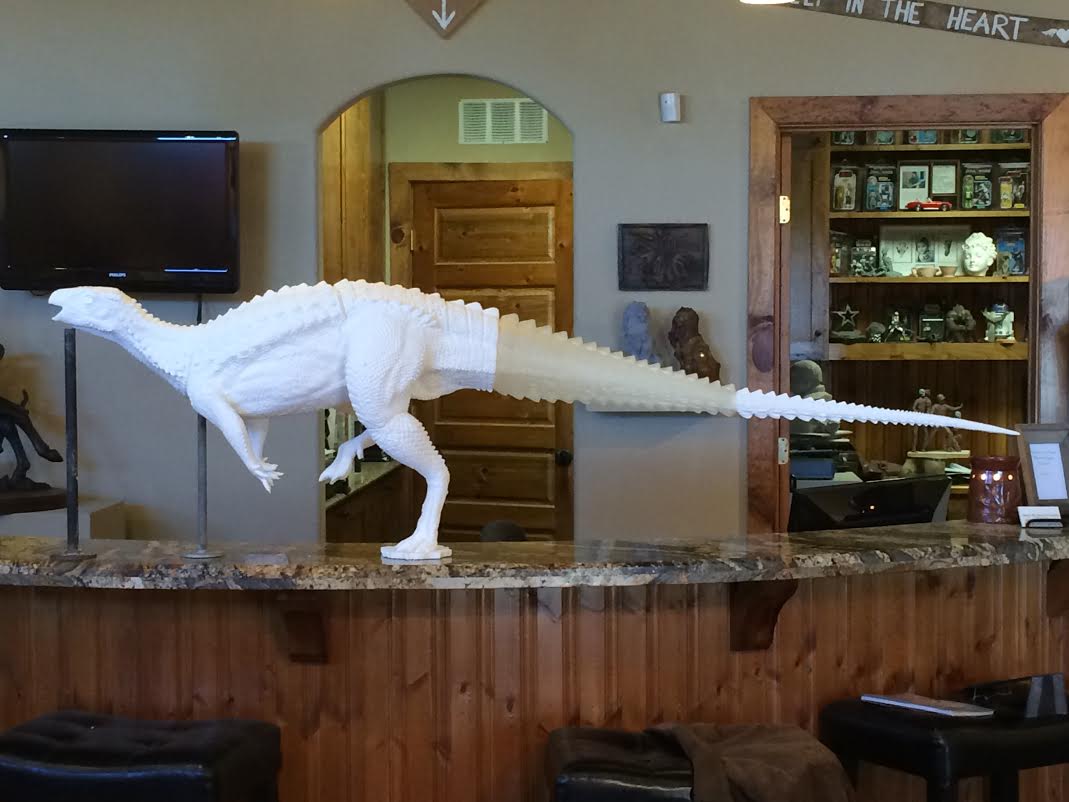
The first dinosaur the team from Deep in the Heart 3D printed was a Wintonopus, which was designed by artist Travis Tischler, and then modified for 3D printing. The 3D printing process is saving the team a lot of time and money in the creation of the final bronze cast statues.
“We are printing them to go directly to casting, effectively skipping 4 major steps in the traditional casting process (1- enlargement, 2- final sculpt at full size, 3- rubber mold making, and 4- wax pattern production),” explained Executive Assistant of Deep in the Heart, Ashley Garza to 3DPrint.com.
The dinosaurs, which will be 3D printed on a Gigabot 3D printer, will be created in separate parts before being assembled. The final 3D printed dinosaurs will range in length from 3 feet up to 18 feet.
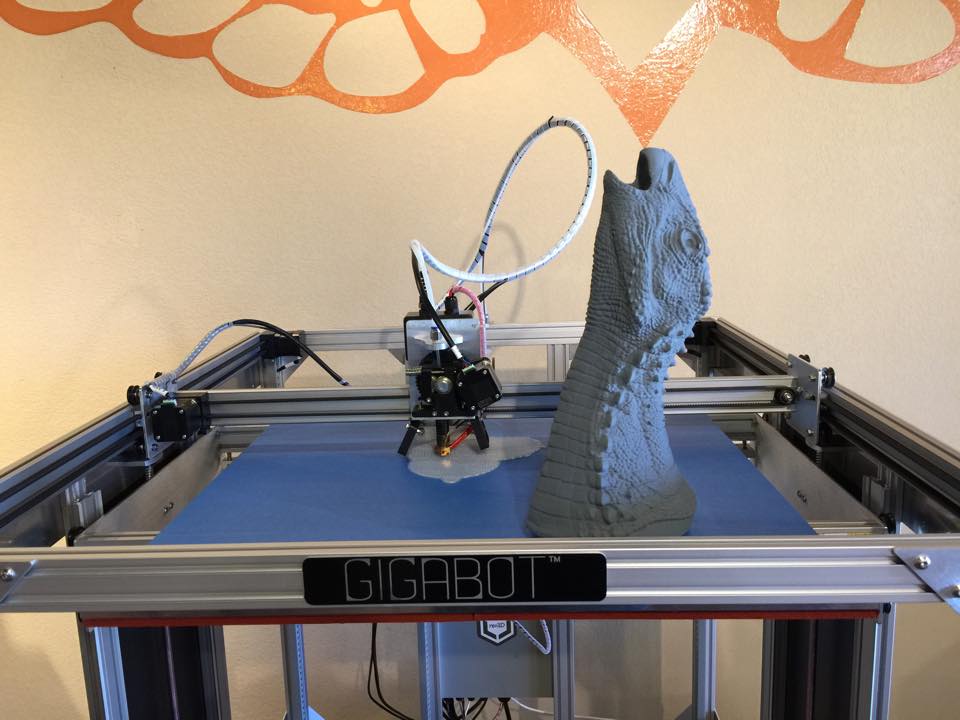
3D Printing a Raptor Head
“This is just the first phase,” explained Garza. “Plans exist for larger pieces up to 60 feet long.”
The team expects to start the casting process soon, while also working on 3D printing the other 11 dinosaurs. They plan to be working on the project for the next 5-6 months.
It will definitely be interesting to see the final results, once they are complete and installed in Australia. 3D printing is certainly changing the landscape of sculpting, and assisting in the creation of statues of all sorts. Museums all around the world are beginning to see the benefits that this technology provides.
What do you think about the potential that 3D printing has in assisting in the creation of large sculptures? Discuss in the 3D printed dinosaur forum thread on 3DPB.com.
Subscribe to Our Email Newsletter
Stay up-to-date on all the latest news from the 3D printing industry and receive information and offers from third party vendors.
Print Services
Upload your 3D Models and get them printed quickly and efficiently.











You May Also Like
Colibrium Additive Gets $31 Million NAVAIR Contract
Colibrium Additive has been awarded a $31 million contract by the Naval Air Systems Command (NAVAIR). The contract is part of the Additive Manufacturing Capability initiative, focused on qualification and...
Nikon AM Synergy Secures DLA Contract for On-Demand Military Parts
Nikon AM Synergy has gotten a DLA contract under the JAMA IV IDIQ Pilot Parts Program. The contract with the Defense Logistics Agency (DLA) is a step forward for Nikon...
ExOne Cuts Costs for U.S. Customers as Printhead Production Moves to Detroit
ExOne Global Holdings, created through the 2025 integration of ExOne and voxeljet, is making changes across its U.S. operations. These include starting printhead manufacturing in the Detroit area and lowering...
3D Printing News Briefs, April 8, 2026: LiDAR Scanning, Vapor Smoothing, FDM Optimization, & More
We’ll kick off today’s 3D Printing News Briefs with some 3D scanning news from Artec 3D, and then move on to new America Makes Project Calls. Then, Raise3D and AMT...