Bioprinted Urethras to Advance Bespoke Medical Solutions


Swedish researchers have created tissue-engineered urethras using 3D bioprinting. Developed at Chalmers University of Technology, the urethral structures are printed with a bioink that integrates human cells with a supportive scaffold, ensuring they can support viable cells and develop proper cell structures. This technology offers a promising solution for patients with severe urethral damage, moving closer to practical medical applications, including a potential for future use in urethral transplants.
Several leading institutions collaborated on this groundbreaking project. Graduate students Johanna Odbratt and Matilda Öjmertz from Chalmers University of Technology presented the findings, working alongside experts from the RISE Research Institutes of Sweden, Sahlgrenska University Hospital, and the University of Gothenburg. Local companies Verigraft, known for its personalized tissue-engineered vein and artery grafts, and Cellink, a BICO subsidiary and leader in advanced bioinks and bioprinting, contributed significantly to this research.
The research was conducted at RISE and Sahlgrenska University Hospital under the Vinnova-funded project “Platform for the Individualization of Xenogenic and 3D-print transplants,” a Swedish government innovation initiative. It involved using a fibrinogen bioink enhanced with Cellink’s GelMA to improve the mechanical stability and cell compatibility of the bioink. This bioink was used to print a urethra containing human urothelial and smooth muscle cells, supported by a polycaprolactone (PCL) skeleton, a biodegradable material providing a sturdy framework for the cells.
After 14 days of culture, the constructed urethra showed healthy cell growth and proper cell structure development. Moreover, the cells helped increase the urethra’s resistance to pressure, proving the technology’s potential to create functional, tissue-engineered organs.

Cellink began commercializing bioinks in 2016. Image courtesy of BICO.
The successful bioprinting of a urethra not only proves the potential for creating customized, tissue-engineered organs but also brings the medical community closer to addressing the critical issue of organ shortages. Sweden’s latest bioprinted urethra opens new opportunities for commercializing advanced therapies. As Sweden continues to establish itself as a hub for developing new advanced therapy medicinal products (ATMPs), initiatives like this fuel the local biotech industry.

This groundbreaking work builds on the landmark efforts of other institutions, such as the Wake Forest Institute for Regenerative Medicine (WFIRM). Led by bioengineer, urologist, and pediatric surgeon Anthony Atala, WFIRM has developed and successfully implanted various cell-based tissues, including urethras, into patients. Their approach often involves starting with a donor organ scaffold repopulated with the patient’s own cells, reducing the risk of rejection. WFIRM’s extensive work in bioprinting bladders and other tissues has laid significant groundwork in the field.
Researchers at Sichuan University in China have also been developing 3D bioprinted urethral structures to address severe urological issues. Their work focuses on using various bioinks and scaffolds to create functional urethral tissues, similar to the efforts at WFIRM and Chalmers University of Technology.
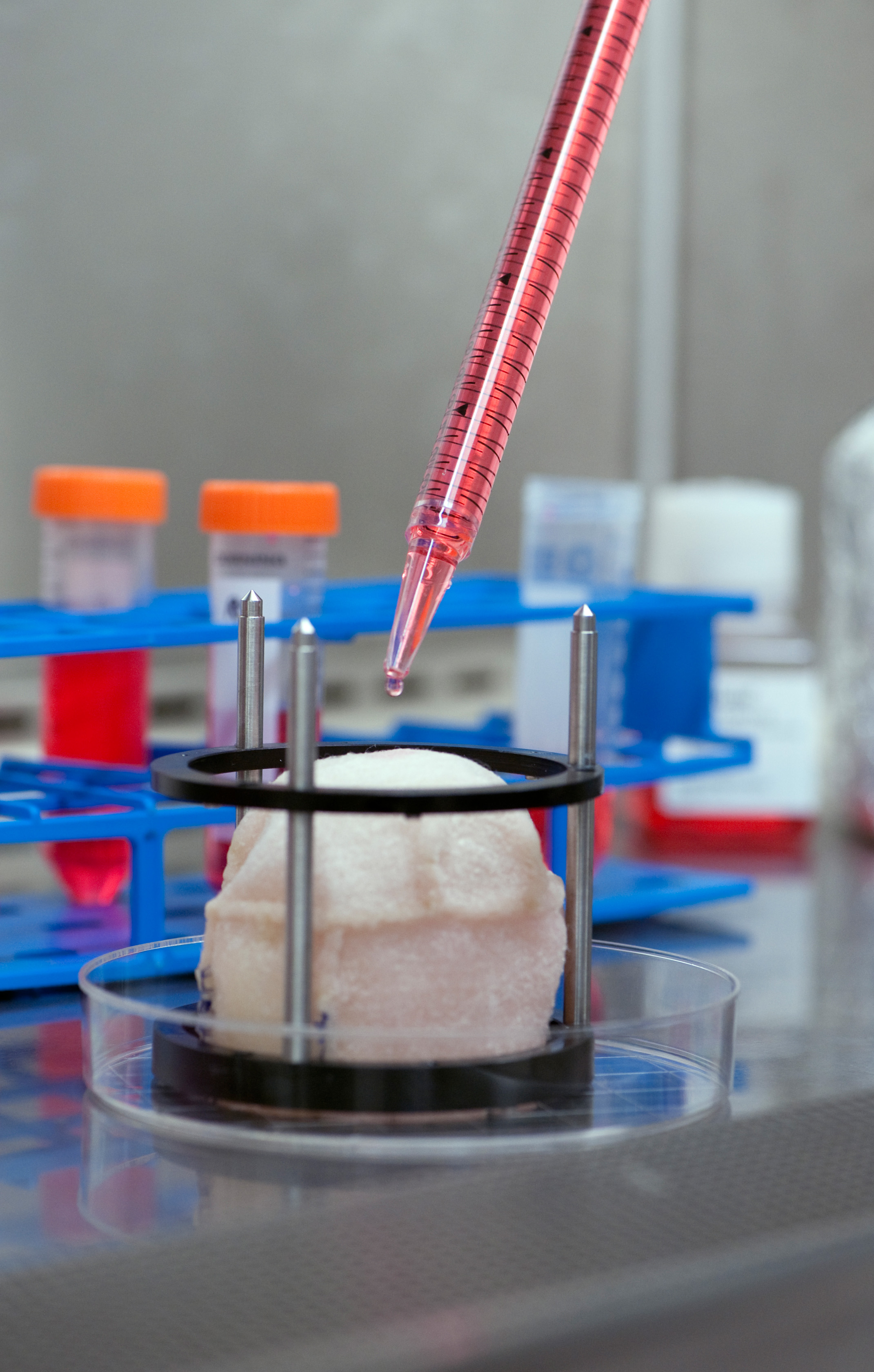
Bladder scaffold being seeded with cells at WFIRM. Image courtesy of WFIRM.
While both graduate researchers Odbratt and Öjmertz started working on the project as part of their one-year master’s thesis just eight months ago, a bioprinted urethra has been in the works for longer. This Vinnova-funded project was announced in early 2022 as a way to address the limitations of current scaffold materials sourced from deceased donors. By constructing scaffolds de novo using bioinks composed of biological extracellular matrix components, the project seeks to eliminate dependency on human donors. This approach could revolutionize personalized tissue engineering, making it widely accessible and applicable to various types of tissues.
Verigraft, which has developed products that have reached the clinical stage, including personalized tissue-engineered vein grafts and personalized artery grafts, announced in 2022 that the initial focus of this project would be on urethral structures and vascular disorders. These areas of regenerative medicine represent significant unmet medical needs, and 3D printed scaffolds have the potential to benefit millions of patients requiring personalized organs.
Subscribe to Our Email Newsletter
Stay up-to-date on all the latest news from the 3D printing industry and receive information and offers from third party vendors.
Print Services
Upload your 3D Models and get them printed quickly and efficiently.













You May Also Like
Creality K3 Opens for Pre-Order at $849, Advancing Multi-Color 3D Printing
Creality has officially opened pre-orders for the Creality K3, its latest flagship K Series 3D printer, starting at $849 in the United States. Recognized as an IFA Innovation Awards 2026...
Prusa Core One L+: A Worthy Upgrade?
Disclosure: The Core One L+ was provided to me by Prusa3d free of charge for the purpose of this review. I have not received any other compensation. All opinions expressed...
Prusa Upgrades Its Lineup with CORE One+ (Gen 2), CORE One L+, and XL+
Prusa Research has updated its high-end desktop 3D printer lineup. The company is offering new and improved versions of the machines it targets at industrial and power users, with the...
Zaha Hadid Architects Print 6M Model with WASP’s Robotic Arm Solutions
Zaha Hadid Architects (ZHA) have successfully used WASP 3D printers to make a 6-meter-tall model of an aircraft control tower. Zaha Hadid Architects’ Tech Lab made the tower in-house for the ZHAviation...