
Massive 3D Printed Sand Wall Lines Dubai’s Museum of the Future

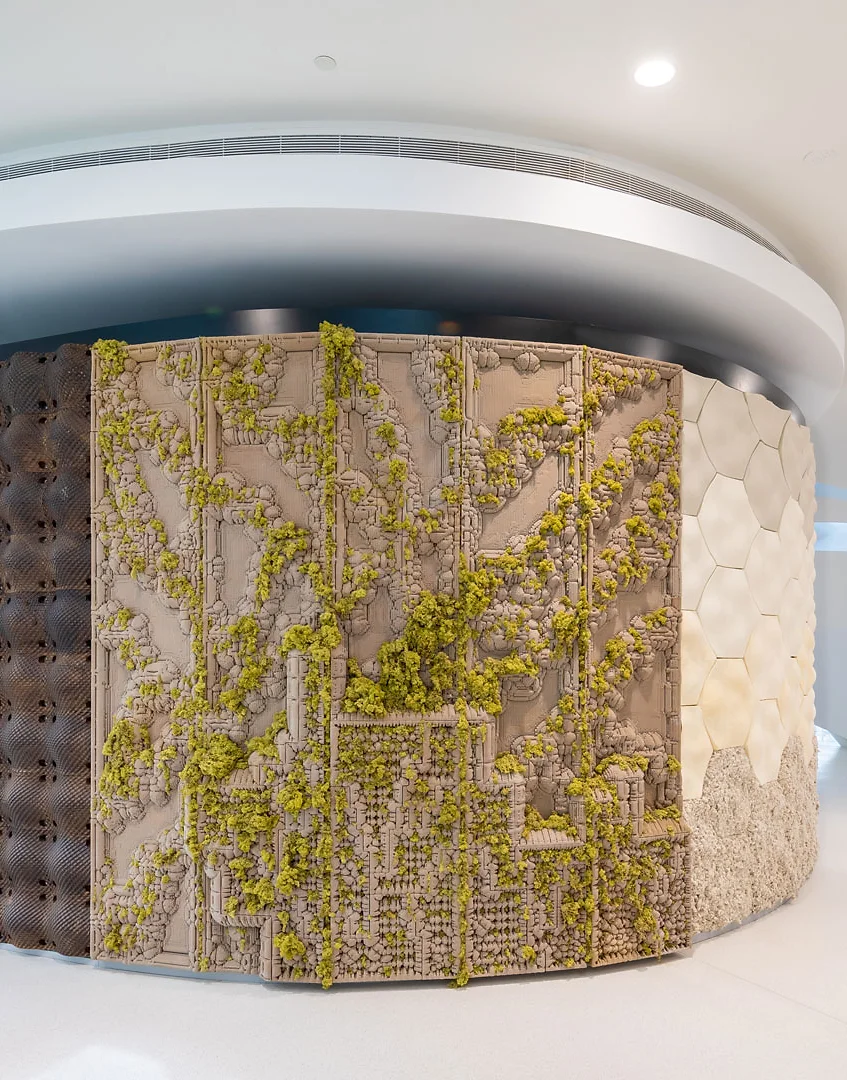
Dubai’s Museum of the Future introduced a new addition to its collection: a six-metre-long wall uniquely crafted using 3D printing and sand. Showcased at the museum entrance, this innovative piece, named Nadarra, is the brainchild of London-based architect and researcher Barry Wark.
Nadarra stands out for its intricate design and use of sustainable materials. Measuring three by six meters, the wall displays a blend of technology with ecological awareness in architectural design. It is a modular installation split into different modules that can be easily assembled and hand-lifted. Manufactured and excavated by German 3D printing design firm Sandhelden, the Nadarra project used voxeljet’s (Nasdaq: VJET) VX1000 3D printer and quartz sand, which undergoes a post-processing step called infiltration, where a liquid binder is applied to a 3D printed object to strengthen and solidify it.
Sand Reimagined
Voxeljet’s VX1000 printer’s advanced capabilities are ideal for this type of project because of its large build volume, allowing for the creation of sizable structures like Wark’s wall. Additionally, its precision in binder jetting technology ensures intricate and detailed designs, crucial for the aesthetic and functional aspects of Nadarra. What’s more, the printer’s compatibility with various materials, including quartz sand, aligns perfectly with the project’s ecological focus. Using local, sustainable materials like sand voxeljet’s machine contributes to the project’s commitment to environmental responsibility.
This focus on sustainability and innovative use of materials and hardware is echoed in the broader environmental values of the Nadarra project. A key aspect of Nadarra is its focus on circular materials and the life cycle of building materials. The sand technology allows the wall to be fabricated, installed, and recycled up to eight times, minimizing waste and environmental impact. This approach not only represents a commitment to ecological sustainability but also demonstrates the potential of 3D printing in creating complex geometric forms without the need for elaborate mold-making processes.
Tech Meets Nature
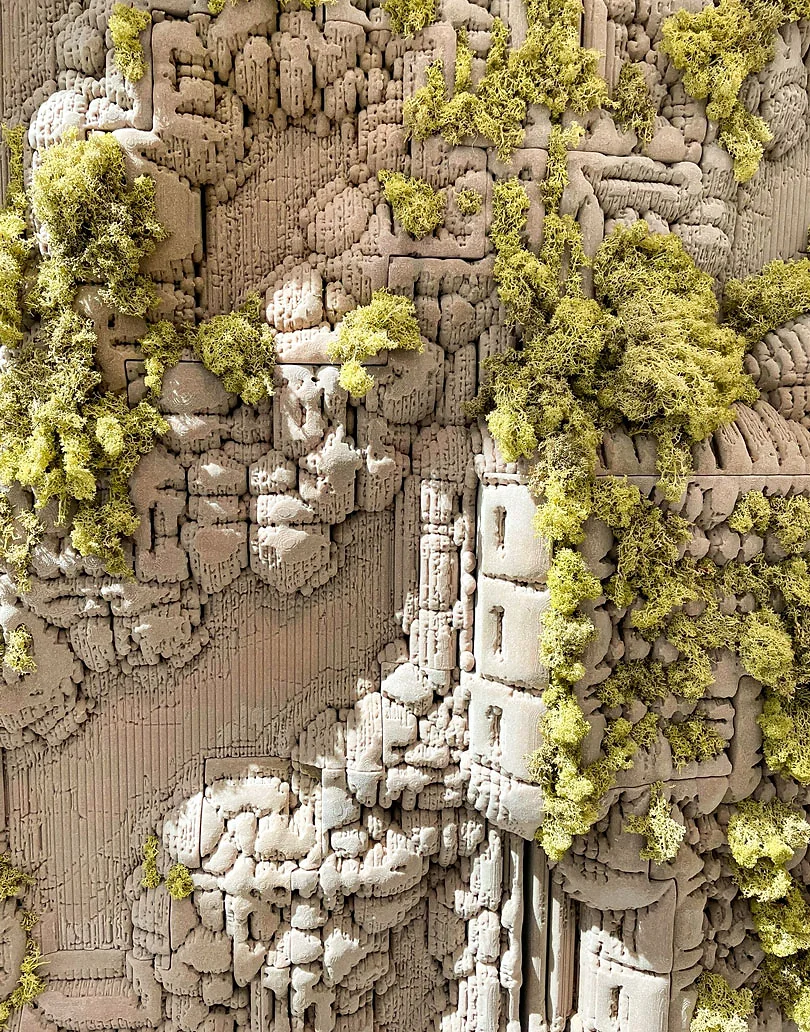
According to Sandhelden, the design of the wall incorporates “biophilic design principles” such as multiscalar detail, organized complexity, and highly differentiated but similar geometries that evoke natural processes like erosion, vegetation growth, and weathering. These features create a unique aesthetic that blurs the lines between natural and artificial, explains Sandhelden, challenging traditional notions of clean, unblemished architecture.
In an interview with architecture and design magazine Dezeen, Wark shared his idea for the future of sand-printing technology in construction. Actively involved in academia, particularly at The Bartlett School of Architecture, Wark envisions a world where this technology could be used to create not just interior elements but also façades and structural components. The potential durability and load-bearing capabilities of sand-printed structures make this a promising avenue for the construction industry, especially in desert regions like the Middle East.

The concept of Nadarra was first presented at the Museum of the Future’s launch exhibition “Tomorrow Today,” curated by London-based expert Gonzalo Herrero Delicado in February 2022. The initial display featured a smaller version of the wall, complemented with preserved moss to demonstrate how plants could integrate into the structure in a natural environment. However, for long-term maintenance reasons, the moss was later removed.
Wark believes the design’s true essence lies in its reflection of the natural beauty of the United Arab Emirates (UAE’s) biome, which is not heavily vegetated. He emphasizes the importance of contextually appropriate ecological design, steering clear of the trend of greenwashing in unsuitable regions.
Artistic Fusion
Project Nadarra is described as “somewhere between new and eroded.” In a social media post, Wark explains, “Nadarra gives form to a contemporary understanding of the nature-architecture dialogue in the age of ecological awareness. That is the interconnectedness of all matter, organic and otherwise, in our built environment. It works with circular materials, novel ecological aesthetics, and advanced sand 3d printing technology.”
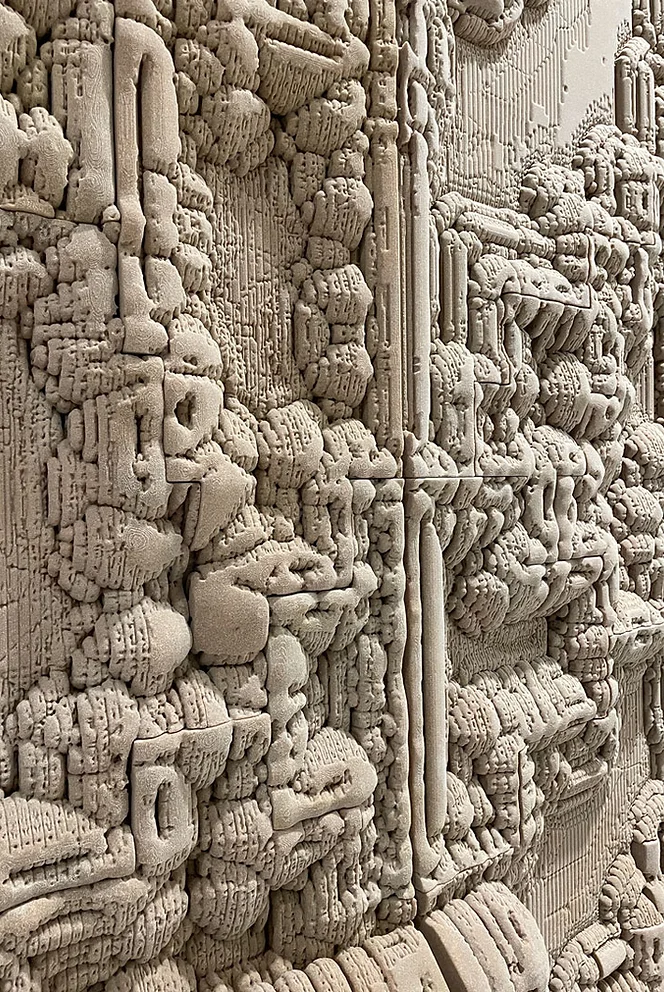
Commissioned by the Museum of the Future’s Creative Director Brendan McGetrick, the 3D printed wall installment is motivated by the recognition that all buildings eventually erode, stain, and weather. It moves beyond the idea of impossibly clean architecture, instead creating crevices and pockets for water and seed retention that can accelerate and promote the growth and presence of non-human organisms within its surfaces. The Museum of the Future’s decision to feature Nadarra in its permanent collection highlights a growing interest in sustainable and innovative architectural practices. This project not only showcases the artistic and technological capabilities of Barry Wark and his collaborators but also sets a precedent for future ecological and sustainable architectural endeavors.
Images courtesy of Barry Wark via Instagram/Sandhelden.
Subscribe to Our Email Newsletter
Stay up-to-date on all the latest news from the 3D printing industry and receive information and offers from third party vendors.
Print Services
Upload your 3D Models and get them printed quickly and efficiently.













You May Also Like
3D Printing News Briefs, August 22, 2026: Polymers for CubeSats, Animal Mobility Devices, & More
We’re starting with defense news in this weekend’s 3D Printing News Briefs, before moving on to polymers for CubeSats and 3D printed prosthetics. We’ll end with a story about engineering...
Pusan National University & ORNL Develop Elastomeric Liquid Crystal Actuators
Researchers from Korea’s Pusan National University and Oak Ridge National Laboratory (ORNL) have developed 3D printed elastomeric actuators. In a paper published in Nature, the team used elastomeric liquid crystal...
Scientists Use BMF to 3D Print Seal Whiskers That Track Prey Long After It’s Gone
Seals use their whiskers to hunt. Not Navy Seals, although they may in some way also, but this article is about lowercase seals. Not Seal the musician either; as far...
Harvard’s Jennifer Lewis Lab Is 3D Printing Artificial Muscles That Twist and Bend on Demand
Researchers at Harvard John A. Paulson School of Engineering and Applied Sciences (SEAS) have developed a new way to 3D print materials that can move on their own, bending, twisting,...























































