It’s Hip to Be Square: Trumpf Updates Metal 3D Printing with Square Build Plate and More

Trumpf, a family-owned machine tool company with a $4.2 billion revenue stream, is a notable player in the industrial laser sector. With a focus on long-term investment, Trumpf has increasingly allocated resources to 3D printing. Most recently, this has included updates to its TruPrint 2000 machine, aligning it with more production-centric needs.
The revised TruPrint 2000 will feature a square build plate, marking a departure from the company’s earlier, somewhat idiosyncratic use of circular build plates. Additionally, laser power has been increased to 500 watts. With a dual-laser setup that allows for complete scanning of the build, the machine offers enhanced hatching and productivity—potentially achieving a productivity gain of up to 36% compared to its predecessor.
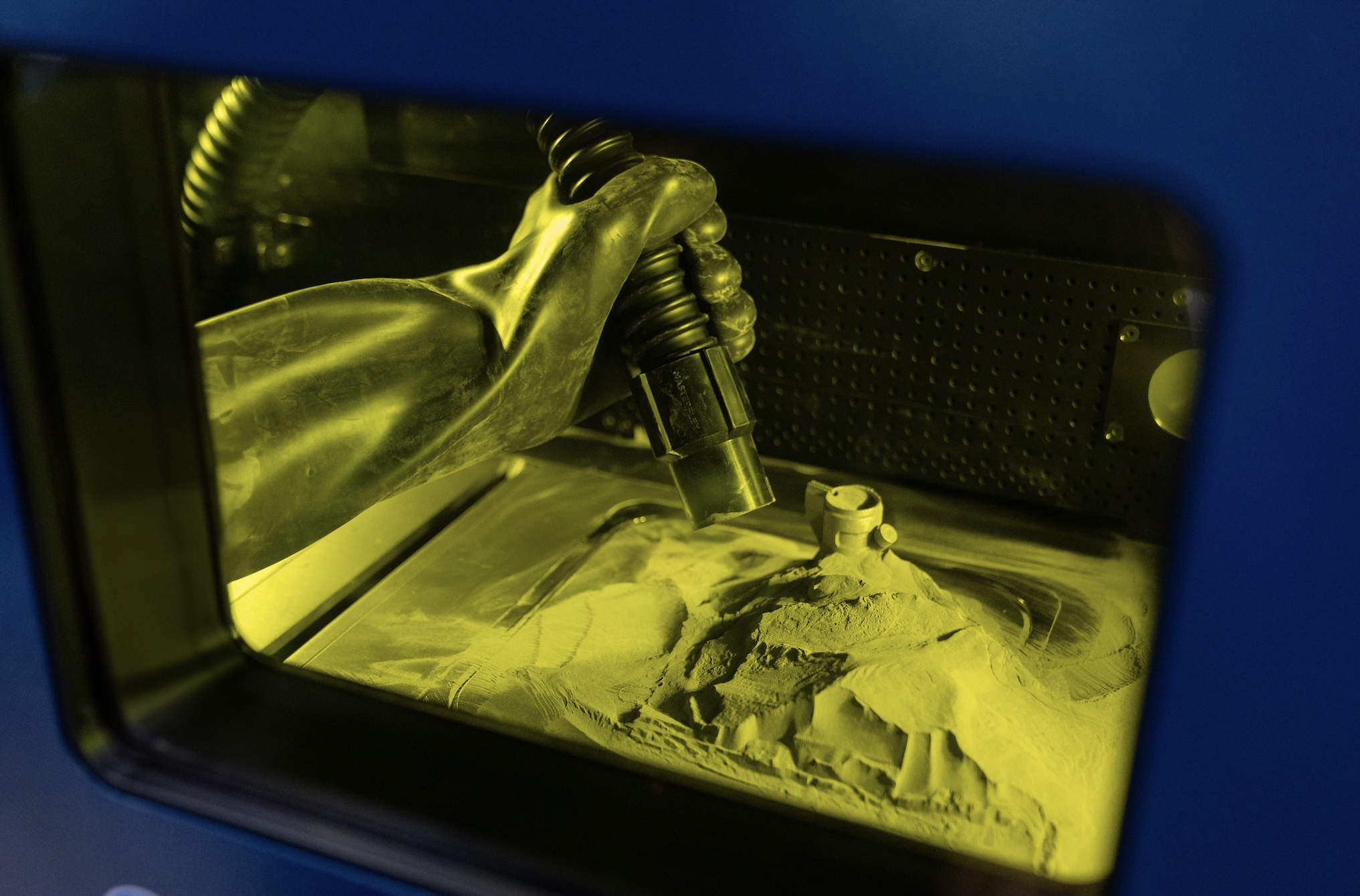
Mirko De Boni, TruPrint 2000 product manager, said of the new machine, “The 3D printer is now also designed for mass production. Users from all industries benefit from the machine’s high productivity, The TruPrint 2000 not only works very productively, but also precisely and with the highest quality, Safety is the top priority for TRUMPF 3D printing, especially for critical areas such as medical technology. With the upgrade of the TruPrint 2000, patients receive high-quality implants with even more long-term stability.”
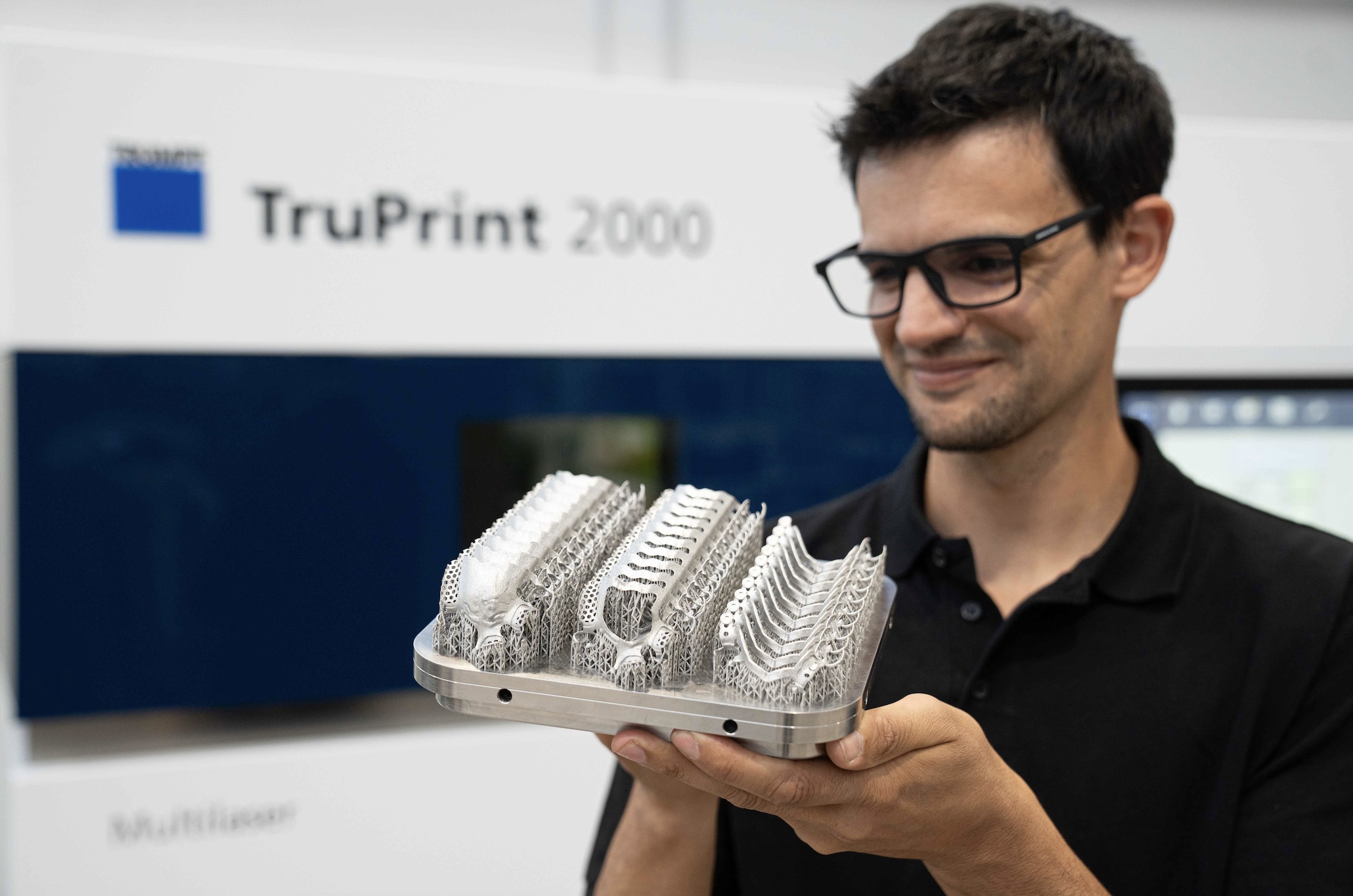
The printer features a “motorized beam expander” allowing for adjustable spot sizes of either 55 or 80 micrometers. Larger spot sizes are suitable for quicker builds, while smaller diameters are optimized for improved part qualities. This dual spot size capability also enables parts to be qualified on the TruPrint 2000 before being produced on TruPrint 1000 and TruPrint 3000 machines—a convenient feature for users.
Trumpf’s Role in 3D Printing
Initially beginning with simpler systems, Trumpf has evolved to offer a comprehensive range of directed energy deposition (DED) and powder bed fusion (PBF) technologies. Recent sales figures, an impressive €5.4 billion—up 27% from the previous year—indicate a promising trajectory. Factors contributing to this growth include a resurgent U.S. economy, the trend towards friendshoring, as well as robust equipment sales in the formerly booming electronics market and increased EUV equipment sales within the same electronics cycle.
Given this context, it’s reasonable to speculate that Trumpf aims to deepen its involvement in additive manufacturing (AM). The company has already been expanding its reach through strategic partnerships, such as a recent collaboration with Airbus Helicopters for the industrial-scale production of end-use helicopter components. This development suggests a long-term vision for supplying critical, high-end components. The Airbus Helicopter facility at Donauwörth, which has already 3D printed 9400 locking shafts for Airbus A350 doors using EOS M 400-4 3D printers, illustrates this point. While it’s unclear whether Trumpf’s equipment will replace or complement the EOS printers, the collaboration represents a significant achievement in a competitive market.
Trumpf has the financial and operational capacity to become a more prominent player in the 3D printing landscape than it has been previously. Companies like AddUp and Trumpf have impressed me with their understated yet effective approaches, focusing more on substantive contributions rather than flashy announcements. As the market continues to mature, it will be revealing to see which companies endure.
Though I’d welcome a more expansive market featuring Nikon SLM Solutions, EOS, Trumpf, GE, AddUp, and Velo3D all thriving, the next few years are likely to be challenging for each of these companies. Market constraints will eventually force some level of attrition or repositioning. Additionally, geopolitical factors may encourage a shift towards local companies, resulting in a market landscape more diverse than conventional business logic would suggest.
While many companies will need to carefully calibrate their investments in 3D printing based on available resources and future potential, Trumpf is in the unique position of being able to aggressively invest to secure a leading role. The question remains: Will Trumpf seize this opportunity, or will it continue to proceed cautiously and incrementally? It’s a topic ripe for speculation.
Subscribe to Our Email Newsletter
Stay up-to-date on all the latest news from the 3D printing industry and receive information and offers from third party vendors.
Print Services
Upload your 3D Models and get them printed quickly and efficiently.











You May Also Like
2026: The Year of the Low Cost Print Farm
The rise of high-speed, reliable desktop Material Extrusion and Vat Polymerization systems by Creality, Bambu, Elegoo, and Prusa Research, the onward march of Formlabs in Pro LPBF and VP, as...
3DPOD 287: 3DP/AM Market Data and Applications with Scott Dunham, AM Research
Scott Dunham models all the data at Additive Manufacturing Research. He has been predicting the growth of the 3D printing market in segments, materials, and applications for over a decade....
3D Printing Stocks in 2025: Performance and Market Trends
In 2025, the best-performing 3D printing stocks weren’t mostly the classic Western printer makers. Some of the strongest performers were digital manufacturing platforms and software-intensive players; these are businesses that...
Who Merged, Who Was Acquired, and Who Disappeared in 3D Printing in 2025
2025 was a year of change for 3D printing, with much of the year’s activity coming from mergers, acquisitions, restructurings, and company exits. Together, these moves indicate a broader shift:...