University of Arizona Gets $1.2M for Hypersonics 3D Printing

Hypersonic glide vehicles will need to resist incredible heat and pressure from flying at Mach Five and above. For that reason, the materials used to make them will likely be very hard, expensive, and difficult to work with. Due to cost, the need to optimize geometries, and a general need to save on mass, additive manufacturing (AM) is a logical technology to manufacture new components for these craft or, indeed, entire vehicles. Additionally, 3D printers can be used to make the new materials themselves.

A $1.2 million grant for equipment for the University of Arizona and its Arizona Research Center for Hypersonics from the Office of Naval Research’s Defense University Research Instrumentation Program is, therefore, rather timely. Professors Andrew Wessman and Sammy Tin will use the funds to buy a laser powder bed fusion (LPBF) machine, a gas atomiser, a vacuum furnace and an X-ray diffractometer so that they can print test parts, develop new alloys, make powders, and sinter parts.
The team hopes to make new materials specifically suited to hypersonics. Indeed, they could make a whole host of materials for use inside engines, on the surface of a vehicle, and for other components. Heat resistance, printability, ductility and many other specific factors could be improved overall.
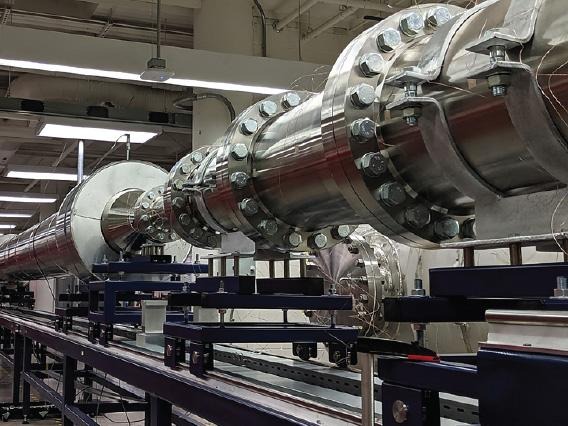
“Combining all these pieces will give us a unique capability in terms of the infrastructure for advanced manufacturing. If we can develop materials and alloys that are specific to the 3D-printing process, we can customize alloy chemistries so that they have attributes that make it easier or more friendly for 3D printing,” said Professor Tin.
“Hypersonic flight and space exploration are among our university’s biggest strengths, and both require materials that can withstand extreme environments. I am proud to have faculty members like Sammy Tin and Andrew Wessman working in this critical area and raising the University of Arizona’s already-impressive profile in advanced manufacturing,” University of Arizona President Robert C. Robbins stated.
The win is an important one for Arizona. The University just got another part of a hypersonics research grant, as well as $1.7 million for better wind tunnels, and previously partnered with Raytheon. The University has said that hypersonics is strategic for its research efforts. Indeed, there will be billions in research funding for hypersonics available in the year to come. I cannot think of anything that will see such a fundamental, deep, and sudden influx of research funding over the coming years. There is a real opportunity for Arizona to make a mark and become one of the main centers for hypersonics in the U.S. This could spin off businesses, lead to key patents, and let it leapfrog larger universities.
Hypersonics represent the ultimate high ground. Significantly faster than conventional aircraft, hypersonic glide vehicles could deploy worldwide in hours. You could put a vehicle above a city anywhere on earth, like a taskable satellite that could be deployed anywhere—or a craft could be a missile that would be impossible to stop. Actually, more like a fighter that could get anywhere and get away faster than a speeding bullet, at least twice as fast.
With tensions over Taiwan creeping upward, the U.S. is realizing China’s strength and contemplating a future where it may want to actually capture Taiwan through violent means. The U.S. has always had the heft to stop such an invasion attempt. China, however, has raised its defense spending considerably. Also by putting a great deal of research into long-range missiles and hypersonics, the nation has developed some scarily credible hardware. It has created DF-21D and DF-26B ballistic missiles which are being explicitly marketed as carrier killers with ranges of over 12,000 kilometers. Another missile is a S300 derivative. The country also have inexpensive options, such as the Tianlei 500, a precision guided munition which could be launched or dropped from over 60 kilometers from a target.
However, it is another weapon, the Eagle Strike 21, a carrier-based hypersonic missile, that has essentially scared the bejesus out of U.S. planners. Deployed onto China’s Type 055 destroyer, these happens have a range of perhaps 1,500 kilometers and it can travel at Mach 6 to ten.
The U.S. spends more than anyone else on its “World Police” role, upgrading its aircraft, trucks, and everything else continually. China, meanwhile, is expanding defense spending but has a narrow focus. America must be excellent and the best everywhere. China just needs to have a credible set of tools for anti-carrier and anti-long-range aircraft. A Carrier Strike Group has over 7,500 people on it. Yes, it projects a lot of power, but Chinese missiles now also make it feel very vulnerable. For this reason, the investment in research for better hypersonics is going to be spectacular indeed.
Subscribe to Our Email Newsletter
Stay up-to-date on all the latest news from the 3D printing industry and receive information and offers from third party vendors.
Print Services
Upload your 3D Models and get them printed quickly and efficiently.











You May Also Like
3D Printing News Briefs, December 27, 2025: Additive Construction in the U.S., Canada, & India
In this holiday weekend’s 3D Printing News Briefs, the focus is entirely on additive construction! We’ll start with news out of North America, specifically Canada and the United States, and...
A Sudden Turning Point: AM Research’s Q3 Offerings Dissect a Pivotal Three Months
One of the most reliable ways to stay updated on activity in the additive manufacturing (AM) industry is to subscribe to AM Research’s data services, available for both the polymer...
3D Printing Used to Make Prototype Plasma Camera Measuring Charged Particles in Space
Space is a vacuum, we’ve all heard that before. But that doesn’t mean it’s completely empty, just that it has an extremely low amount of particles and matter. Stars emit...
3D Printing News Briefs, December 17, 2025: Standards, Ballistics, Dental Aligners, & More
Today’s 3D Printing News Briefs is a bit of a mixed bag, including stories about standards, ballistics 3D printing, dental aligners, and more. Read on for all the details! DNV...