New Skin Cancer Treatment Device Manufactured with Micro 3D Printing



IMcoMET is a biotech startup in the field of skin cancer treatment. Their focus is on the tumor microenvironment. They are pioneering a groundbreaking new immunotherapy that has the potential to fundamentally change the way we treat skin cancer. Cancer cells can fool the immune system by sending signals that act as a camouflage. These signals are molecules, mainly proteins, which produce the cancer cells and release them into the fluid surrounding the cells. This fluid is referred to as the microenvironment. The aim of immunotherapy is to remove the camouflage signals, to stimulate an immune response and have it destroy the tumor as it normally would.
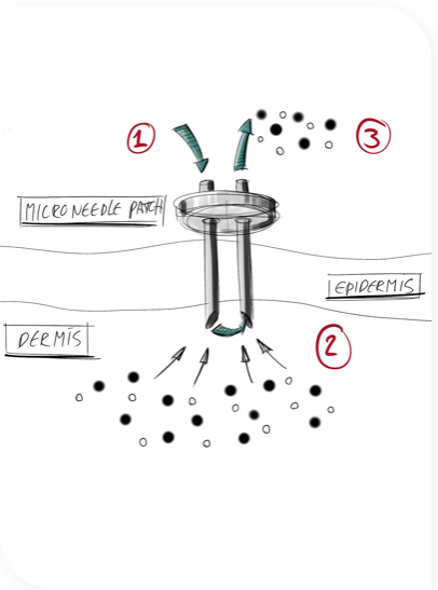
IMcoMET has developed a technology based on microfluidics and microneedles which allows the microenvironment of the tumor and all of its components to be physically removed, in order to then be replaced with healthy tissue. M-Duo Technology® uses small needles placed very close to each other which work together, one needle injects a carrier fluid while the other aspirates it. As the fluid travels between the two needles within the skin, it mixes with the cell fluid and drains all the signals present in that area. This is done continuously, without having to remove the needles.
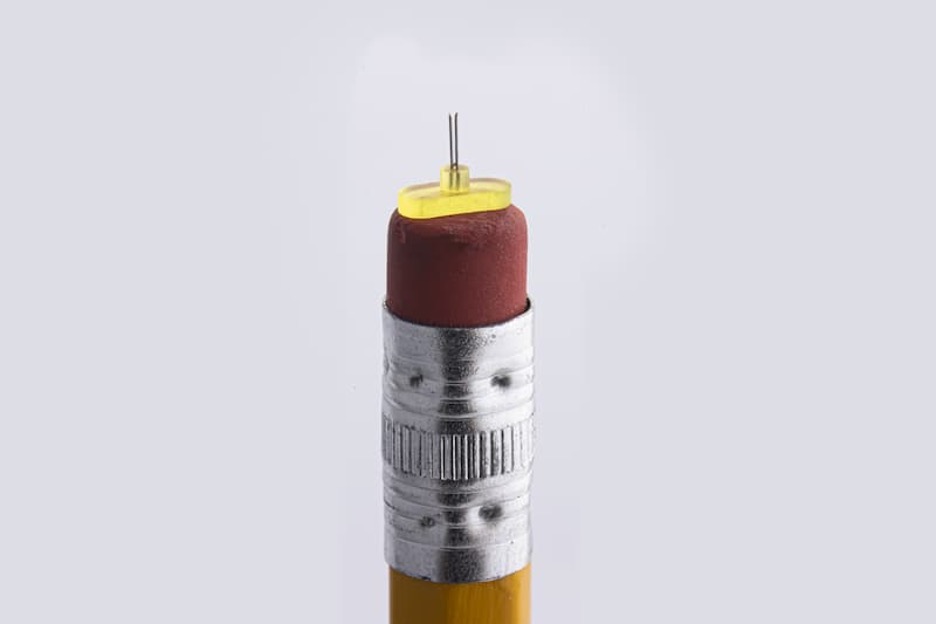
The microneedle-Duo (M-Duo) Technology uses 3D printed components, specifically the caps and the lid that holds the needles in place. IMcoMET chose BMF micro-precision 3D printing to manufacture these parts due to the high-precision requirements of the part. The part contains two channels of 100µm diameter, positioned in parallel at only 20-40µm distance from each other. BMF’s micro-precision 3D printers bridge the technological gap between classic SLA 3D printing and nano 3D printing. For IMcoMET, BMF’s 3D printers are an enabler for them to miniaturize their technology.
Subscribe to Our Email Newsletter
Stay up-to-date on all the latest news from the 3D printing industry and receive information and offers from third party vendors.
Print Services
Upload your 3D Models and get them printed quickly and efficiently.













You May Also Like
Excellent Desktop Injection Molding, Made in Italy by Robot Factory
I was captivated when I saw my first Robot Factory 3D printer. The robust, precise machine was built to last. And this was in an era of very flimsy, disposable,...
Pogačar & Fairlight Cycles Show Us Low Cost 3D Printed Components for Bikes
There has been a lot going on in 3D printing for bicycles over the years. The most successful implementation so far is in bicycle seats. Carbon 3D printed seats are...
3D Printing News Briefs, June 18, 2026: Reseller, Relocation, Metal Space Powder, & More
We’ll start with business news in today’s 3D Printing News Briefs, as XJet appointed a value-added reseller in Germany, BIO INX is expanding its presence in the Italian market, and...
Researchers Combine AI and Bioprinting to Create Tiny Blood Vessel Networks
If 2026 has a theme in bioprinting, it may be blood vessels. Researchers can already print incredibly sophisticated tissues. The harder part is keeping those tissues alive. Without a network...