Fleet of 3D Printers Begin Building Housing Community in Texas with Construction Giant Lennar Corp and ICON

As 2022 comes to an end, additive construction (AC) companies all over the world are announcing a flurry of upcoming projects. The most recent of these is also one of the most ambitious: in collaboration with Lennar Corporation, among the US’s largest construction firms, Austin-based ICON will build a community of 100 homes in Texas.
The 100-home community located in Georgetown — one of Austin’s fastest-growing suburbs — will be known as Wolf Ranch. Co-designed by the renowned architectural/urban planning firm Bjarke Ingels Group (BIG), each home will be between 1600 and 2100 square feet, with 8 different floor plans for potential buyers to choose from.
Additionally, each home will come equipped with rooftop solar panels, similarly to the community in California recently announced by Mighty Buildings. The starting price for a house at Wolf Ranch is expected to be in the mid-$400,000 range. Potential buyers can start making reservations in 2023.
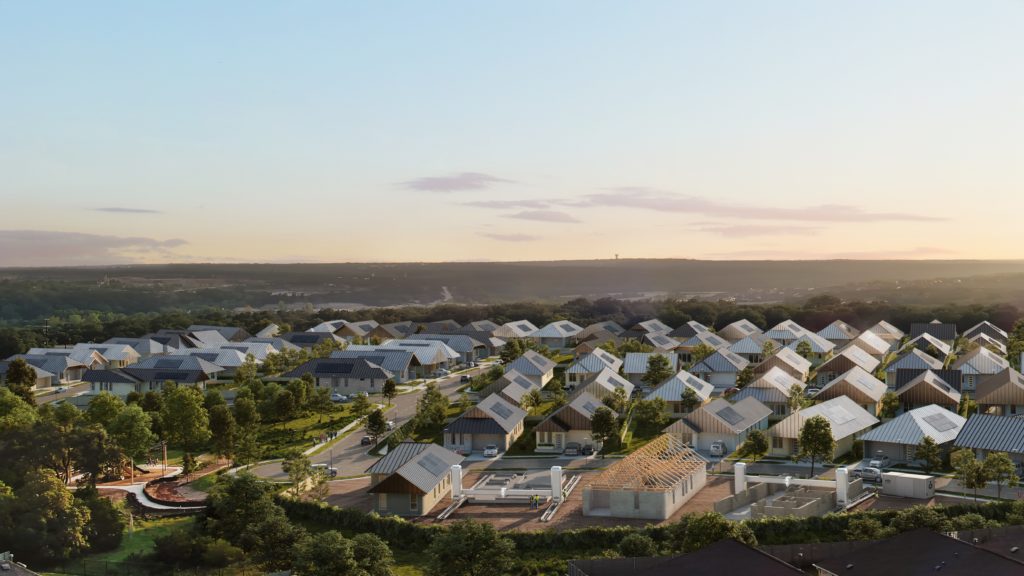
In a press release announcing Lennar’s collaboration with ICON and BIG, the housing conglomerate’s executive chairman, Stuart Miller, commented, “Given the housing shortage that persists across the country, it has never been more important to innovate in order to find new methods of construction that will enable greater design flexibility and greater production at affordable prices.” ICON’s co-founder and CEO, Jason Ballard, proclaimed, “In the future, I believe robots and drones will build entire neighborhoods, towns, and cities, and we’ll look back at Lennar’s Wolf Ranch community as the place where robotic construction at scale began. We still have a long way to go, but I believe this marks a very exciting and hopeful turn in the way we address housing issues in the world.”
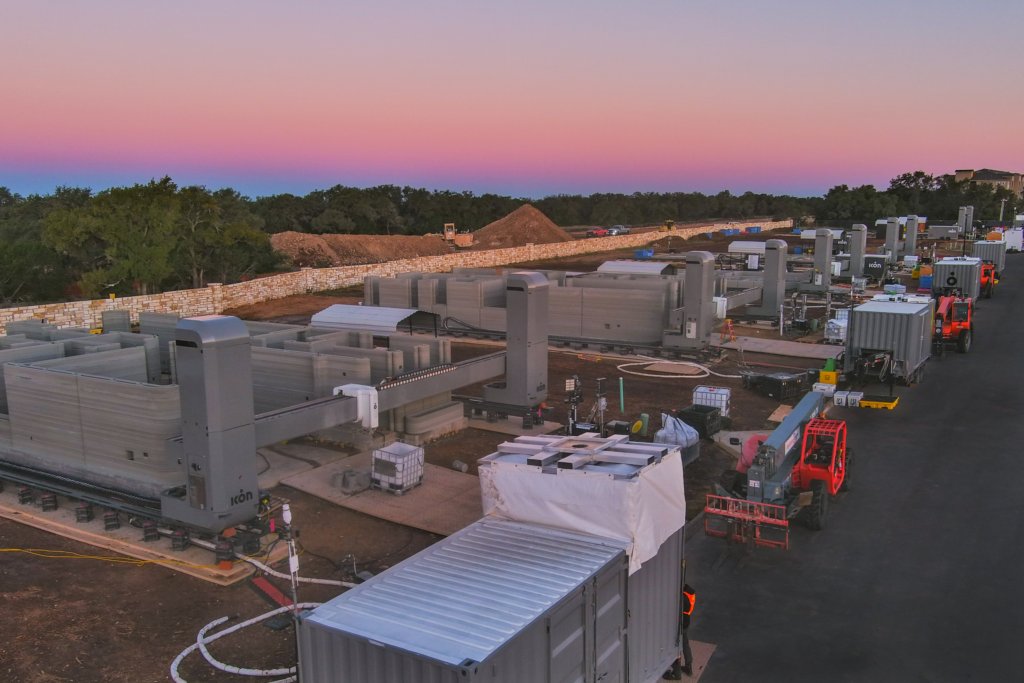
In general, out of all the segments in the additive manufacturing (AM) sector, leaders of AC companies seem to be the most overtly futurist. This, along with the technology’s relative newness and a comparatively small market, can sometimes lead to concrete printing not being taken as seriously as the rest of the additive space.
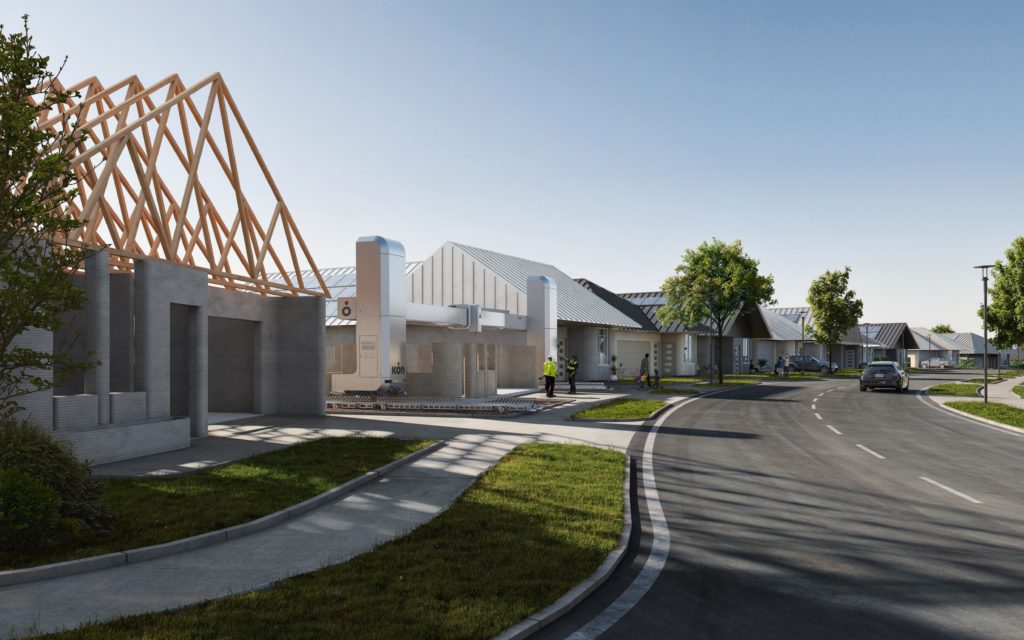
On the other hand, both the technology and the market have matured dramatically in 2022, and AC firms have increasingly been gaining the support of major legacy construction companies, as is the case here. In fact, this project was originally announced over a year ago (without a specific location), so ICON is in that sense the forerunner of the other deals done this year between AC companies and legacy firms.
Moreover, the fact that the project didn’t simply fade into obscurity, but rather, has been updated with firmer details, suggests that (1) the technology to automate homebuilding at scale must really be there. Of possibly even greater significance, it suggests (2) that a heavyweight in the construction industry like Lennar also must be interpreting 2022 as a banner moment for AC. I’ve believed since last year, when a residential printed home in the US was built by Habitat for Humanity, that if AC does indeed successfully scale-up, it will happen much faster than is currently being projected by the few people paying attention to the technology. That’s not to say that this one updated announcement is evidence of that: but to reiterate what I mentioned in the first paragraph, the number of announcements in the AC segment seem to be proliferating all of a sudden.
Images courtesy of ICON
Subscribe to Our Email Newsletter
Stay up-to-date on all the latest news from the 3D printing industry and receive information and offers from third party vendors.
Print Services
Upload your 3D Models and get them printed quickly and efficiently.













You May Also Like
How Drone Proliferation Is Forcing a Rethink of Defense Manufacturing
The rapid proliferation of low-cost drones is forcing manufacturers to rethink their approach to design, production, quality, and scale. For defense manufacturing teams, the challenge is both how quickly a...
What 3D2GO Says About 3D Printing’s Growth in Southeast Asia
The Philippines offers an interesting case study in how 3D printing can develop in Southeast Asia, and Manila-based 3D2GO helps illustrate it. 3D printing in Southeast Asia doesn’t have to...
3D Printing News Briefs, September 12, 2026: Rebranding, Cybersecurity, Project Call, & More
We’ve got a lot of business news from ATLIX to start off this weekend’s 3D Printing News Briefs, with a new identify for its additive manufacturing (AM) portfolio and some...
Silencer Market Set to Test Metal Additive’s Readiness for Production Prime Time With Enormous Market Expansion
Throughout the history of additive manufacturing (AM) technologies, there are only a couple of really interesting case studies in which we see a market significantly disrupted and revolutionized by AM....