US Navy Fulfills First NATO Stock Number Orders for 3D Printed Parts


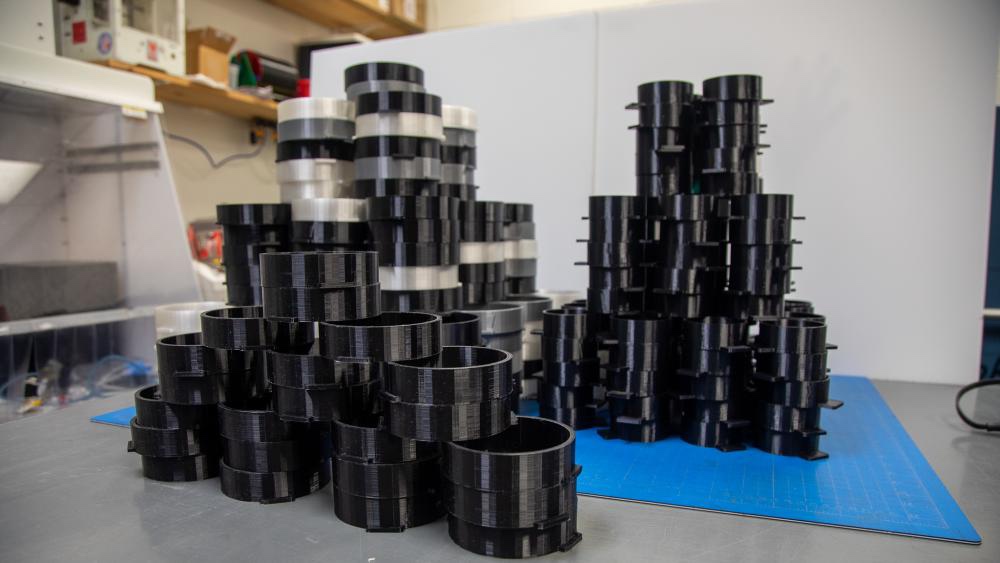
As active as has been the US military’s support for the additive manufacturing (AM) sector, in general, the US Navy might be the branch whose progress has accelerated most quickly in 2022. The latest evidence of that was the announcement by the Mid-Atlantic Regional Maintenance Center’s (MARMC) Innovation Lab that it had printed 313 deck drain coamings to fulfill an order.
Notably, these were the first orders for printed parts with national stock numbers (NSNs), an acronym that stands for “NATO stock number” in the 63 or so countries outside the US that also buy NSN parts. Additionally, they were the first such orders to be fulfilled by any US military branch: specifically, the Naval Sea Systems Command (NAVSEA) Organic Industrial Base (OIB), of which the MARMC Innovation Lab is a part.
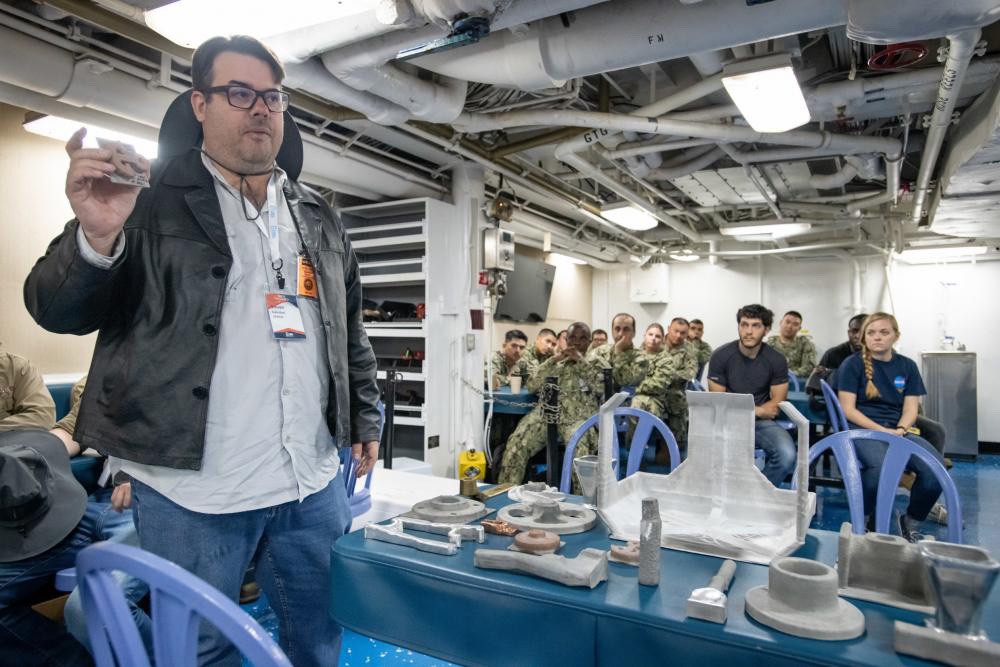
The Naval Surface Warfare Center (NSWC) Carderock, located in Maryland along the Potomac River, originally developed the deck drain coamings along with composite inserts, to decrease the amount of maintenance related to corrosion on naval vessels, and to stop water from splashing all over the decks of swaying ships. Aside from the three NSNs covered by the deck drain coamings, NAVSEA currently has 143 more NSNs to be fulfilled by 3D printed parts.
In a statement about the fulfilled NSN orders from MARMC’s Office of Research and Technology Applications, the Innovation Labs’ manager, Steven Peterson, explained, “The real value of the Innovation Lab isn’t necessarily creating end-products. The value lies in the capability to build a deck plate understanding of modeling and simulation tools that support additive and digital manufacturing processes.”
This is an especially important point given that the precedent for printing parts to fill NSN orders has now been set. It will likely not only speed up the process of NAVSEA’s fulfillment of the rest of its existing orders for printed parts, but should increase the number of such orders, as well as the number of such orders for other divisions of the US Navy, and the rest of the US military.
Moreover, beyond the US, the more than 60 nations who use the NSN system — all the nations in NATO, plus the NATO-sponsored nations, which includes countries like Japan and Australia — can, and presumably will, follow the US Navy’s lead. As I’ve mentioned in multiple posts recently, advanced manufacturing ecosystems seem to be centralizing around NATO, and the longstanding existence of the NSN system is likely one of the main explanations for that development.
All the nations involved are already used to ordering from, and supplying, a shared catalog of a wide range of end-products. Incorporating advanced manufacturing in general, and AM in particular, into that process is as inevitable as the growth of the industries, themselves. The aspect of this dynamic that makes it so significant is the unmatched level of purchasing power represented by the nations involved, at a time when those same nations have a variety of strategic reasons to cooperate with each other in critical areas of manufacturing. At the same time, of course, there is no guarantee that they will succeed at cooperating.
Subscribe to Our Email Newsletter
Stay up-to-date on all the latest news from the 3D printing industry and receive information and offers from third party vendors.
Print Services
Upload your 3D Models and get them printed quickly and efficiently.













You May Also Like
3D Printing News Briefs, July 1, 2026: Prosthetics, Drug Delivery, & More
We’re focused on healthcare and research in today’s 3D Printing News Briefs, including 3D printed prosthetics, patient-specific implants, drug delivery, and more. Read on for all the details! Students from...
3D Printing News Briefs, June 18, 2026: Reseller, Relocation, Metal Space Powder, & More
We’ll start with business news in today’s 3D Printing News Briefs, as XJet appointed a value-added reseller in Germany, BIO INX is expanding its presence in the Italian market, and...
CEO Yoav Zeif on Why Stratasys’ Markforged Acquisition Is Really a Bet on Industrialization
When Stratasys announced plans to acquire Markforged, the immediate focus was on the deal. Markforged is one of the most recognizable names in additive manufacturing (AM), known for its continuous...
Stratasys Acquires Markforged, Analysis of AM’s Latest Consolidation Move
A very long time ago, in 2023, the additive manufacturing (AM) industry was enraptured over the attempts by a large chunk of its publicly traded original equipment manufacturers (OEMs) to...