New Induction Nozzles Could Improve 3D Printing Quality and Reliability

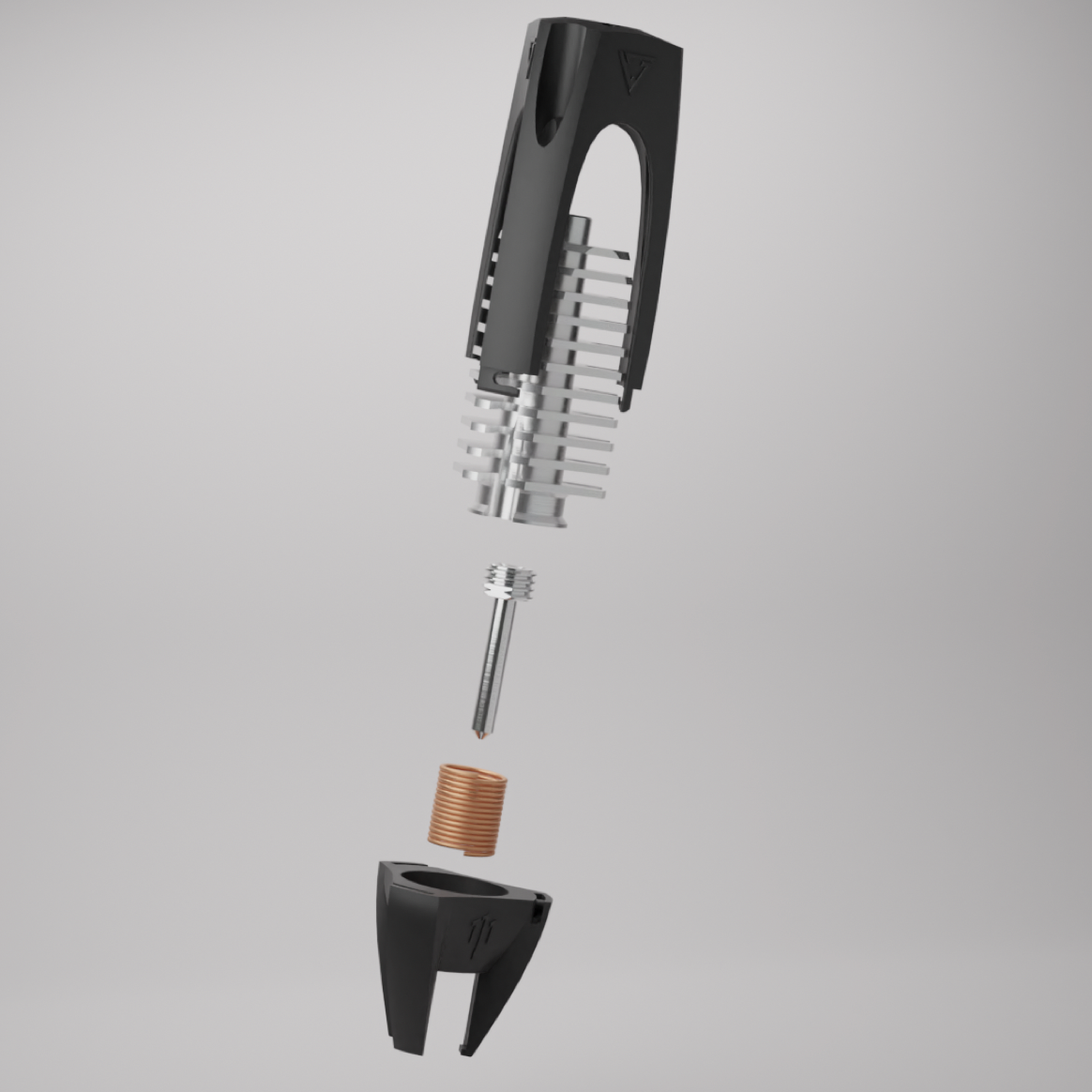
After wowing me last year at Formnext with its nozzle technology, Vienna-based startup Plasmics has launched a Kickstarter for its INo Trident induction-heat nozzle for extrusion 3D printing. The same technology that is in many stovetops, induction heating works by electrically transferring heat through conductive materials.Induction nozzles can be found on many-a lab table and in the dreams of additive manufacturing (AM) users. Now, Plasmics claims that it will be the first to introduce such an induction extrusion nozzle commercially, with a goal of shipping in March of next year.
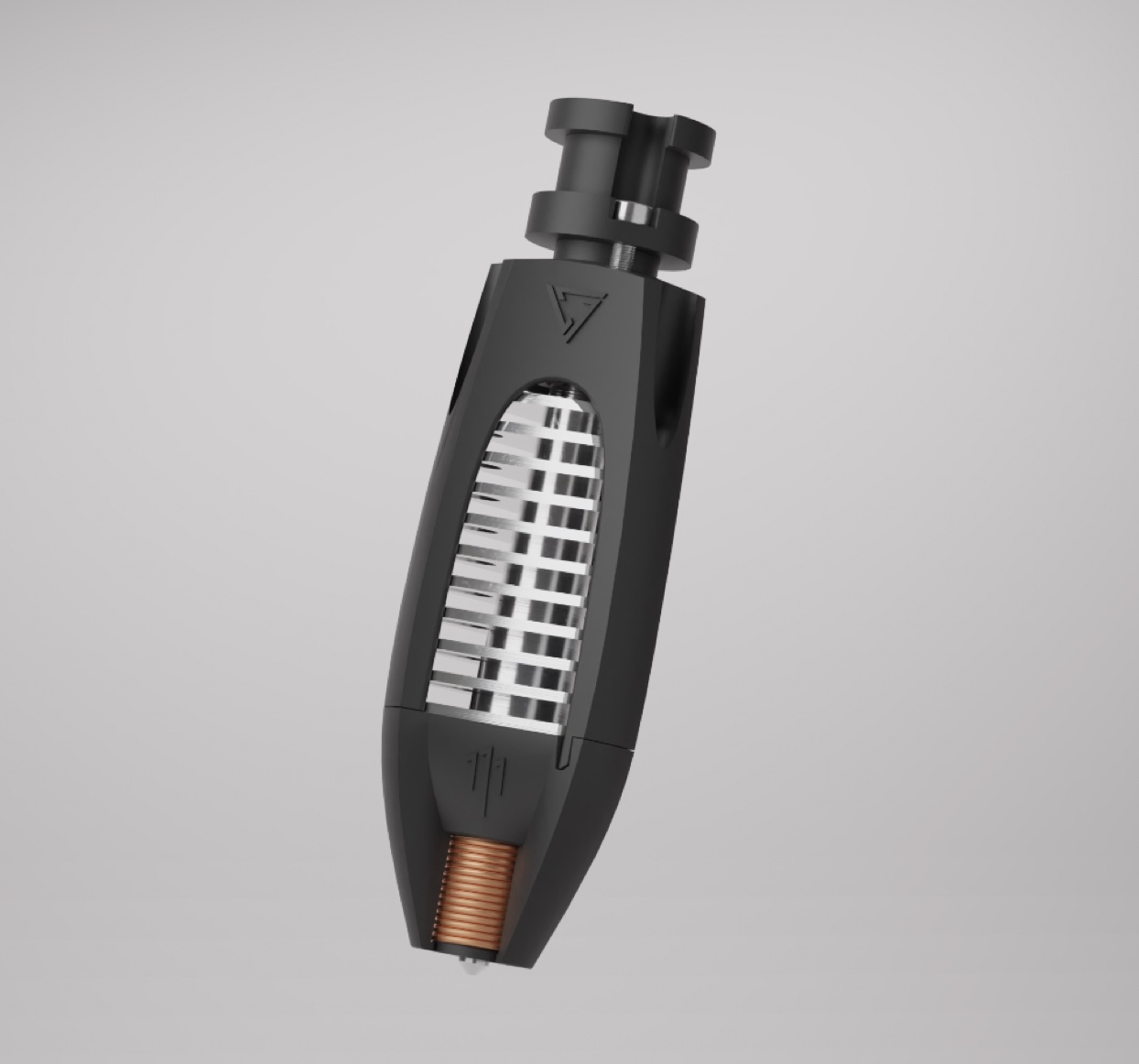
“Along with the nozzle, the hotend is the part of the 3D printer which has the highest impact on printing quality. Conventional resist-heated nozzles often do not maintain a constant temperature during extrusion because of the slow heat transfer. This, in turn, leads to speed limitations and oozing. That’s why we developed the Plasmics INo Trident – to be able to solve all these issues,” says Konrad Schreiner, CEO of Plasmics.
The Precision of Induction
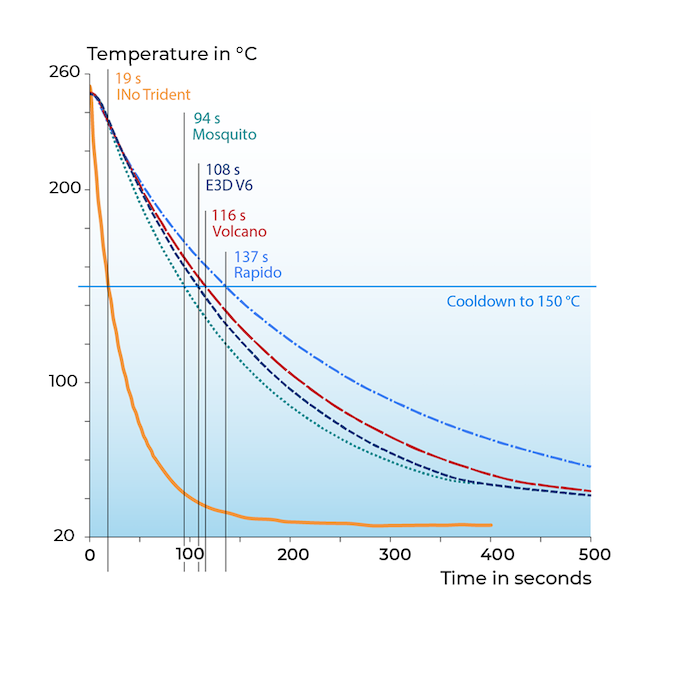
The company says that other hot ends took 37 seconds to get to 250°C, while the INo Trident took just eight seconds. Conversely, the INo Trident was 75 seconds faster than other hot ends to drop to 150°C. The company notes that this could be especially valuable when printing varioShore TPU from colorFabb. Below, we can see heat up times of some nozzles compared.
Below we can see the temperature cooldown when compared to other nozzles. This could offer a decided advantage.
Cost vs Value
The nozzle is costly, coming in at €319 for the Kickstarter version, which will later be retailed for €479. You can also opt for the €419 INo Trident Carbon Black Edition.

Now, many users will probably be comparing the price of the Plasmics nozzle with the cost of their printer. I’m not going to say that the INo Trident is not pricey. The good news is that it is a drop in replacement for existing nozzles. The company has made the nozzle abrasion resistant, which could prolong its life and allow for more exotic materials. It can also withstand temperatures for ULTEM and other high-temperature filaments. For now, it only has Klipper support with Marlin and Duet support via SPI interface to be added before the product is shipped. Klipper, is growing, but that could limit the appeal for now.
Plasmics is more ambitious still. Later on, the company hopes to roll out the Plasmics Ecosystem bit by bit , which will include better Gcode generation. The firm is behind the scenes working with some top orthoses and medical device firms to deploy its technology in manufacturing.
Induction nozzles have been a topic of research for over a decade. At one point, all extrusion printer manufacturers could allow for induction nozzles to instantaneously and dynamically heat and cool according to wall slip and other pressure effects in the nozzle. Systems could also even heat and cool quickly to specific geometries within a print. I hope that Plasmics takes us all into an induction age, where we can digitally measure and control our heat.
Subscribe to Our Email Newsletter
Stay up-to-date on all the latest news from the 3D printing industry and receive information and offers from third party vendors.
Print Services
Upload your 3D Models and get them printed quickly and efficiently.











You May Also Like
The AM Applications Game: Where Additive Manufacturing Is Actually Winning
When Additive Manufacturing Research (AM Research) announced its upcoming webinar, “3DP/AM Market Insights: 2025 Review and 2026 Preview,” it pointed to a key issue for the industry: which sectors are...
MIT’s Enterprise Additive Manufacturing Program Heads to RAPID + TCT 2026
MIT will offer the class Enterprise Additive Manufacturing over the course of five days. Three and a half days will take place at MIT, while two half days will see the...
The Great AM Reset: Why Applications Will Decide Who Survives
For decades, the AM industry has been powered by an exciting narrative of endless growth and disruptive potential. We celebrated every new technology, every injection of capital, and every bold...
Bambu Lab Says 2025 Was a Breakout Year: 10 Million Monthly Users and Real Business Growth
Chinese 3D printer maker Bambu Lab reported strong results for 2025, showing that the company’s push into community and small-business 3D printing is working. The numbers suggest consumer 3D printing...