Pratt & Whitney Evaluates Large Velo3D System for 3D Printing Jet Engine Parts

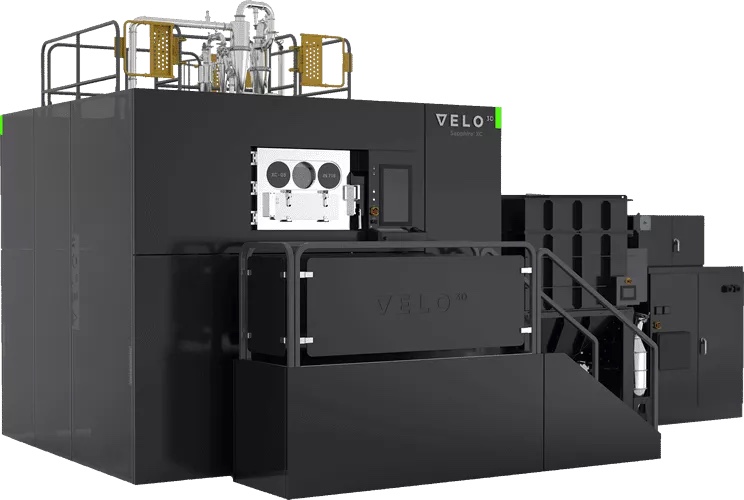
Velo3D has announced that its Sapphire XC will be evaluated for use in the production of jet engine components by Pratt & Whitney, at the Raytheon Technologies Research Center, in East Hartford, Connecticut. A subsidiary of Raytheon Technologies, Pratt & Whitney is one of the world’s largest aero-engine manufacturers.
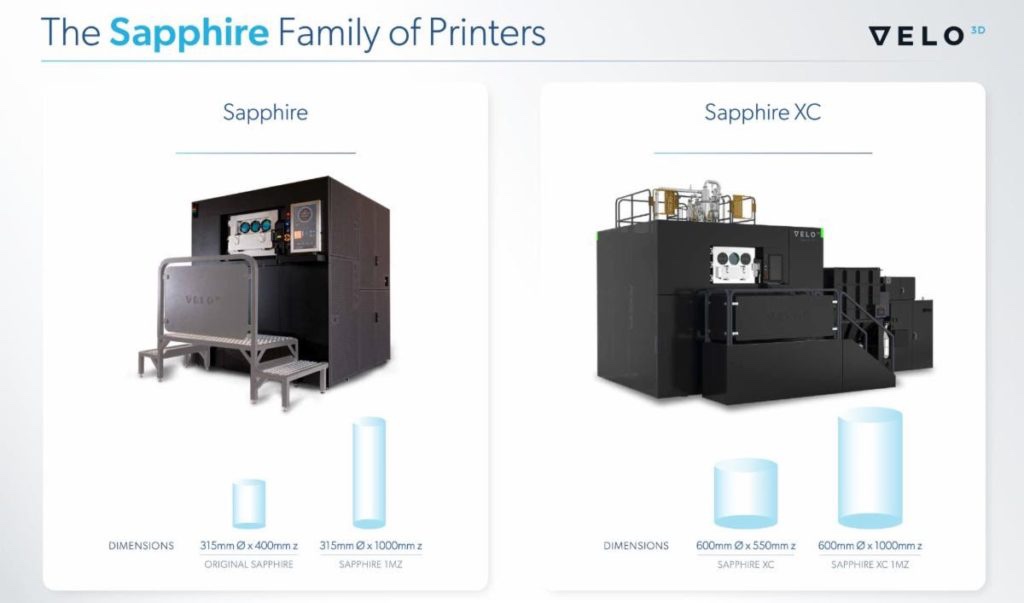
Released at the end of 2021, the Sapphire XC currently has the largest build capacity of any Velo3D machine, although that will change later this year, when the XC 1MZ is released. Lockheed Martin Space received one of the first Sapphire XC’s, in April, 2022, after Velo3D announced shipment of the first machine, to an unnamed “key aerospace customer”, last December. Additionally, Texas-based contract manufacturer Knust-Godwin, which makes parts for a variety of heavy industry sectors including oil & gas and aerospace/defense, received a Sapphire XC earlier this month.
In a press release, Velo3D’s founder and CEO, Benny Buller, commented, “Metal additive manufacturing [AM] can transform aviation and space systems by delivering unprecedented part consolidation, lighter weight components, and more efficient systems. …We’re eager to see how [Pratt & Whitney] innovate their most mission-critical designs using our end-to-end solution, and how the economies of scale of an in-house system help increase addressable use-cases.”
It is notable that Lockheed and Raytheon are among the earliest customers for the Sapphire XC, beyond the fact that they’re two of the world’s largest defense corporations. They’re also two of the five initial corporate participants in the Biden administration’s AM Forward program, launched in May of this year. The program’s objective is to stimulate the adoption of AM by American small and medium enterprises (SMEs), mainly by directing a large number of existing SME-related federal agencies to start facilitating and encouraging the incorporation of AM.
Thus, Velo3D — as well as any company servicing one of the five AM Forward corporations — will grow increasingly integrated into the federal procurement supply chain for 3D printing. In other words, Velo3D can be expected to be one of the many beneficiaries of increasing amounts of federal funding for the AM sector throughout the rest of this decade.
Moreover, assuming Pratt & Whitney’s evaluation of the Sapphire XC is successful, Velo3D will continue to get more and more customers from the aerospace sector. This would put it in good position to be considered the industry standard for powder bed fusion metal printing.
Images courtesy of Velo3D
Subscribe to Our Email Newsletter
Stay up-to-date on all the latest news from the 3D printing industry and receive information and offers from third party vendors.
Print Services
Upload your 3D Models and get them printed quickly and efficiently.













You May Also Like
Solukon Goes Big with New SFM-AT850 Depowdering System
Solukon has released the SFM-AT850 depowdering system. The German depowdering specialist has updated its product line, and this machine replaces the SFM-AT800-S and SFM-AT1000-S. Rather than many small parts, this...
The Hidden Economics of Powder Bed 3D Printing: Closing the Loop in Powder Management
Automation is a very topical thing in additive manufacturing at the moment. With renewed scale, some clients are fervently looking to automate production. Other business cases only make sense with...
Oerlikon Adds ATLIX’s xBUILD 5000, Plans More for 2027
Oerlikon has installed a new ATLIX xBUILD 5000 metal 3D printer at its facility in Huntersville, North Carolina, marking the first production deployment of the system worldwide. The machine will...
The Science Lab You Can 3D Print
Researchers at Sweden’s Umeå University have shown how desktop 3D printers can be used to make lab equipment, giving scientists a cheaper way to build tools for their research. The...