3D Printed Mining Parts from Sandvik Begin Trials in Sweden

Sandvik (Nasdaq Stockholm: SAND) has already established itself as a force to be reckoned with in additive manufacturing (AM). The Swedish metals, mining and engineering giant has become a substantial provider of metal powders and 3D printing services. And its various divisions are starting to see increased benefit from the cross-pollination that comes with Sandvik’s role in AM. The latest example sees the multinational partner with fellow Swedish mining firm Boliden to 3D print and install underground drill rigs.
In the new trial, Sandvik and Boliden have redesigned components for their mining equipment. The parts were first 3D printed at Sandvik’s Italian subsidiary, BEAM-IT. The plan is to then monitor their performance on machines at Boliden’s underground mines in Sweden and, then, Ireland. So far, the first components have already been installed at the firm’s Garpenberg mine, but the results have yet to be determined.
The benefits of 3D printing parts for mining operations are manifold. In addition to the fact that individual components could be optimized for better performance, AM offers the ability to produce and install replacement parts more quickly. This is particularly useful in remote locations, which is why navies around the world, as well as companies with offshore oil rigs are exploring the technology. The same is true for underground mines.
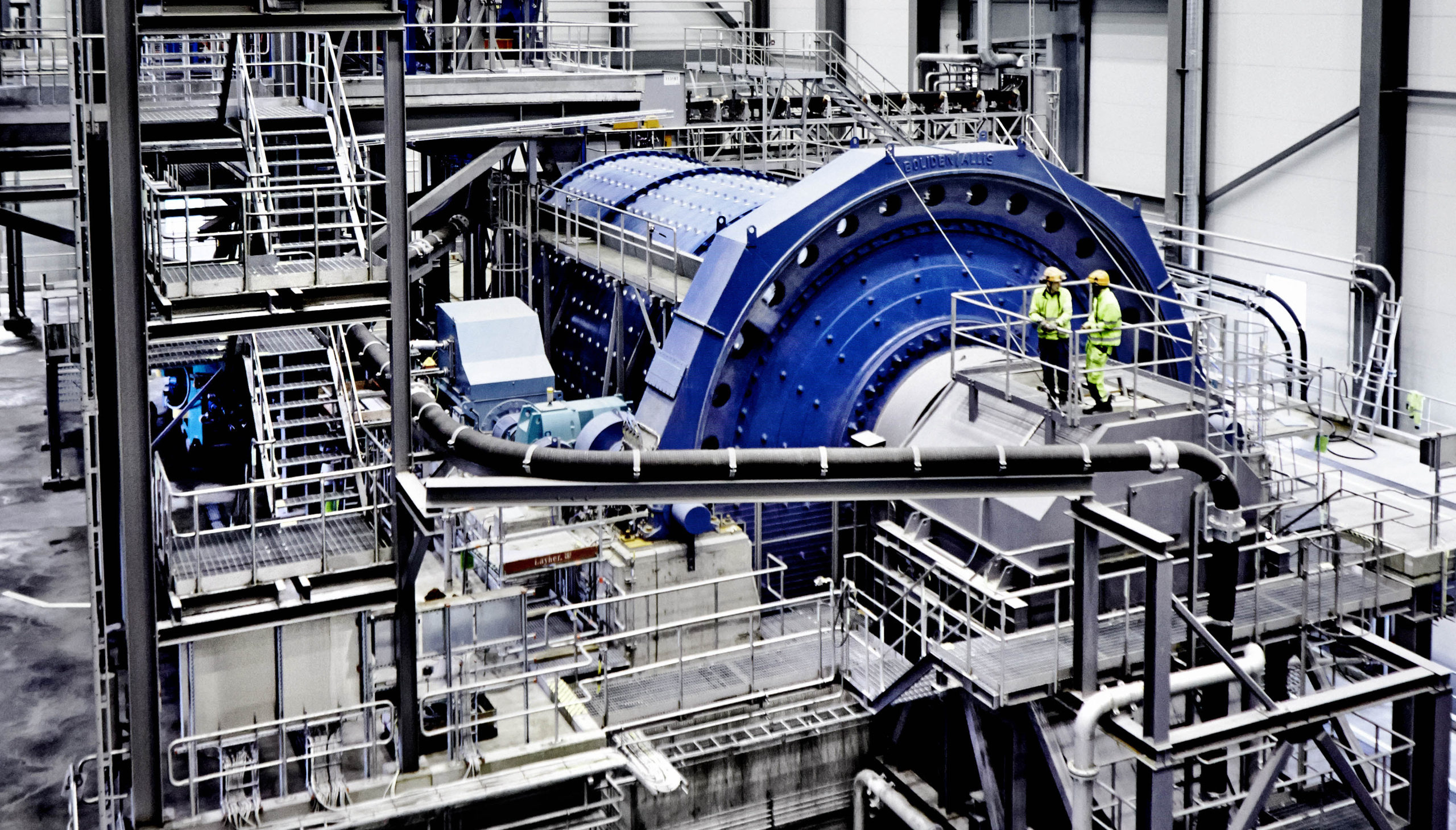
Boliden’s Garpenberg mine. Image courtesy of Boliden.
Erik Lundén, President of Parts & Services at Sandvik Mining & Rock Solutions, said, “Mining equipment can last up to 25 years – and needs to be supported throughout that time – even in the most remote of locations. We have many different SKUs (stock keeping units), and from an inventory point of view we can’t tie up the capital that keeping all these parts in stock would entail. 3D printing of parts locally offers us the prospect of not only getting parts to the customer much faster, but doing so far more sustainably.”
Ronne Hamerslag, head of supply management at Boliden, noted the benefits that additive can bring to the firm’s mining operations:
“Additive manufacturing shows a lot of potential, both in reducing carbon footprint within the supply chain, through reduced or eliminated need for transport and storage of parts and also shorter delivery times. This trial will give us a deeper understanding on how we can move forward and develop our business in a competitive way,” Hamerslag said. “Its efficiency, speed and climate friendliness mean that we have to investigate additive manufacturing closely. We are only at the proof-of-concept stage with Sandvik right now, but it’s already clear that it could become a game-changer for the spare parts business in mining – for both miners and equipment manufacturers.”
Obviously, the sustainability benefits of producing spare parts for businesses depend on what those businesses do. In the case of mining, one might wonder just how sustainable it is to ensure the continuation of operations that likely destroy ecosystems. Moreover, what’s mined will then be used to fuel global industrial resource use, thus creating further environmental destruction.
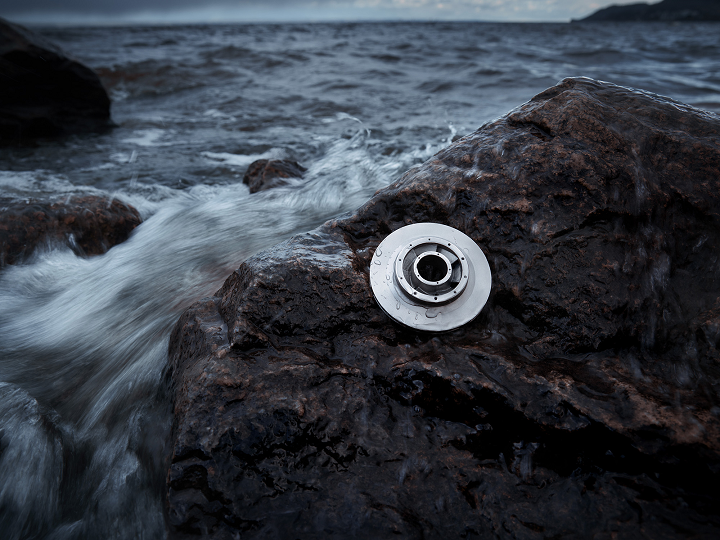
An impeller 3D printed by Sandvik. Image courtesy of Sandvik.
The Garpenberg mine, in particular, is primarily dedicated to zinc, but also produces copper, lead, gold and silver. In total, it processed about 3,056 ktonnes of ore in 2021. Zinc’s most common use is for anti-corrosion plating of iron, but it is also used for electric batteries and more. So, if were able to make a collective decision as a global society, we might ask ourselves if any ecological destruction caused by the mining of zinc outweighs the material’s utility. Because we can’t make such collective decisions, we can safely say that, for the time being, mining operations will continue on their present track.
The partners suggest that operating items that need to be changed every 3,000 to 4,000 hours are the best candidates for AM. This includes bushes, brackets, drill parts and more. In addition to the actual engineering and performance of the parts, the partners have to explore the business options. This includes addressing such concerns as who performs the 3D printing, the exact costs, and where the intellectual property rights, warranties and liabilities lay.
Subscribe to Our Email Newsletter
Stay up-to-date on all the latest news from the 3D printing industry and receive information and offers from third party vendors.
Print Services
Upload your 3D Models and get them printed quickly and efficiently.











You May Also Like
Snapmaker Secures Series B Backed by Xiaomi Founder’s Network and China’s Investment Elite
Desktop 3D printer manufacturer Snapmaker has gotten a series B round. The round is led by Hillhouse Ventures and Meituan. Cowin Capital and Orient Securities Capital dipped in for another round,...
Registration Rates for Additive Manufacturing Strategies 2026 Increasing This Week
It may not seem like it, but February is right around the corner, and that means it’s almost time for our 9th annual Additive Manufacturing Strategies event. Returning to New...
LEGO’s First Mass-Produced 3D Printed Element Is Now in Stores in a New Holiday Set
Back in September, 3DPrint.com reported that LEGO was preparing to release its first mass-produced 3D printed element inside an upcoming LEGO Christmas set. At the time, details were limited to...
Formnext 2025: Day Three: We Are the Champignons
Closing out the Champ bar and sitting in the lobby of the Marriott is perhaps not the most healthy of pastimes. Consuming a tower of mini burgers pinned to chicken...