Rubber3DPrinting’s Conductive TPU Filament Has Incredible Potential for Robotics, Prostheses, & More


 Material choices continue to expand within the 3D printing space. We now have metal-like filaments, wood-like filaments, filaments with carbon fiber in them, and more. One filament option which is not all that common, due to the difficulty that companies have in manufacturing it, is thermoplastic polyurethane (TPU). TPU, however, is really being used more and more by owners of 3D printers due to its flexibility. We’ve seen it used to create a myriad of different 3D printed products which were almost impossible just a couple years ago.
One man, named Thomas Palm, seems to have become quite proficient at what he does. He has created his own consumer-level filament extruder that has the ability to extrude TPU, which his company Rubber3dprinting offers for sale.

3D printed keyboard-like device by Palm.
“The current consumer filament-extruders out there cannot extrude TPU, etc. with good tolerances,” Palm tells 3DPrint.com. “So I designed my own. My true goal is to release a Kickstarter or Indigogo project for my filament-extruder later. Hopefully Quarter 1 of 2015.”
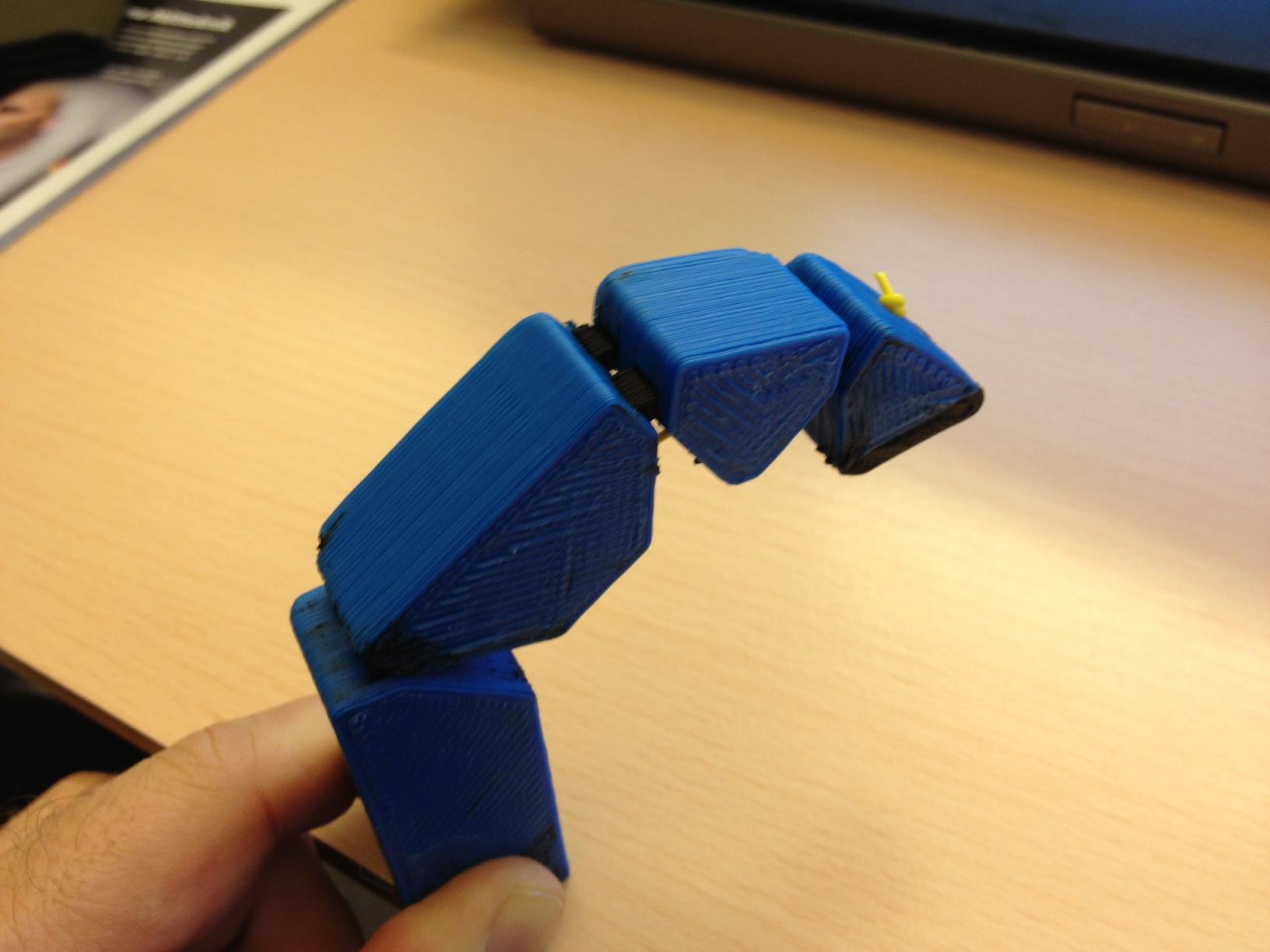
Not only is Palm able to create ordinary TPU filament, but he is also able to create conductive TPU, by putting carbon into his mixture. The possibilities for this material are really endless, but Palm has been testing it by creating several unique designs. One of these is a prosthetic/robotic finger that he has 3D printed. It is printed using a dual extrusion method, printing the TPU for the bendable joints as well as the force sensitive fingertips.
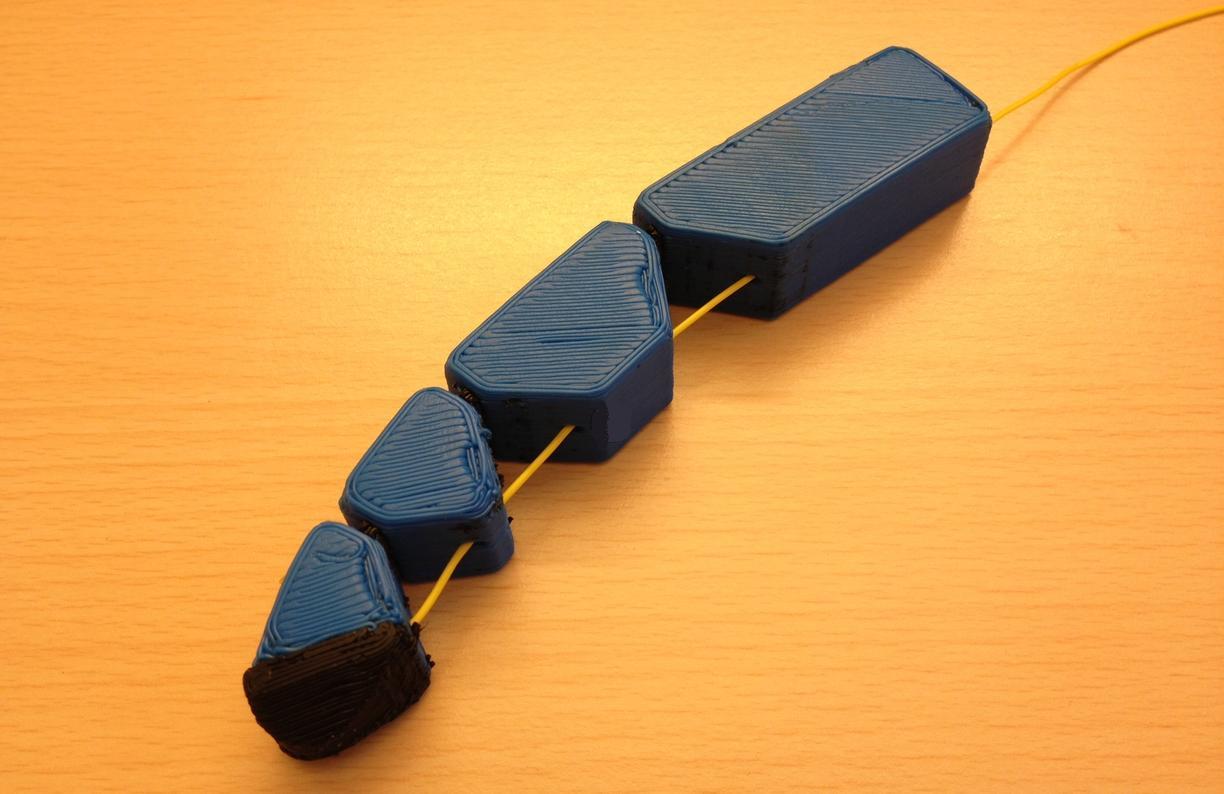
3D printed finger with fingertips that can be touch-sensitive with bendable joints
“The fingertip has an outer shell that, when pressed, will connect to the inner conductive surface, thus creating a closed circuit,” Palm tells us. “The connection is also a bit pressure sensitive.”
While Palm admits that having touch sensitive fingertips on robotic hands is not something all that new, he believes that his innovation will make it much more affordable, and also allow for the 3D printing of a complete hand without requiring much assembly.
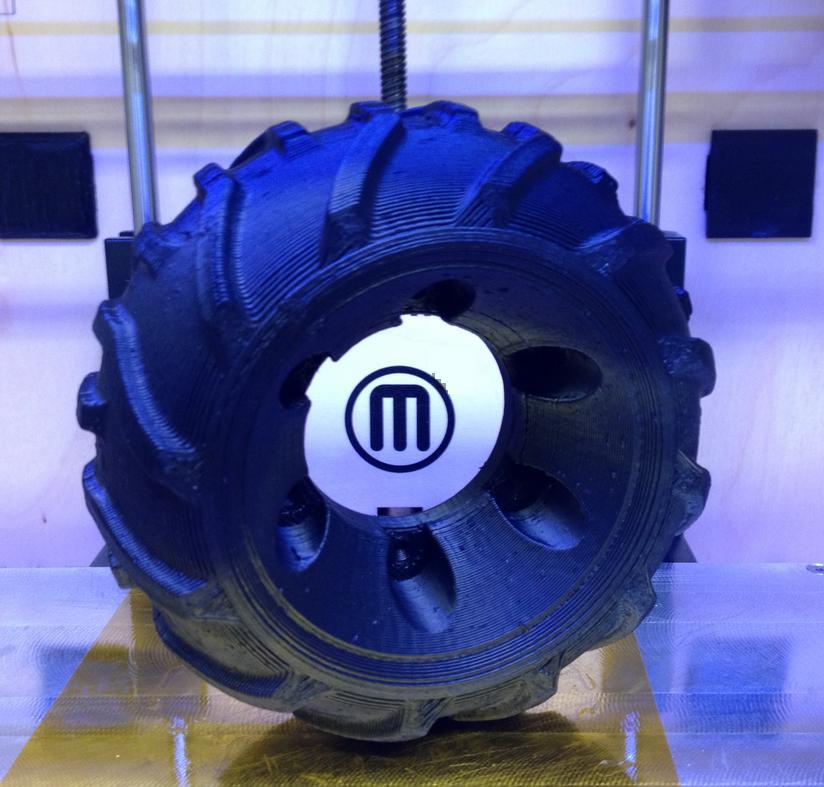
Other designs which Palm has come up with, and has 3D printed using his TPU material, include a set of wheels for an OpenRC Truggy, as well as a 3D printed keyboard-like device, a product he calls “Mr. Vise Guy,” a Flexible Plastic Bag Handle which makes holding grocery bags a lot less painful on the hand, and a pair of very comfortable and quite aesthetically appealing sandals, among other things.
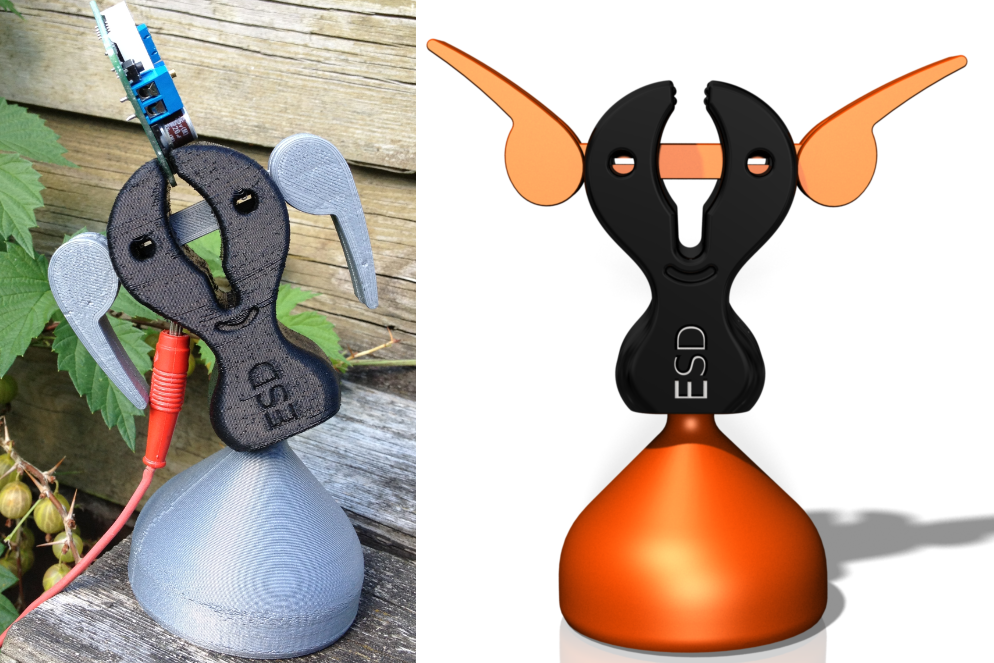
Mr. Vice Guy – 3D printed
It should be interesting to see all of the unique products that Palm comes up with for his filament in the future, and we will definitely keep an eye on Kickstarter/Indiegogo for his filament extruder, launching sometime in the beginning of 2015.
What do you think about the potential for Palm’s rubber-like TPU filament, and his conductive TPU filament? Discuss in the Conductive TPU filament forum thread on 3DPB.com. Check out the video below showing Palm talking about some of his creations, and some more photos.

Subscribe to Our Email Newsletter
Stay up-to-date on all the latest news from the 3D printing industry and receive information and offers from third party vendors.
Print Services
Upload your 3D Models and get them printed quickly and efficiently.













You May Also Like
50,000 Orders and Counting: EPlus3D & Chinese AM Services Provider Are Scaling Liquid Cooling Solutions for AI Servers
An under-appreciated story driving the additive manufacturing (AM) industry this year has been the divergence between what’s driving the market in China and what’s driving it everywhere else. Let’s start...
Seven Trends Reveal What’s Next for 3D Printing at TCT Shenzhen 2026
TCT Shenzhen 2026 opened on October 14 in Hall 15 of the Shenzhen World Exhibition & Convention Center in Bao’an, and ran through October 16. The event brought together equipment...
With Increased Aerospace & Defense Focus, CORE Industrial Partners Buys More Manufacturing Firms
Private equity’s march into manufacturing continues with CORE Industrial Partners’ latest acquisitions. CORE purchased Fathom a few years ago, and later bought 3DXTECH LLC, Triton 3D LLC, and Gearbox3D. It...
Can India’s AM Push Help Make it a Viable Supplement to China?
Diversifying manufacturing supply chains to locales outside of China has nothing to do with actually cultivating “substitutes” to the Chinese economy. The real stakes are these: China is an irreplaceable...