Porsche Invests in Chinese 3D Printer Maker INTAMSYS


The paths of two interesting companies are converging as the investment arm of luxury auto manufacturer Porsche backs Chinese 3D printer maker INTAMSYS. The exact amount of funding has not been disclosed, but Porsche Ventures has said that it has invested in INTAMSYS as a means of exploring the use of its technology in automotive applications.
INTAMSYS was founded in 2016 with a focus on material extrusion 3D printers. This led to the development of high-temperature machines capable of 3D printing with engineering-grade materials, like the polyaryletherketone (PAEK) family of plastics. This makes its 3D printers ideal for such applications as aerospace, automotive, and medical parts that need to be temperature- and chemical-resistant, while maintaining high strength. In the case of medicine, this could mean biocompatible implants made from PAEK polymers.
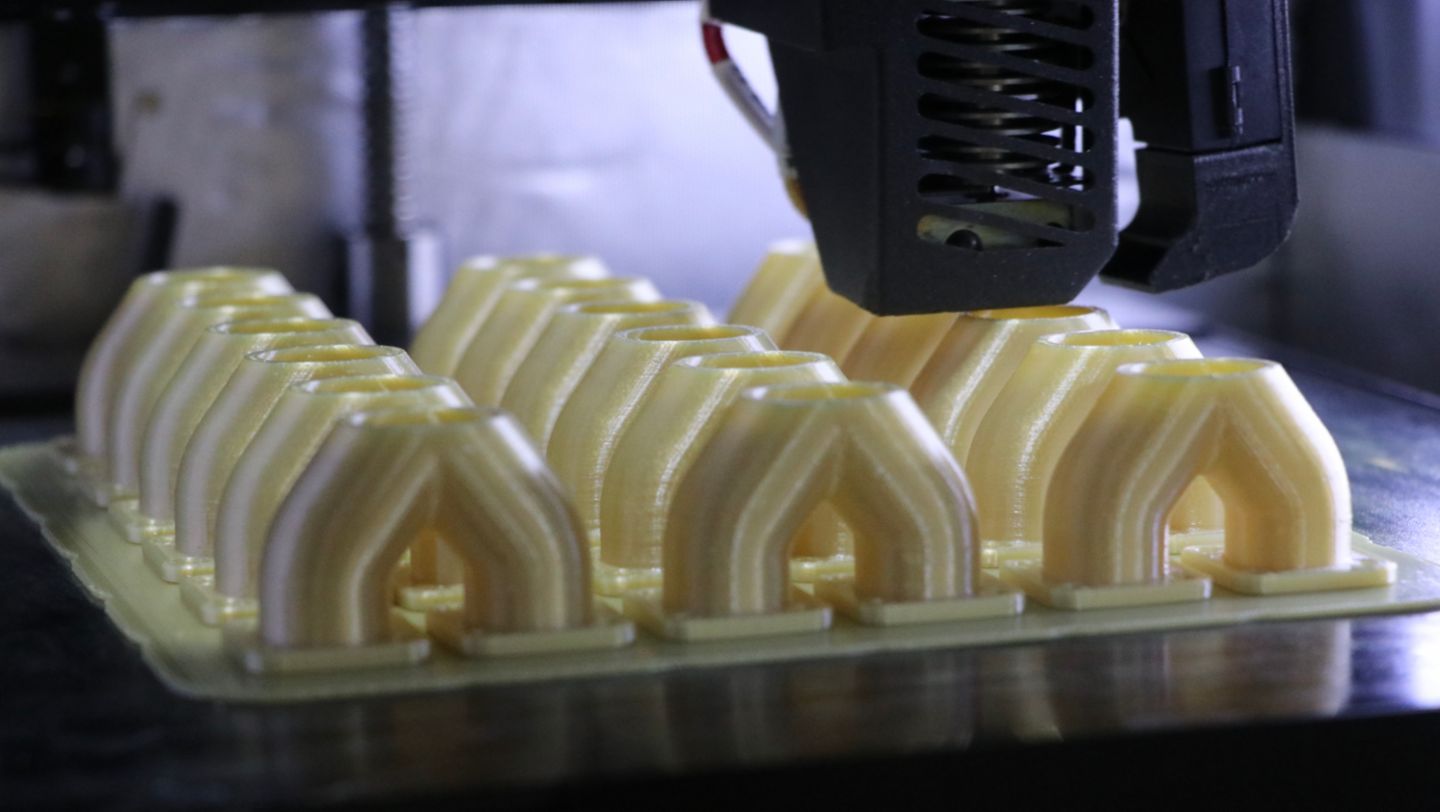
Batch parts 3D printed with an INTAMSYS machine. Image courtesy of Porsche.
Although this is the first investment by Porsche Ventures into 3D printing, the auto manufacturer has toyed with the technology in the past. With GKN, Porsche Engineering used laser powder bed fusion (PBF) to 3D print components for an electric drive train using a new steel alloy. More recently, it has relied on SLM Solutions’ 12-laser system to 3D print a proof-of-concept e-drive housing. The Porsche 911 GT2 RS was outfitted with PBF-printed metal pistons. This doesn’t even include what its parent company, Volkswagen, is up to.
“Digital transformation has seeped into every aspect of production and daily life, and is listed as one of the core issues in Porsche’s operation strategy,” says Jens Puttfarcken, President and CEO of Porsche China. “Porsche plans to boost the actual application of additive manufacturing technology, and leverage the significant innovation potential of 3D printing in terms of both product and process to offer customers more flexible production and customisation services. We are honoured to support INTAMSYS as an important partner on Porsche’s digital transformation journey, as they help fulfill our vision of the future.”
“We are excited to see that our product and vision are recognised and supported by Porsche,” says Charles Han, CEO of INTAMSYS. “In the future, we at INTAMSYS will continue our close cooperation with Porsche to develop more innovative products, expand the application of additive manufacturing and empower the digital manufacturing transformation of the automotive industry, in a bid to benefit more customers with high-tech solutions.”
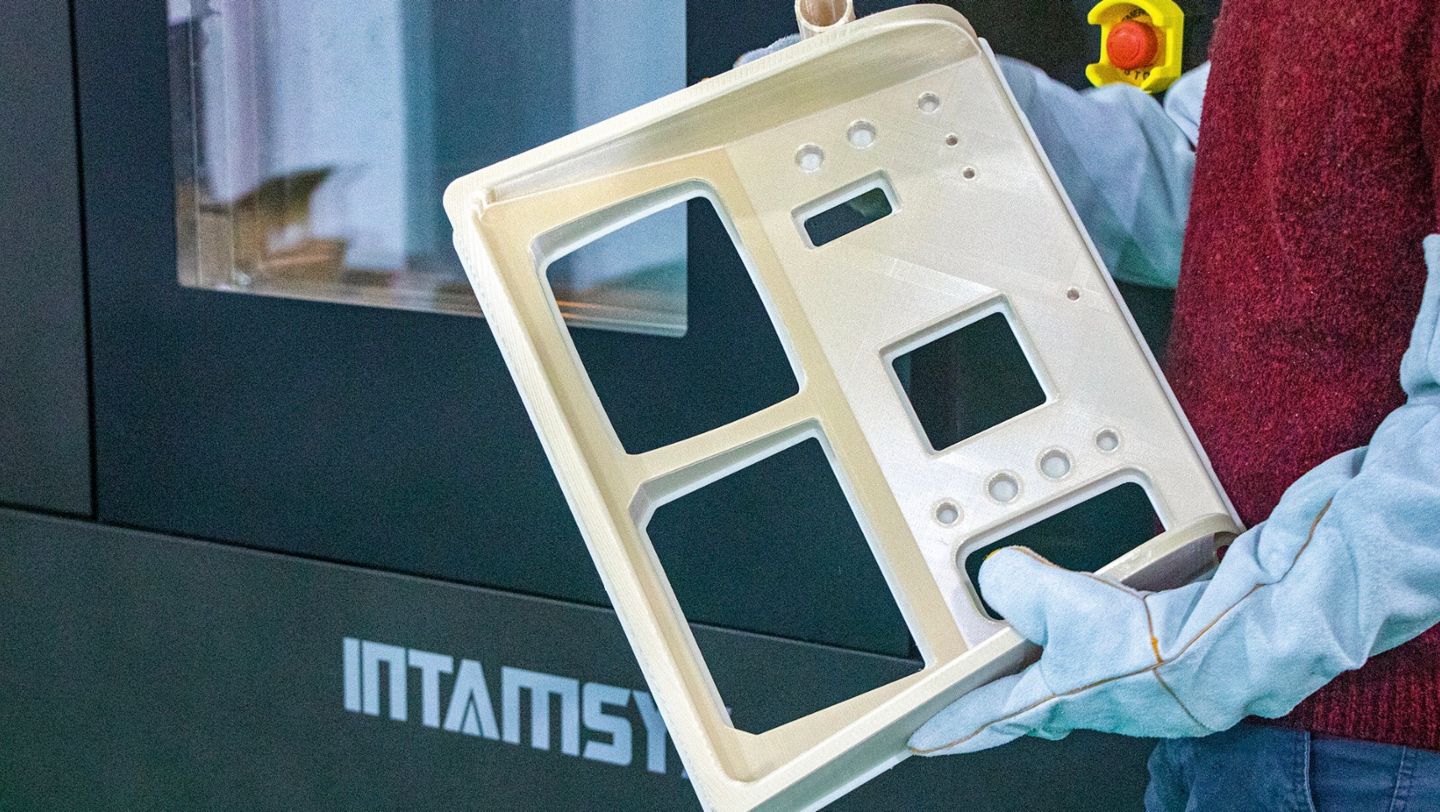
A large part 3D printed with the FUNMAT PRO 610 HT. Image courtesy of Porsche AG.
These developments ramped up more steadily in the past several years with the company seemingly focused on metal parts. So, why is Porsche investing in a desktop extrusion system manufacturer? And why in China?
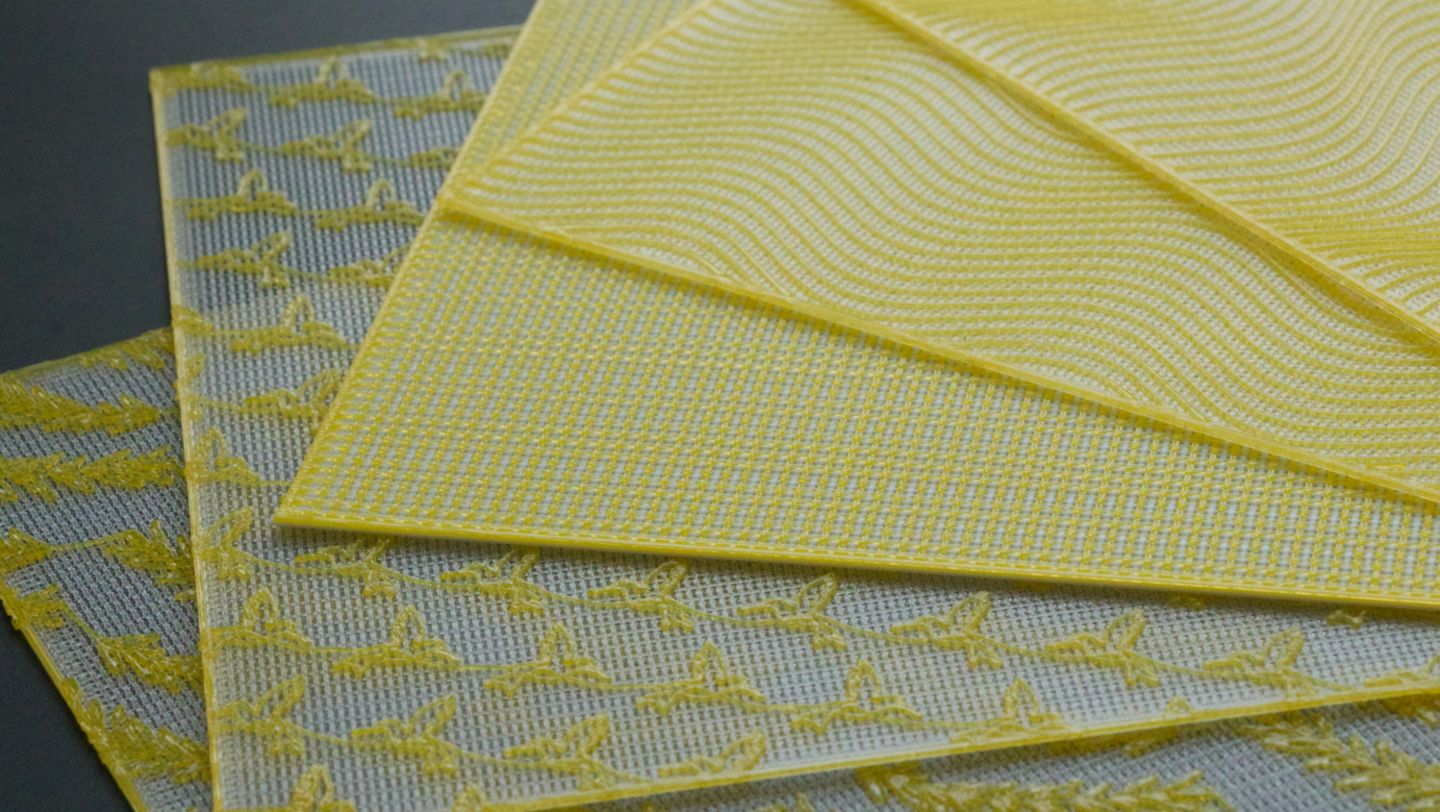
Flexible material 3D printed with INTAMSYS technology. Image courtesy of Porsche AG.
It’s possible that the German car company is relying on INTAMSYS technology similar to the FLEX 510 to 3D print seats for its vehicles. The new feature was made available for the Boxster, Cayman and 911 models in October 2021 and will become a standard option in the Porsche Car Configurator starting in February 2022. Because the FLEX 510 is capable of quickly 3D printing with flexible materials such as thermoplastic polyurethane, it wouldn’t be surprising if Porsche’s partially polyurethane 3D printed seats were made using either multiple FLEX 510s or a scaled-up version.
Regardless of whether or not this is the case, INTAMSYS is one of a number of firms in China that is growing rapidly. Stereolithography 3D printer manufacturer UnionTech just received a $31 million investment, while PBF maker Farsoon has reported its best financial year to date. At the moment, INTAMSYS looks a bit like the Chinese version of an early-stage Stratasys, prior Objet merger.
However, INTAMSYS has the benefit of skipping all of the growth pains that Stratasys went through as 3D printing was slowly adopted around the world. Now, additive manufacturing is nearly mature. Auto makers have been using it for prototyping for decades and it is being used to make end parts regularly in aerospace. It makes more than enough sense for Porsche to jump onto this bet early enough in the firm’s growth stage to access a Stratasys-like business before its competitors know how valuable it is.
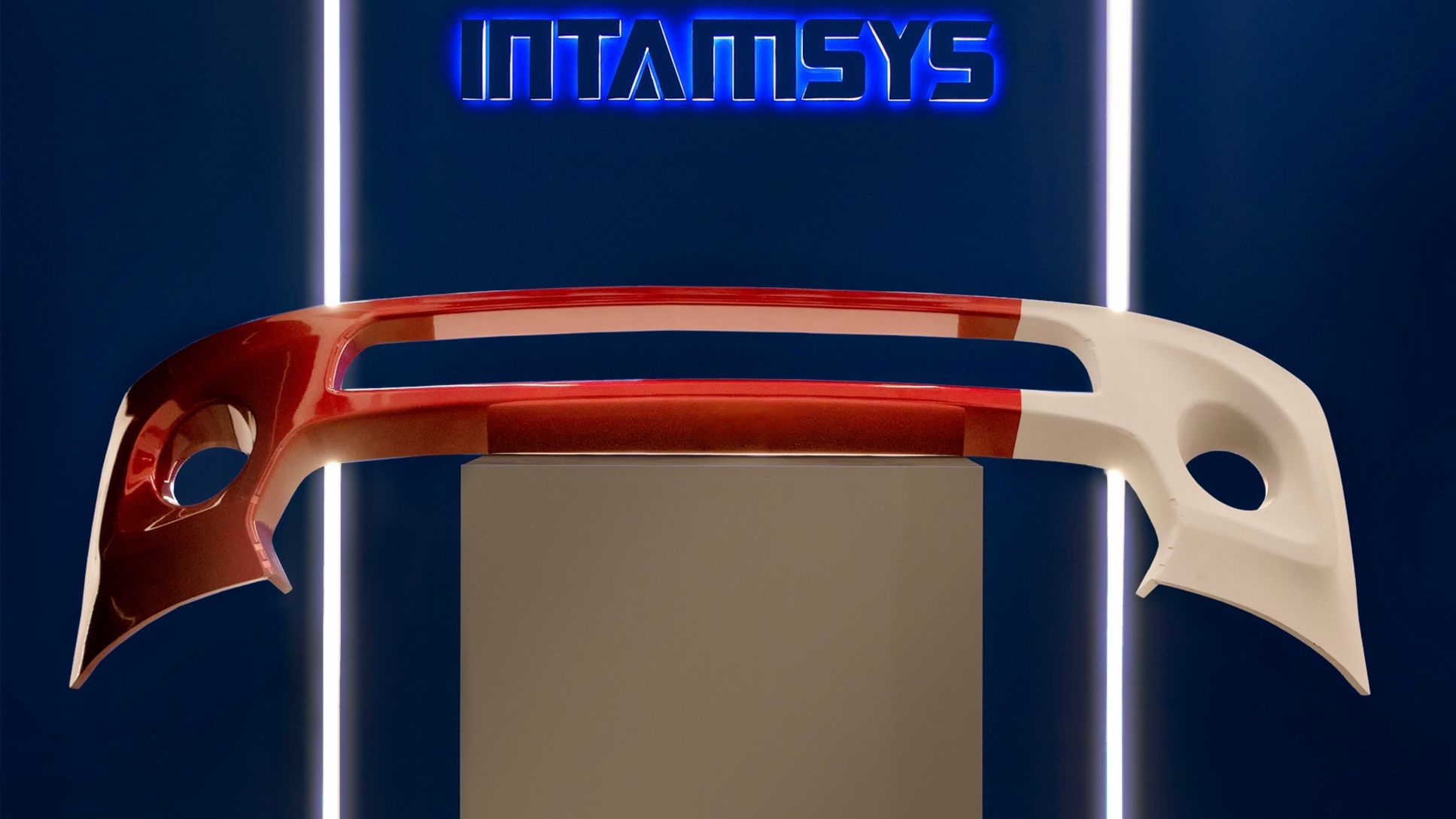
A car bumper 3D printed with INTAMSYS technology. Image courtesy of Porsche AG.
According to the “Additive Manufacturing for Automotive Part Production – 2019 – 2029” report from SmarTech Analysis, 3D printing in the automotive segment will be a $9 billion segment by 2029. As fellow 3DPrint.com writer Matt Kremenetsky pointed out, a great deal of this activity is taking place in Germany.
Among those leading the charge is Volkswagen, the parent company of Porsche. VW claims that it will be using HP’s Metal Jet Fusion technology to 3D print 100,000 end parts by 2025. Major auto supplier MAHLE has partnered with SLM Solutions to drive 3D printing of auto components as well.
But it won’t only be Germans who are deploying the technology. In the U.S., Ford claims that it will be using Desktop Metal/ExOne’s binder jetting to 3D print metal end parts. Don’t be surprised if we don’t hear some surprising announcements from any or all of the above in 2022.
Subscribe to Our Email Newsletter
Stay up-to-date on all the latest news from the 3D printing industry and receive information and offers from third party vendors.
Print Services
Upload your 3D Models and get them printed quickly and efficiently.













You May Also Like
Metal 3D Printers for the Desktop Are Finally Starting to Feel Like Desktop Products
FDM 3D printing is becoming increasingly accessible, yet metal 3D printers designed for everyday desktop use remain rare on an ordinary workbench. The real challenge is not making a metal...
What 3D2GO Says About 3D Printing’s Growth in Southeast Asia
The Philippines offers an interesting case study in how 3D printing can develop in Southeast Asia, and Manila-based 3D2GO helps illustrate it. 3D printing in Southeast Asia doesn’t have to...
The Frankenservice Part 2: Have Your Cake and Eat it Too
This series of articles delves into a thought experiment. What if we let go of using a few machines very optimally, but instead use lots of different machines to meet...
Silencer Market Set to Test Metal Additive’s Readiness for Production Prime Time With Enormous Market Expansion
Throughout the history of additive manufacturing (AM) technologies, there are only a couple of really interesting case studies in which we see a market significantly disrupted and revolutionized by AM....