FIT AG and pro-beam Team up for (DED & PBF) Electron Beam Metal 3D Printing

The world of electron beam 3D printing is suddenly becoming larger. Whereas it was previously dominated by a single company, GE’s Arcam, there have been a number of new entrants as of late. Germany’s pro-beam Group has partnered with 3D printing specialist FIT AG to develop additive manufacturing (AM) processes relying on electron beams. According to their recent framework agreement, they will “pool their know-how and create new technological opportunities through the resulting synergies.” This will include process, materials, and equipment for electron beam technology.

pro-beam’s electron beam powder bed fusion process. Image courtesy of pro-beam.
FIT AG is the German AM specialist that spun out Netfabb, one of the leading 3D printing software developers that was ultimately bought by Autodesk. With more than 25 years in the AM space, the company offers industrial 3D printing services and develops data preparation and 3D printing process technology.
pro-beam has been in the world of electron beams for over 45 years, specializing in welding, hardening, drilling and surface coating. More recently, the firm entered the AM space with both directed energy deposition (DED) and powder bed fusion (PBF) technologies.
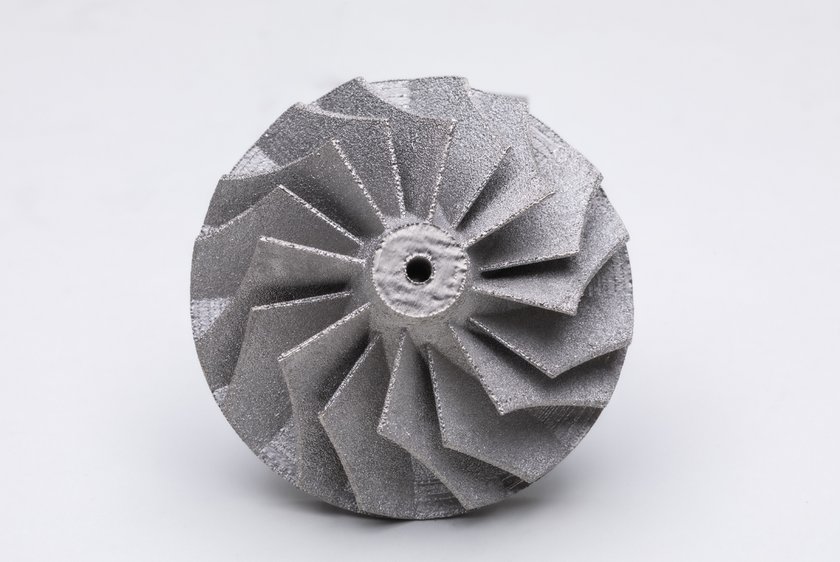
A titanium turbocharger 3D printed with pro-beam’s electron beam PBF process. Image courtesy of pro-beam.
“The respective expertise of the two companies FIT and pro-beam holds enormous potential,” says Dr. Thorsten Löwer, CTO at pro-beam, “to achieve a significant expansion of additive manufacturing applications using the electron beam.”
“I am convinced that this technology cooperation will produce important results,” explains Carl Fruth, founder and CEO of FIT AG, adding “We have some very specific ideas in mind that we can now tackle with pro-beam to achieve a market-ready technology solution.”
We’ve reached out to pro-beam to learn exactly what “very specific ideas” the company has in mind. Regardless, they are involved in a space that is currently becoming quite exciting. Companies like Wayland Additive and JEOL claim to address the existing issues faced by electron beam PBF, ensuring greater levels of repeatability and control. Meanwhile, there is Xi’an Sailong Metals in China and FreeMelt , the latter of which has an open architecture, making it more flexible for material and application development. All of these are operating under the shadow of GE Additive, which has the most established history and reputation in the space.

A copper rocket propulsion model 3D printed using pro-beam’s electron beam DED approach. Image courtesy of pro-beam.
I am not aware of any other company offering electron beam-based DED, making pro-beam a first in the space. What advantages this technique has over other energy sources, such as plasma arcs, is hard to know and we’re hoping that pro-beam can enlighten us. This also makes pro-beam the only one electron beam 3D printer manufacturer tackling both DED and PBF, giving it the ability to produce both large and small parts and leverage the benefits of each. For DED, this might include the 3D printing of a much wider variety of materials, as well as the ability to combine them. PBF is valuable for highly detailed components with complex geometries. Collaborating with FIT AG will likely speed up any development the firm planned to do on its own, giving pro-beam access to an even broader understanding of the AM industry.
Subscribe to Our Email Newsletter
Stay up-to-date on all the latest news from the 3D printing industry and receive information and offers from third party vendors.
Print Services
Upload your 3D Models and get them printed quickly and efficiently.













You May Also Like
Why the AM Industry Should Pay Attention to Schneider Electric’s $22.6B PTC Acquisition
By late 2024, there was already enough signaling of the additive manufacturing (AM) industry opportunity in the data center infrastructure market for AM Research to write a report on the...
How Does Nike’s 3D Printing Approach Fit Into Its Restructuring Plan?
Shares of Nike stock hit all-time highs in late 2021 but have cratered in the years following, with the company losing nearly 80 percent of its market cap since peaking....
3D Printing News Briefs, October 1, 2026: Defense, Enclosures, & More
In today’s 3D Printing News Briefs, we’re starting with defense news, first from Massivit and then from AML3D. Then we’ll move on to U.S. manufacturing of a new large-format LPBF...
South Korea’s Lincsolution Lands Hanwha Defense Deal as Hanwha Invests Billions in US
I recently wrote about how the South Korean additive manufacturing (AM) firm Lincsolution is building an aerospace and defense hub, part of the company’s construction of “the largest AM facility in...