3D Printing Versus Injection Molding


Most custom plastic parts are produced commercially via injection molding. This is because once the upfront costs are covered, injection molding can produce in quantities of thousands to hundreds of thousands with very low price points per item. However, those upfront costs can drive decisions on when to use injection molding, especially if the quantities needed for production are not very high. This is where 3D printing can have an advantage for production.
3D printers can make a part without the need for upfront tooling costs. Sometimes called direct digital manufacturing, a 3D printing service only requires a 3D CAD file to get started. With a low barrier to entry both in costs and minimum requirements, 3D printing can help everywhere from rapid prototyping to low volume production. 3D printing often has a break-even between 250 and 2,000 parts before injection molding becomes a more viable option.
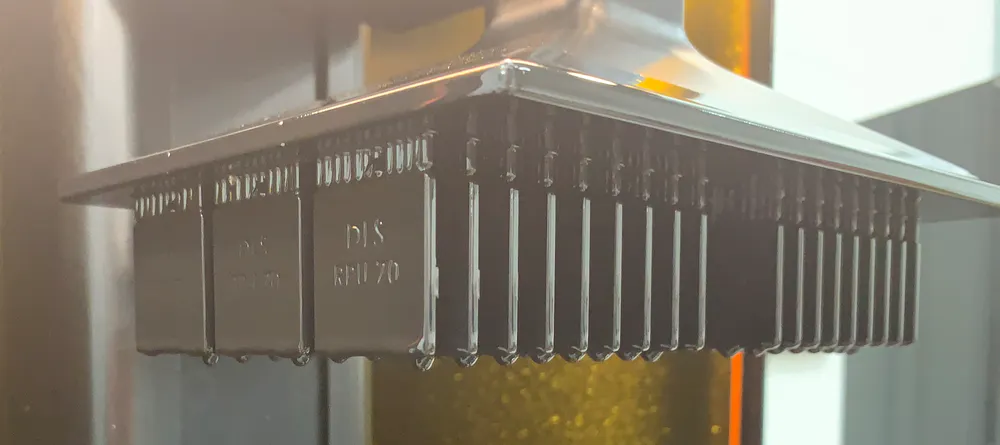
3D printing processes can be viable for production depending on the part size, design, and requirements.
The major expense in injection molding is the upfront tooling required. Not only does it require a significant financial investment, but it also often takes weeks to months to have the tool produced for a production run. However, as quantities increase, or specific materials and surfacing requirements are absolutely critical, using an injection molding service is still the correct route.

Injection molding offers consistent repeatability, smooth finishes, and the highest material availability for production.
3D printing and injection molding are not mutually exclusive. In fact, 3D printing often is a critical step in the prototype and validation of an injection mold part design. 3D printing is also being used to build molds or mold inserts and improve the process. Metal 3D printed mold cores can contain complex cooling channels which would be impossible to traditionally machine. These improvements can make the molding process faster or more reliable with less scrap.
3D printing processes like stereolithography (SLA) have commonly been used to fit check validations before moving to more costly tooling. This removes the risk of moving to a final production tool and finding the revision needs to change after tooling is produced. Beyond a substitute for low volume production, 3D printing is also a crucial step to ensure the molded project will be successful.
Services like Xometry are able to take projects from prototype to production regardless of if they are 3D prints or molded parts. Xometry has an instant quoting tool and on-staff expertise to consult with clients on their projects to determine the best manufacturing route to match their requirements. More about Xometry’s capabilities can be found here.
Subscribe to Our Email Newsletter
Stay up-to-date on all the latest news from the 3D printing industry and receive information and offers from third party vendors.
Print Services
Upload your 3D Models and get them printed quickly and efficiently.











You May Also Like
2026: The Year of the Low Cost Print Farm
The rise of high-speed, reliable desktop Material Extrusion and Vat Polymerization systems by Creality, Bambu, Elegoo, and Prusa Research, the onward march of Formlabs in Pro LPBF and VP, as...
3DPOD 287: 3DP/AM Market Data and Applications with Scott Dunham, AM Research
Scott Dunham models all the data at Additive Manufacturing Research. He has been predicting the growth of the 3D printing market in segments, materials, and applications for over a decade....
3D Printing Stocks in 2025: Performance and Market Trends
In 2025, the best-performing 3D printing stocks weren’t mostly the classic Western printer makers. Some of the strongest performers were digital manufacturing platforms and software-intensive players; these are businesses that...
Who Merged, Who Was Acquired, and Who Disappeared in 3D Printing in 2025
2025 was a year of change for 3D printing, with much of the year’s activity coming from mergers, acquisitions, restructurings, and company exits. Together, these moves indicate a broader shift:...