
Sushi Chef Needs Your DNA for Your Personalized 3D Printed Food

3D printed food is always a grand source of fascination for readers (and writers). You may have decided to check out this article because you love 3D printing, love sushi, were just hungry—or all three. The triumphs of 3D printing within the food industry, however, surpass gastrointestinal joy as dollar signs flash with profitable promise in an area that could develop by as much as 40 percent annually to evolve into a $500 million industry by 2023.
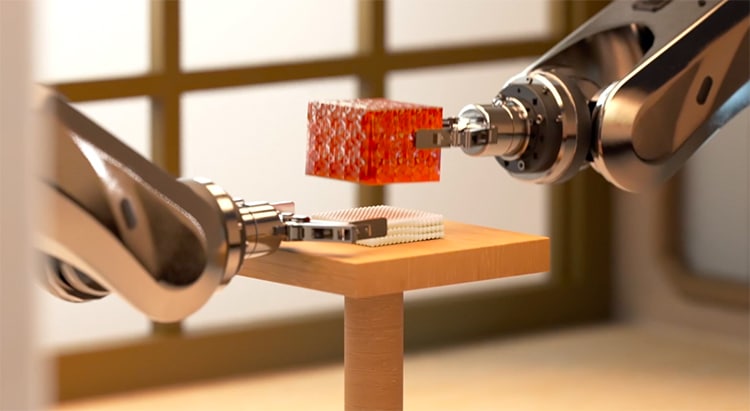
Robotic arms prepare sushi
Sushi Singularity, a restaurant in Tokyo slated to open this year, is getting in on the customization trend with a “hyper-personalized” menu. And just as 3D printing is often said to be revolutionizing the industrial market, Japan’s Open Meals plans to revolutionize sushi with digital fabrication—and individual DNA studies.
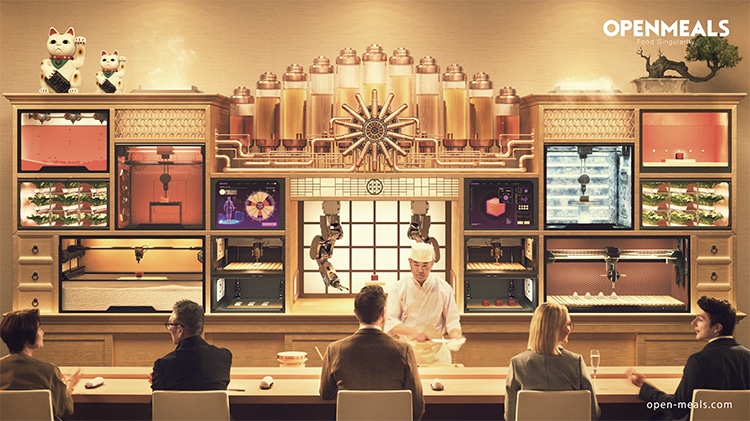
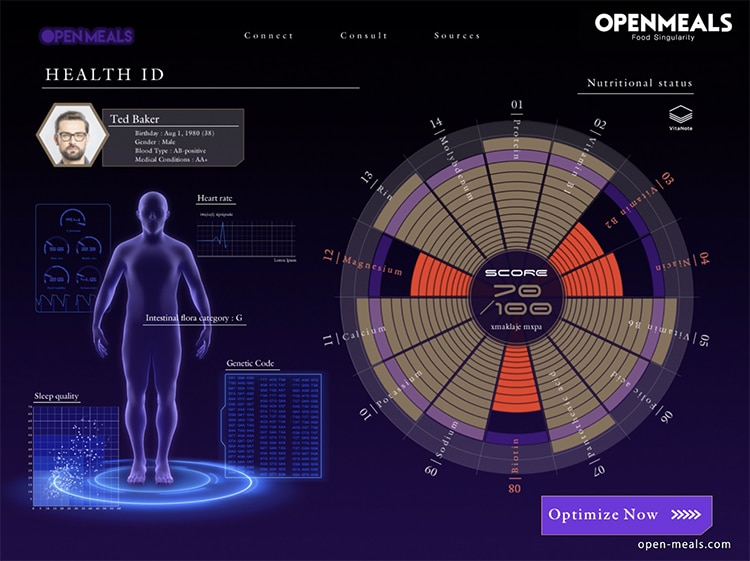
If you are planning to enjoy some of the new sushi ingredients and flavors offered by Open Meals, you will have to provide them with a biological sample at the time you make your reservation. Their team will then research your biometrics so they can give you a “personalized nutrient infusion” – all via sushi!

Guests can look forward to Asian fare that is not only beautifully designed, but also completely customized for their body’s needs. Not just operating on whim, Open Meals has been working on this concept for years.
Undoubtedly, if there is any way to expose people to the wonders of a new technology, it is through their stomachs. The downloadable dishes, meant to offered to the public on the Foodbase platform, will be created with detailed algorithms responsible for producing the proper taste, smell, temperature, and texture. And while 3D printing flesh or organs might not be suitable talk for the dinner table, the Open Meals concept is not unlike bioprinting, using biological information from sushi lovers to then 3D print a meal specific to their own constitution.
One of the greatest benefits—and attractions—to 3D printing is the capability for personalization. In applications like automotive, this may involve the capacity to customize car interiors exactly to the driver’s comfort, or in more retail applications, footwear may be designed completely around the wearer, featuring a one-in-a-kind fit offered via on-demand production.
Even more importantly, as 3D printing continues to weave its way through the medical realm, we realize the incredible potential of patient-specific medical guides as well as 3D printed models for diagnosis and treatment—not to mention the promising future for 3D printed human organs that have little chance of rejection, and don’t have to be provided through an excruciating waitlist.
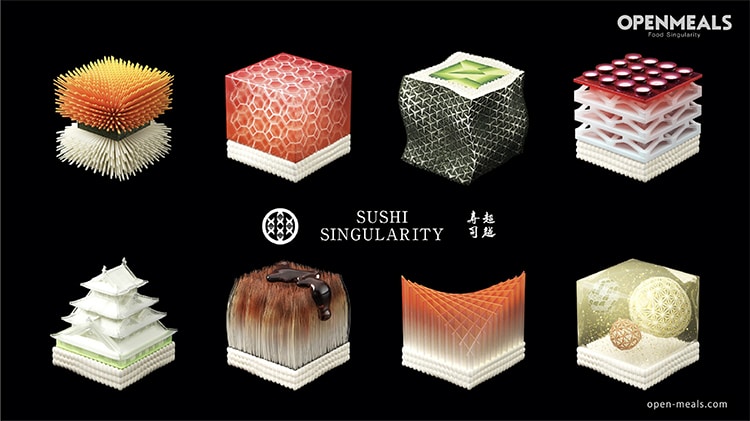
Curious to find out more about Open Meals? Check out their website, or Wagashi, to learn about their 3D printed fare inspired by nature.
[Source / Images: My Modern Met]Subscribe to Our Email Newsletter
Stay up-to-date on all the latest news from the 3D printing industry and receive information and offers from third party vendors.
Print Services
Upload your 3D Models and get them printed quickly and efficiently.













You May Also Like
3D Printing News Briefs, August 22, 2026: Polymers for CubeSats, Animal Mobility Devices, & More
We’re starting with defense news in this weekend’s 3D Printing News Briefs, before moving on to polymers for CubeSats and 3D printed prosthetics. We’ll end with a story about engineering...
Pusan National University & ORNL Develop Elastomeric Liquid Crystal Actuators
Researchers from Korea’s Pusan National University and Oak Ridge National Laboratory (ORNL) have developed 3D printed elastomeric actuators. In a paper published in Nature, the team used elastomeric liquid crystal...
Scientists Use BMF to 3D Print Seal Whiskers That Track Prey Long After It’s Gone
Seals use their whiskers to hunt. Not Navy Seals, although they may in some way also, but this article is about lowercase seals. Not Seal the musician either; as far...
Harvard’s Jennifer Lewis Lab Is 3D Printing Artificial Muscles That Twist and Bend on Demand
Researchers at Harvard John A. Paulson School of Engineering and Applied Sciences (SEAS) have developed a new way to 3D print materials that can move on their own, bending, twisting,...























































