Creality Launches Filament Maker M1 & Shredder R1, Letting Makers Reuse Waste, Cut Costs, and Create Their Own Filament


From Printing Objects to Shaping Materials
Desktop 3D printing has made on-demand creation more accessible than ever. Yet one critical part of the process remains fixed: the material itself.
Most users still rely on pre-made filament while facing failed prints, material waste, rising costs, and limited flexibility.
With M1 and R1, Creality introduces a new approach—bringing material creation into the desktop workflow and enabling users to reuse, modify, and produce their own filament.
A Compact Workflow with Greater Control
At the core of the system are two components:
- Shredder R1 — processes properly prepared 3D printing waste into reusable material
- Filament Maker M1 — mixes, extrudes, and spools filament
Together, they form a compact, desktop-scale workflow that integrates key steps of filament production.
Designed for hands-on users, the system works best with properly prepared materials and supports ongoing experimentation and refinement.
With this workflow, users can:
- Reduce material costs by reusing prepared waste
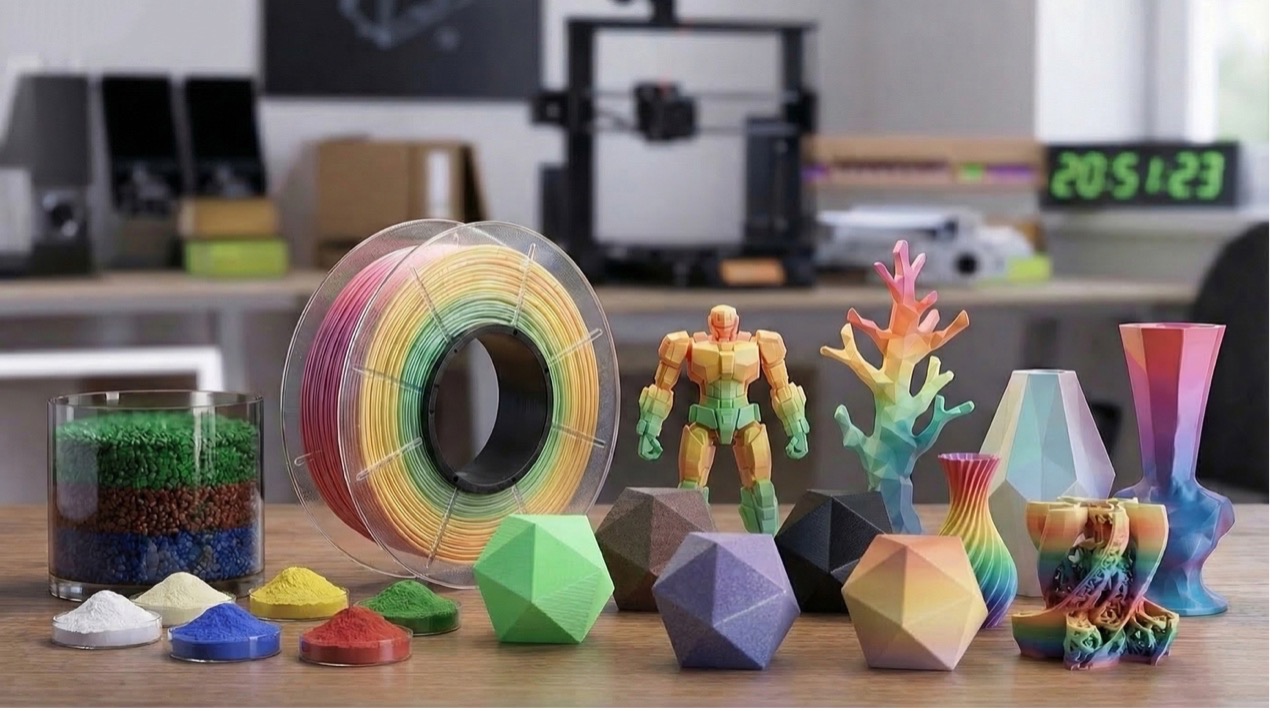
- Create custom filament with different blends, colors, and additives
- Gain greater control over print outcomes
- Explore small-batch and experimental production
Rather than a fully automated solution, M1 and R1 are positioned as tools that empower creators to actively shape their materials.
Market Response and Ecosystem Expansion
Early testing and discussions within the maker community have shown strong interest in recycling workflows, customization, and cost efficiency.
With M1 and R1, Creality expands its ecosystem beyond hardware — bringing material creation into the desktop workflow and redefining how users engage with 3D printing.
Now Live on Indiegogo
The Filament Maker M1 and Shredder R1 are now available on Indiegogo, with limited early access pricing for first backers.
As creators move from simply using materials to actively shaping them, they unlock greater flexibility — opening new possibilities for how 3D printing can be applied and explored.
Images courtesy of Creality
Subscribe to Our Email Newsletter
Stay up-to-date on all the latest news from the 3D printing industry and receive information and offers from third party vendors.
Print Services
Upload your 3D Models and get them printed quickly and efficiently.













You May Also Like
3D Printing News Briefs, October 10, 2026: Drones, WAAM, Ceramics, & More
We have a packed 3D Printing News Briefs for you this weekend! First, America Makes celebrated the recent National Manufacturing Day with 3D printed drones, and then it’s on to...
10 Years of Multi Jet Fusion: Onsite at HP’s Vancouver, Washington Facility
At this year’s RAPID event in Boston, HP Additive Manufacturing Solutions celebrated ten years in the additive manufacturing (AM) market. The company ushered in the milestone with several innovations, including...
PharmaTher Plans U.S. Network to 3D Print Medicines on Demand
3D printing medicines has often been tied to the idea of personalization, basically making a pill in the right dose, shape, or drug combination for a patient. PharmaTher is now...
3D Printing News Briefs, September 17, 2026: 3D Printed Boat, UAS Development, & More
We’ll start with maritime manufacturing in this week’s 3D Printing News Briefs, and continue on to defense 3D printing. We’ll end with funding for Tripo AI. Read on for all...