KFC Russia Explores 3D Printing Chicken

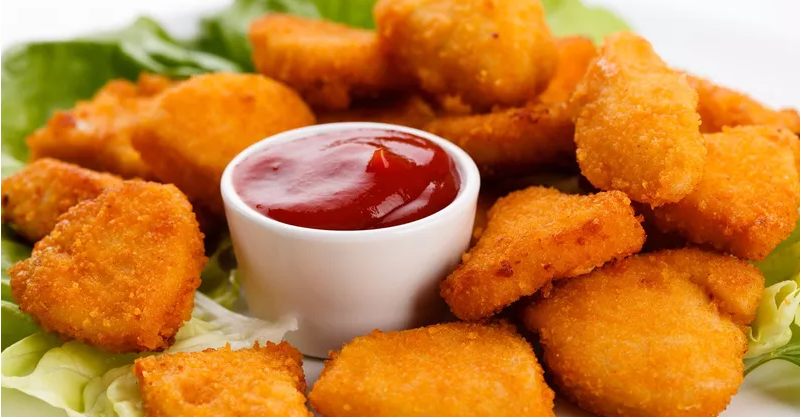
Considering the amount of time that scientists have spent lately engineering human tissue in the lab, it’s not surprising to hear that restaurant chains want to get in on the action to replace the expense of raising animals for meat. And while you may be trying to imagine how 3D printed meat would be displayed on a KFC menu board, the “powers at be” at KFC are still busy at the drawing board—collaborating with 3D Bioprinting Solutions.
3D printed food is always a shoo-in for garnering excitement, feeding our appetites with potential for the future, whether targeting meat, breakfast, cake, or other items that can be easily extruded.
A variety of different companies have been interested in redefining meat, but often with a plant-based concept. 3D printing enthusiasts, technology buffs, and curious consumers may be interested in finding out more about the techniques and the materials, but still balk at becoming anything close to a vegetarian (or god forbid, a vegan!).
 3D printing actual meat has historically been more challenging—along with the overall concept of any type of tissue engineering. The KFC announcement could be more gimmick than true intent, but for now they seem to be exploring the benefits of more environmentally friendly production, better nutrition, and the possibility of eliminating chicken farms (and all the associated flak from activists—as well as consumers who are just generally disgusted).
The process of creating chicken in a lab, dubbed “craft meat,” could mean reducing emissions exponentially as well as freeing up large tracts of land currently required to raise animals.
“The production of cell meat products is the next step in the development of our concept of the restaurant of the future,” explained Raisa Polyakova, KFC CEO in Russia.
Only time will tell whether there is a true market for bioprinted chicken, with success in the lab waiting to be seen, as well as popularity with the Russian fast-food palate. Polyakova is confident that they may be able to pioneer new technology that can be shared with the rest of the world, perhaps transforming menus everywhere one day. Savings on the bottom line could play an enormous role too—not only allowing for chains like KFC to save substantially in production, but also passing that down to consumers who are tired of over-paying for sandwiches, burgers, and most items available in contemporary drive-thrus.
[Source / Images: popmech]“Technologies based on 3D bioprinting, which were initially widely recognized in medicine, today are gaining more and more popularity in the field of food production, such as, for example, animal meat. The rapid development of such technologies in the future will make meat products printed on a 3D bioprinter more affordable,” said Yousef Hesuani, co-founder and managing partner of 3D Bioprinting Solutions.
Subscribe to Our Email Newsletter
Stay up-to-date on all the latest news from the 3D printing industry and receive information and offers from third party vendors.
Print Services
Upload your 3D Models and get them printed quickly and efficiently.









You May Also Like
Push Button Metal: Market Overview 2026
Pioneered by Xact Metal, low-cost metal printing could break open the LPBF market and make it much bigger than it is now. OneClickMetal showed us how canisters and ease of...
Push Button Metal: SnowX
In addition to MetalBase and ScrapLabs, we now have a new competitor in the low-cost LPBF space. Chinese firm SnowX aims to release its SnowPod through Kickstarter. The 80 ×...
Push Button Metal: FastForm Sells 1,000 LPBF Machines
We’ve been fascinated by the idea of Push Button Metal for a few years. Rather than a $1 million machine that needs lots of stations and preparation, affordable, easy-to-use metal...
The Business Case for Binder Jet in an Uncertain World: Jedi Mind Tricks, Part I
You’ve probably noticed that the binder jet market has been rather rocky as of late. Voxeljet was delisted, was not sold, and is now restructuring. Nano Dimension subsidiary Desktop Metal...