Project PLA Makes Recycling & Composting a Reality in the US for 3D Printing Users

As the ongoing need for and conversation about recycling and saving the environment from plastic trash continues, the concern has expanded to the 3D printing industry—and especially since polymers are so often used. While polylactic acid (made from corn starch), and commonly known as PLA, is often touted as a better choice due to its biodegradability, you may have found yourself wondering how often this is a reality.
William Sloth is a junior in high school, but also the President of Project PLA, and one of those entrepreneurs and users who is following through:
“I am very passionate about our environment and I try to make choices each day to be more environmentally conscious,” Sloth told 3DPrint.com. “I think Project PLA is the perfect solution to make the 3D printing industry more environmentally friendly and take full advantage of PLA’s biodegradable potential.”
Sloth dedicated heavy research to composting PLA, as it is so intensely marketed as ‘biodegradable’ and ‘earth-friendly.’ He was surprised to find that despite all the information regarding its environmentally positive features, his local recycling center would not take #7 plastic, which is how PLA is designated. On further research, Sloth found out that most recycling centers do not accept #7, and it is not a material that can just be thrown out with the kitchen scraps into your compost pile at home. His solution was to create a method for breaking down the PLA for others and finding a realistic way to route it for composting.
The result of research, development, and a lot of legwork is that Project PLA acts as a ‘middleman’ for collecting plastic from makers in the US, breaking it down, and then composting it at industrial sites. Sloth explains that all users must do is mail their PLA to his team, and they forward it to the composting facility. If you are interested, check out the Kickstarter campaign, striving for a $10,000 USD goal, with the mission of offering users a way to 3D print with no waste.
“It’s that easy to compost your PLA,” says Sloth, who is also currently investigating methods to recycle other 3D printing waste.
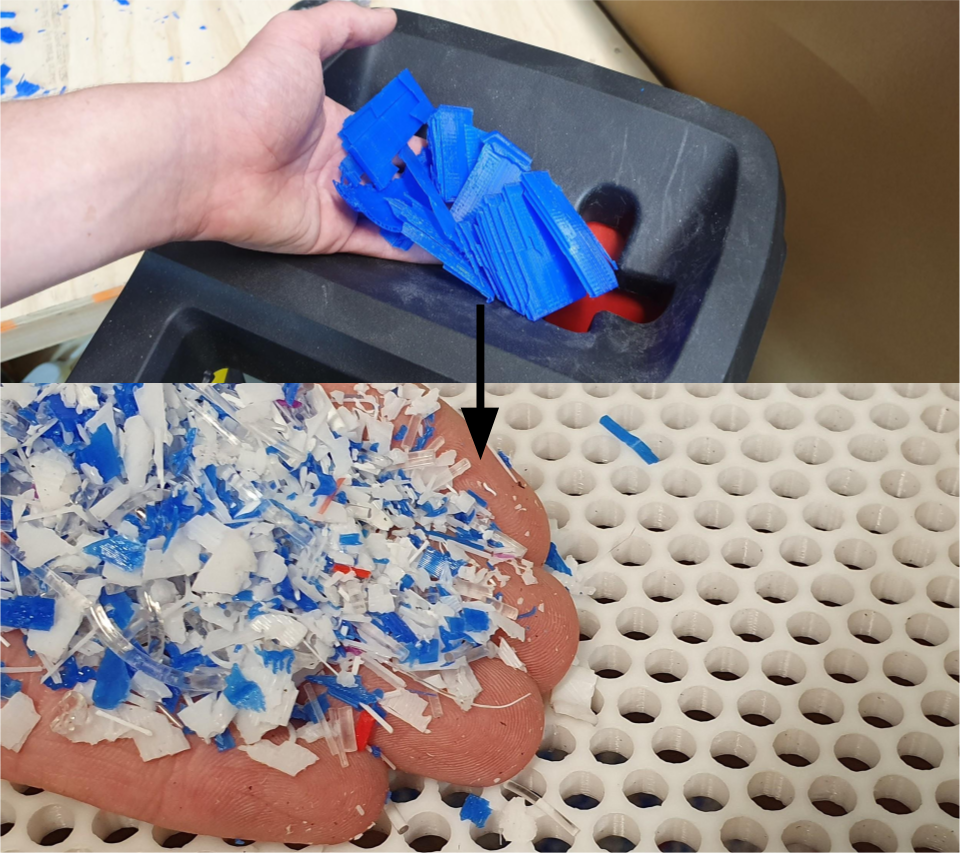
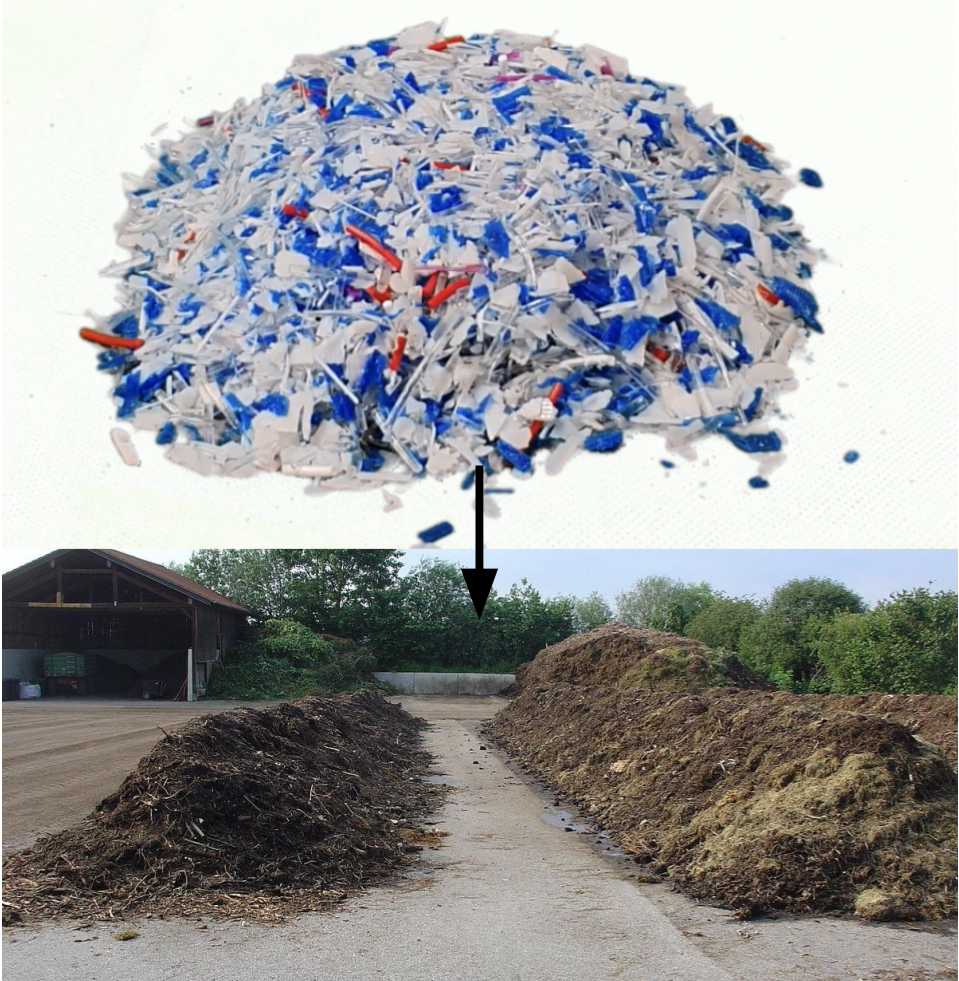
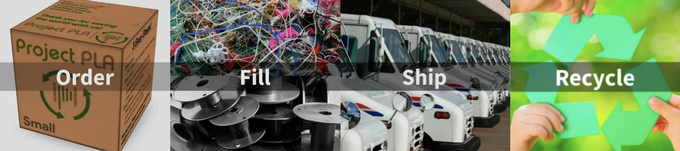
Upon ordering your box to place materials to be recycled in, which could cost anywhere from $29 to $149, you then wait until it is full, affix the included return label, and drop it off at the post office for mailing to Project PLA. They will then grind up the PLA in a shredding machine, run it through a 3D printed 4mm hole filter to achieve a fine consistency, and mail it to the assigned recycling center.
“At these large-scale operations, each stage of composting is closely monitored, including the temperature, aeration, and moisture,” Sloth told 3DPrint.com. “Once the PLA is properly is fully degraded, the compost is then sold by these industrial composting facilities to individuals and businesses.”
Project PLA also takes empty spools for recycling. They can be ‘tossed in with the PLA’ to be shipped, and then sorted and shipped for recycling. They also hope to be recycling ABS and PETG soon.
Encouraging users to recycle 3D printing materials is the goal of many around the world who have created different methods, from bringing the 3D printing cycle full circle to recycling scrap metal and other materials like nylon into printing materials. What do you think of this news? Let us know your thoughts! Join the discussion of this and other 3D printing topics at 3DPrintBoard.com.
Subscribe to Our Email Newsletter
Stay up-to-date on all the latest news from the 3D printing industry and receive information and offers from third party vendors.
Print Services
Upload your 3D Models and get them printed quickly and efficiently.











You May Also Like
Sintavia Taps NVIDIA Blackwell for AI-Driven Additive Manufacturing Pipeline
Investors have become increasingly anxious about the sustainability of NVIDIA‘s growth trajectory, which is a rather natural outcome when a stock goes up infinity percent or so over the course...
Please Localize Your Supply Chains
Resilience is starting to feel like the only economic metric that matters, which is noteworthy, for one, because there is no defined metric that I know of that actually measures...
3D Printing Moves Deeper Into Production as Parts Near $110B by 2034
A new report takes a closer look at how much 3D printing is actually being used in real production. The numbers point to a market that is already growing at...
The Blueprint for Industrial Serial Production
Lithoz is kicking off the 2026 trade fair season with a powerful showcase of real-world applications of ceramic AM serial production capabilities alongside new material upgrades. The company is stepping...