Interview with Hans Fouche on his African Large Scale Pellet 3D Printer the Cheetah


Hans Fouche-Inventor and Founder at Fouche 3D Printing
Hans Fouche is an Inventor and Engineer, who is fascinated with 3D Printing. In this interview, we discuss his invention, which is the Cheetah 3D printer and his outlook on the African 3D printing landscape.
Can you give us your background in 3D printing and additive manufacturing?
For me, it started way back in 1990 while working at Brabham F1 in the wind tunnel, developing models for testing. I started with Superglue layers and then Icing sugar, chocolate, and ABS plastic. More recently with Potters clay and Cement.

Pottery and Clay 3D printed model
You are an inventor and engineer. Can you explain the importance of these two skills in 3D printing and additive manufacturing?
I always wanted to do “my own thing”. Then it is very important to think outside the box, but Engineering still keeps your feet on the ground, and ensure you come up with practical machines that can work.
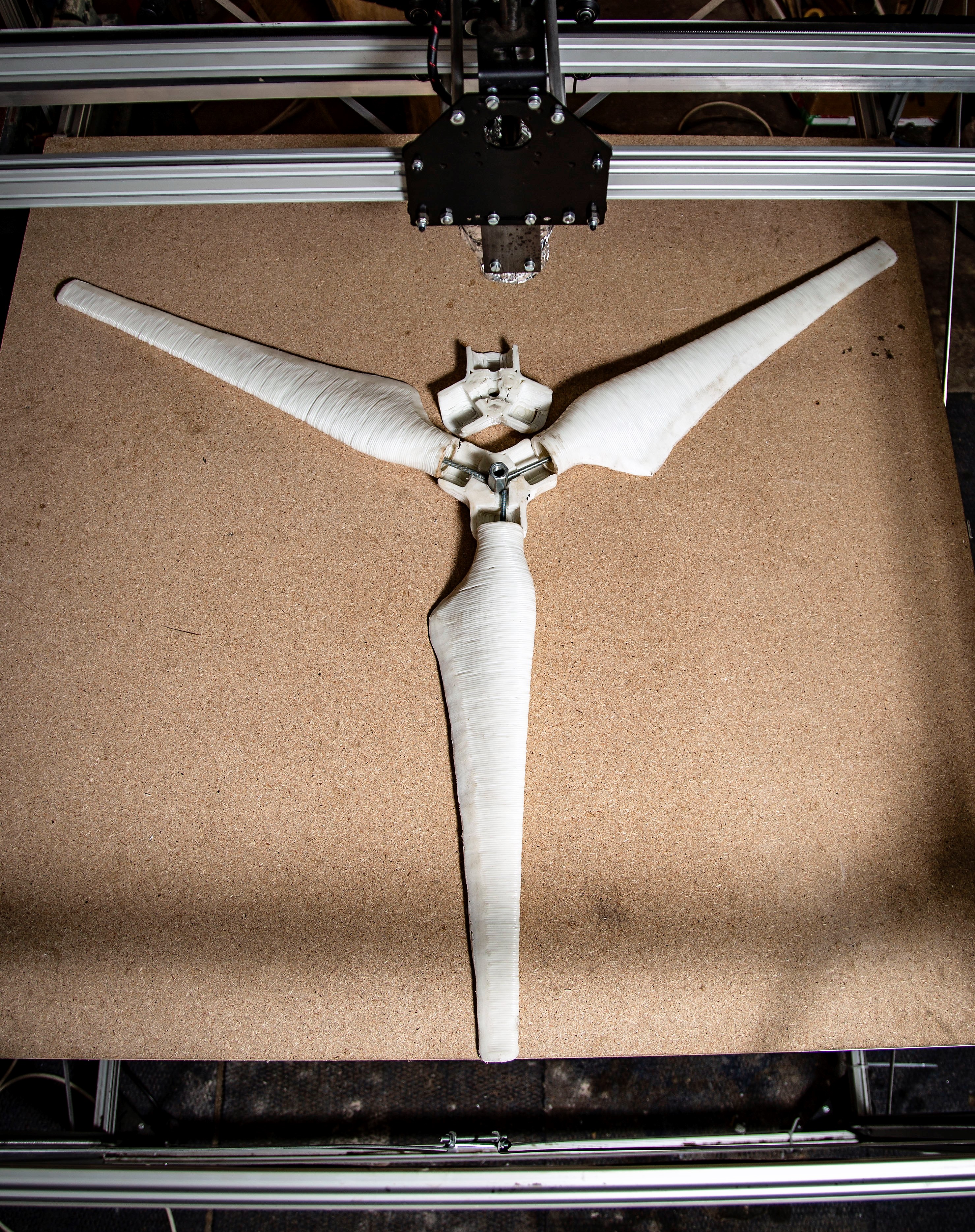
3D Printed Propulsion Unit
You invented the Cheetah 3D printer. Can you describe the printer and its applications?
I also went through the small desktop filament 3D printer stage, but find it very expensive and slow. Inventor and engineers don’t like that and so the idea is to make it cheaper and faster! Use the material that filament is made of and go for a bigger nozzle size. The Extruder we use is just a filament Extruder turned through 90 degrees, and we print with the filament before it has time to cool down. The ABS pellet price is a tenth of the ABS filament price, and our flow rate is 1 Kg per hour, ten times more than a normal desktop printer. Applications you get is real size, usable things, that you can sell.

Cheetah Pro 3D Printer
What advantages does the Cheetah 3D printer have over other 3D printers of similar build up in the market?
Price. The price per cubic meter of the print volume is the best there is. That is achieved via design. These are no-frills industrial machines. You won’t find any flickering multi-color LCD’s on them.
How has the Cheetah 3D printer performed in the African market in terms of acceptance and sales?
Slow. The machine is far “out of the box”, and people are slow to take upon such ideas, but there are a few early adopters, with very nice long term plans. Big plans.
Do you see yourself extending the Cheetah 3D printing family with more models soon?
Yes. The Cheetah, speed, has some African Animal friends! The Warthog, playing in the mud, prints with Potters clay. The Termite builds huge structures with mud, is a cement printer. The Octopus 3D Chocolate printer, have 8 nozzles. The Dream: You have a central warehouse in a village, with lots of Cheetahs, Warthogs and Termite 3D Printers in the Village. Local Taxi’s take bags of ABS, Clay and Premix Cement to the 3D Printers in the village, who get the g-code files for the week’s production via e-mail. Five people around every machine do the week’s production at their houses, look after their children after school, don’t worry about daily transport to a big factory. The next week the local taxi, pick up the production, drop off new material, and the Printer Owner gets the week’s production via e-mail. And then all these products get sold on Amazon.
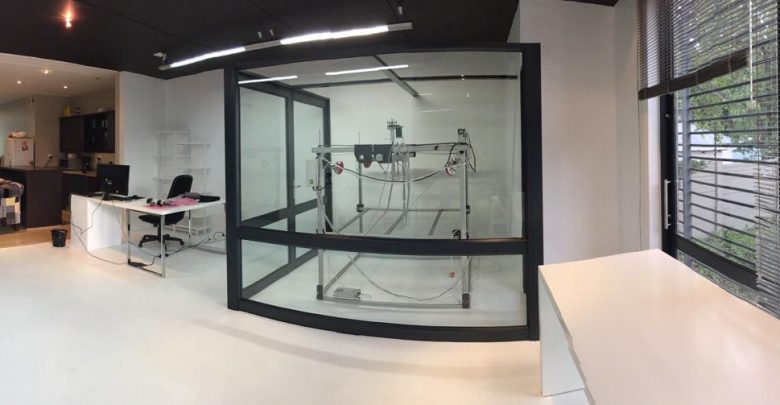
Warthog 3D Printer in glass house
Discuss this article and more on 3DPrintBoard.com or comment below to tell us what you think.
Subscribe to Our Email Newsletter
Stay up-to-date on all the latest news from the 3D printing industry and receive information and offers from third party vendors.
Print Services
Upload your 3D Models and get them printed quickly and efficiently.











You May Also Like
Sintavia Taps NVIDIA Blackwell for AI-Driven Additive Manufacturing Pipeline
Investors have become increasingly anxious about the sustainability of NVIDIA‘s growth trajectory, which is a rather natural outcome when a stock goes up infinity percent or so over the course...
Please Localize Your Supply Chains
Resilience is starting to feel like the only economic metric that matters, which is noteworthy, for one, because there is no defined metric that I know of that actually measures...
3D Printing Moves Deeper Into Production as Parts Near $110B by 2034
A new report takes a closer look at how much 3D printing is actually being used in real production. The numbers point to a market that is already growing at...
The Blueprint for Industrial Serial Production
Lithoz is kicking off the 2026 trade fair season with a powerful showcase of real-world applications of ceramic AM serial production capabilities alongside new material upgrades. The company is stepping...