miniFactory Releases Aarni Monitoring System for FFF 3D Printing


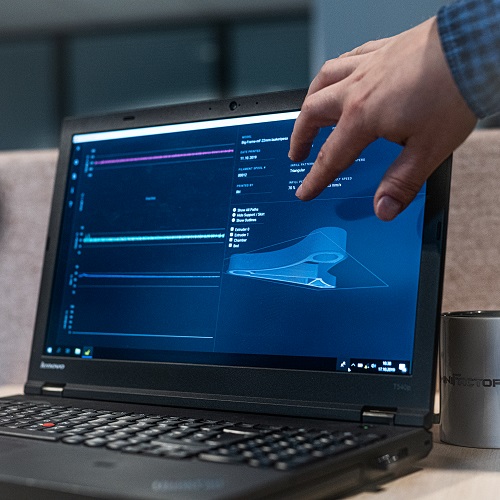
Finland’s miniFactory continues to refine FFF 3D printing. While previously they have continued to accentuate 3D printing with new 3D printers, technical datasheets, personalization tools, and much more, now they are taking digital fabrication to the next level with Aarni, a process monitoring system that gives users much greater insight into what is happening with their prints in real-time.
 Failure of prints can be frustrating for users on every level, disrupting the creative and manufacturing process. But monitoring is becoming more popular for many different types of technology. With 3D printing, huge amounts of time and money wasted can be averted. This type of system is new in FFF 3D printing, however, allowing users to verify quality and be ensured of reliability in parts.
The miniFactory team describes the Aarni system as a ‘pioneer’ for FFF production, as data is observed and collected from numerous points—and saved every second—thanks to precision sensors designed for users all the way up to the industrial level.
“After the print is completed, you have access to the 3D visualization with the intuitive and easy-to-use software installed on your computer,” states the miniFactory team. “The software visualizes the print line-by-line and layer-by-layer.”
Aarni lets users check out their printed parts, attaining information that would not have been possible previously, with the system seeking out the optimal printing process and then setting parameters for whatever material you are using. ‘Visualization’ is the key to the process, with line-by-line inspection—and no room for hidden errors. As the miniFactory team points out, the type of value achieved is completely new, as it is derived from preventing failure due to the following processes:
- Visualization of the data – sensors monitor temperature, humidity, and more to maintain quality.
- Ensuring of part properties – mechanical properties are automatically controlled.
- Certification of printed parts – certification is a sign of professional manufacturing.
- Prevention of moisture – the heated filament chamber prevents moisture.
The Aarni monitoring system is meant to accompany the miniFactory Ultra 3D Printer, an efficient and versatile industrial 3D printer used for ULTEM®, PEKK, PPSU, PA-CARBON, PEEK, and other ultra-polymers.
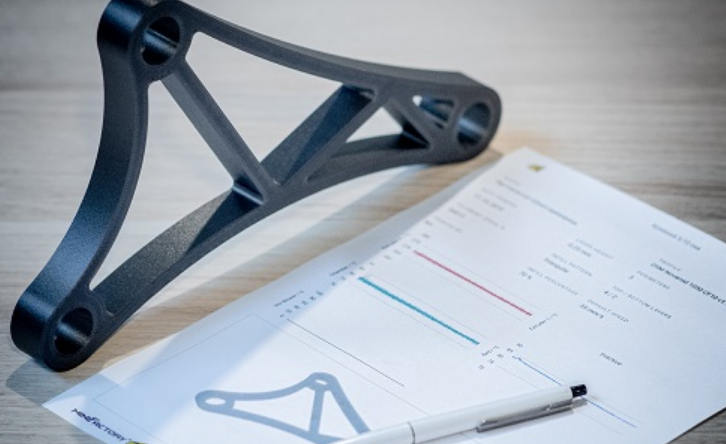
“The software that we have developed for miniFactory Aarni follows the same easy and intuitive use as our Ultra 3D Printer. This ensures that anyone can use the software without experience about process monitoring,” concludes miniFactory.
“miniFactory Aarni can be also used for research purposes. It collects data from multiple measurement points with different sensors. Data collecting is done every second, so you can follow the behavior of temperature, humidity and cooling through the whole print process. This data can be used many ways for example in the development of new materials. When the process is monitored by Aarni, you can focus on something else.”
What do you think of this news? Let us know your thoughts! Join the discussion of this and other 3D printing topics at 3DPrintBoard.com.
[Source / Images: MiniFactory]Subscribe to Our Email Newsletter
Stay up-to-date on all the latest news from the 3D printing industry and receive information and offers from third party vendors.
Print Services
Upload your 3D Models and get them printed quickly and efficiently.













You May Also Like
Divergent Declares that German 3D Printers are Superior, And Plans Massive LPBF Expansion
Divergent has announced a new version of its Laser Powder Bed Fusion (LPBF) printer and a new site. The company aims to do nothing short of “further accelerating its mission...
Zellerfeld Invests in Volumental
Correction: I was mistaken. Zellerfeld has invested in Volumental. Volumental is still independent. A previous version of this article stated that Zellerfeld had bought Volumental. My sincerest apologies for all...
SpaceX IPO Puts a Major 3D Printing Powerhouse on Wall Street
SpaceX officially began trading on the Nasdaq today under the ticker symbol SPCX, marking one of the most anticipated and largest public offerings in Wall Street history. The company priced...
TDK Makes Sound AI Infrastructure Bet with Fabric8Labs Acquisition Worth Up to $400M
As I described in a recent PRO article, the bulk of global investment is currently premised on a bet that an AI infrastructure buildout can eventually result in a workable...