
GENESIS Eco Screen: A 3D Printed Urban Biodiversity Habitat Made of Recycled Plastic

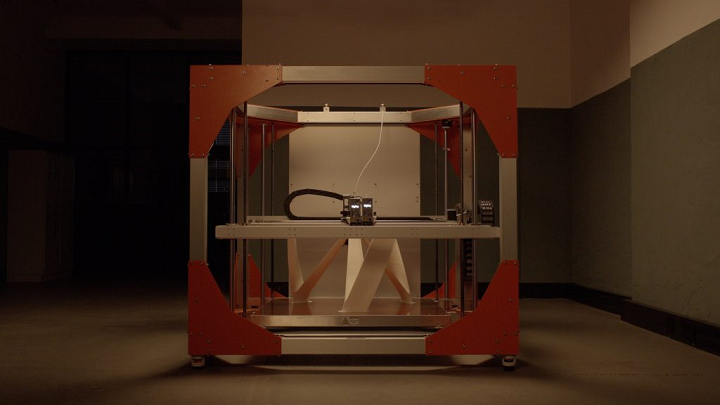 Large-format 3D printing company BigRep, along with its innovation department NOWLAB, just launched their latest sustainability project – GENESIS Eco Screen, the first 3D printed urban plant and insect habitat. Just like the company’s recent BANYAN ECO WALL, this eco-friendly installation also features an embedded drainage system, but the difference is that it’s being 3D printed out of recycled plastic materials on four of the company’s BigRep ONE systems.
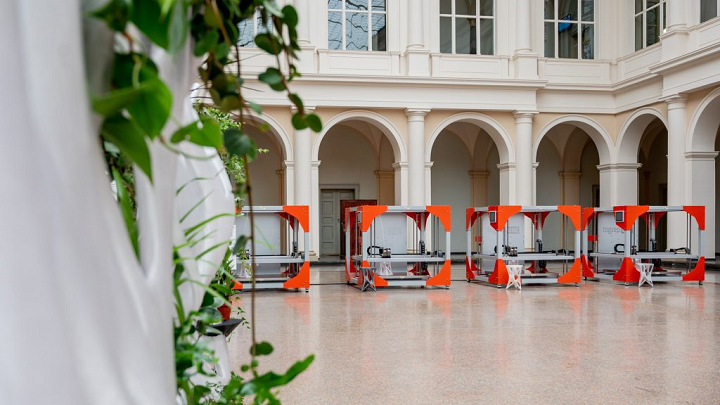
The printing itself is taking place live at the historic Thaersaal at Humboldt University in Berlin, and spectators are welcome to come watch the process in the beautiful hall. Lindsay Lawson is the Project Lead, with Daniel Büning, the BigRep CIO and NOWLAB Managing Directer and Co-Founder, rounding out the team.
The idea behind a circular economy is to close the gap between waste, resource input, energy usage, and emissions by reducing consumption and material usage; these days, 3D printing is often used for sustainability initiatives that support the idea of a circular economic system.
“Disruptive technologies such as 3D printing are key to solving some of the world’s biggest problems,” stated Büning in a press release. “We want to deliver groundbreaking innovation to maximize the potential of AM, thereby creating entirely new applications. With this project, we are introducing a new and truly sustainable manufacturing protocol to the manufacturing of polymer objects using multiple pre-used plastic materials. The GENESIS Eco Screen shows how society can develop a greener future – with circular economy solutions that are sustainable, local, modular and collaborative.”
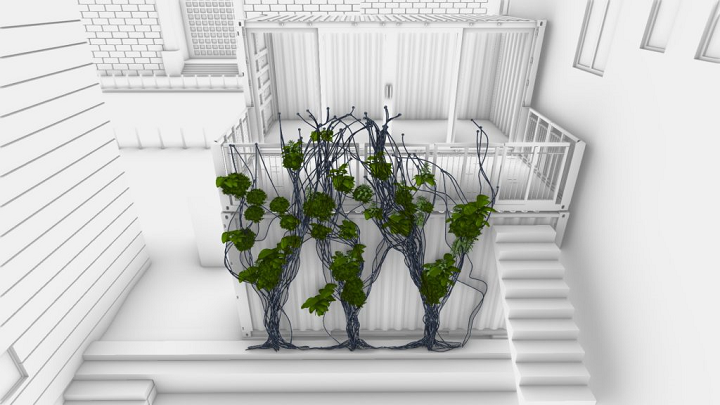
 This 3D printed installation address some major environmental challenges, like urbanization deteriorating biodiversity, plastic waste, and overconsumption of energy and other resources. The innovative prototype is a great example of a scalable circular economy and how to make urban architecture more green, and it could not have been accomplished without BigRep’s large, serial production 3D printers, agent modeling, and custom-made generative design algorithms.
The GENESIS Eco Screen is made up of 16 segments, and its full size measures at 4000 x 4000 x 300 mm. The intelligent algorithms and agents are similar to AI in that they are able to design complex geometries autonomously, using just a few pre-set parameters; one example of this was a data analysis of sun exposure across the installation. This allowed BigRep and NOWLAB to optimize the diameter of its 3D printed branches, create the right shading features, and position the plants accordingly.
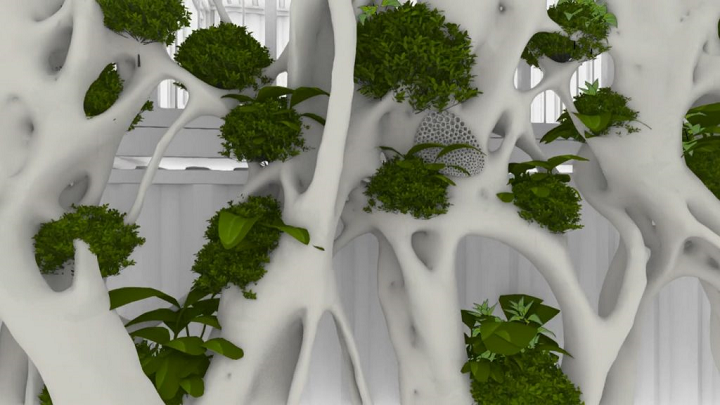
The eco wall installation looks like a massive root system, with an embedded water and drainage system for plants and insect habitats, and even a bee shelter. It’s being 3D printed out of BigRep’s PETG and BASF Innofil3D rPET filaments that are 100% recycled PET bottles.
 The GENESIS Eco Screen is on schedule to be finished later this month, and will then be displayed in downtown Berlin at the Fiction Forum exhibition center, which is organized on behalf of the Federal Ministry for Economic Affairs and Energy by the German Federal Government’s Center of Excellence for the Cultural and Creative Industries. The center itself is actually located at the site of an East German border control station that’s since been demolished.
In the meantime, the public can learn more about the closed loop process set up at the Fiction Forum that recycles PET bottles as an input material by visiting an exhibit at the Thaersaal, which shows five steps taken to turn the waste into proper 3D printing material.

The used bottles are first delivered to a collection point, then cleaned and pre-processed for the Dual Axel Shredder machine designed by a nomadic, Berlin-based design studio called raw paradise. The machine processes the plastic into raw, 3D printable material, and 2.75 mm filament is finally fed into BigRep’s large-scale ONE 3D printers to build the unique biodiversity habitat that is the GENESIS Eco Screen.
https://www.facebook.com/bigrep3dprinter/videos/2345688782352041/
What do you think? Discuss this story and other 3D printing topics at 3DPrintBoard.com or share your thoughts in the Facebook comments below.
[Images: NOWLAB/BigRep GmbH]Subscribe to Our Email Newsletter
Stay up-to-date on all the latest news from the 3D printing industry and receive information and offers from third party vendors.
Print Services
Upload your 3D Models and get them printed quickly and efficiently.













You May Also Like
Kickstarter is Testing the Next Wave of Desktop 3D Printing
3D printers are raising serious money again…on Kickstarter, that is. Over the last few months, a new group of 3D printer campaigns has attracted millions of dollars and thousands of...
Stratasys vs. Bambu Lab: What’s Really Behind the $27.6M Patent Verdict?
Editor’s note: This is Part 1 of a two-part series by Xu Fanglei examining the technology and patent issues behind the Stratasys-Bambu Lab dispute. Part 1 looks at the U.S....
Bambu Lab and SUSAN FANG 3D Print for London Fashion Week
At London Fashion Week, some of the more unusual pieces on the runway came from 3D printers. Chinese fashion designer SUSAN FANG presented her Spring/Summer 2027 Air-Illusion collection at the...
Stratasys Wins $27.6M in Patent Case Against Bambu Lab; Bambu Challenges Verdict
Update, September 21, 2026: This article has been updated with a statement from Bambu Lab responding to the verdict, along with additional information about the company’s ongoing patent challenges against...
























































