Aspect Biosystems Heads $2.2 Million Project with New Microfluidic 3D Bioprinting Platform

Aspect Biosystems, headquartered in Vancouver, has created a new microfluidic 3D bioprinting platform to further the progress of tissue engineering. In a collaboration with Merck, GSK, and McGill University’s Goodman Cancer Research Centre, they hope to continue 3D printing impacts in the ever-expanding medicine realm through allowing for better accuracy and screening of immuno-therapeutics that target challenging and deadly diseases like breast cancer.
This powerful partnership comprises a project worth $2.2 million, backed also with contributions by CQDM and the Canadian Cancer Society.
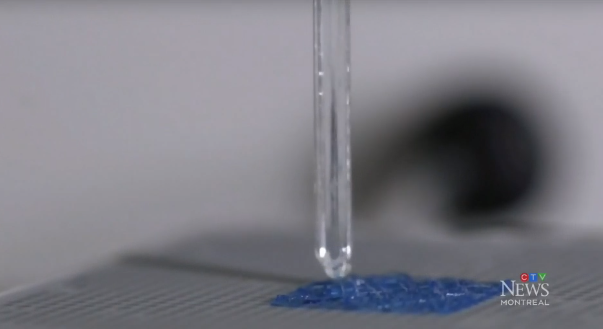
“As a founding member of the CQDM, Merck Canada is proud to support this investment in R&D with the objective of potentially improving patient response to some treatments for breast cancer patients,” said Anna Van Acker, president and managing director, Merck Canada Inc. “We believe that collaboration between public sector, academia, patients, NGOs, industry and government will lead to innovations that improve patient outcomes and today’s announcement is yet another example of the modern R&D model we are pursuing in Canada.”
These organizations have committed a substantial amount of funds due to their dedication to research of therapeutic targets and immuno-oncology therapeutics, with Morag Park and her team at Goodman Cancer Research Centre and McGill University Health Centre partnering with Aspect Biosystems. Their focus in bioprinting is to create breast cancer cells and tumors using biological material from patients.
“We are thrilled to partner with global biopharmaceutical leaders, GSK and Merck, as well as world-class groups at McGill and the Canadian Cancer Society that are dedicated to finding cures for cancer,” said Tamer Mohamed, chief executive officer, Aspect Biosystems. “We are deeply committed to forming strategic partnerships to accelerate the impact of our technology on patient outcomes.”
“In addition to our partnerships and programs focused on developing tissue therapeutics for regenerative medicine, our 3D bioprinting platform is also enabling breakthroughs in therapeutic discovery. This public-private partnership is a great example of combining state-of the-art technology and science with world-class expertise and resources to accelerate the discovery and development of new therapies for patients.”

“The 3D printer remakes this tumor microenvironment in the same manner as it exists in the patient,” said Morag Park of the Goodman Cancer Research Centre Director. “It’s this reconstituted tumor that allows us to test new drugs and therapies.”
These advances will allow for further strides in research and evaluation of anti-cancer drugs and how well patients respond to varying treatments.
“We are excited to work with Aspect’s innovative team to combine our bio-bank of patient-matched tumor-associated cells with Aspect’s microfluidic 3D bioprinting technology to create programmable 3D tumor models,” said Dr. Morag Park, director, Goodman Cancer Research Centre at McGill University. “Solid tumor growth is regulated by complex interactions of tumor cells with the tumor microenvironment. This collaboration seeks to create a powerful new platform for studying these critical interactions in a human-relevant environment and, ultimately, accelerate the discovery and development of novel cancer immunotherapies.”
Microfluidics are the common subject of research today as students explore how these systems are commonly used today, as well as being used in combination with miniaturization and innovative new scaffolds for tissue engineering. Find out more about how Aspect Biosystems is furthering the development of oncology therapeutics here.
What do you think of this news? Let us know your thoughts! Join the discussion of this and other 3D printing topics at 3DPrintBoard.com.

Subscribe to Our Email Newsletter
Stay up-to-date on all the latest news from the 3D printing industry and receive information and offers from third party vendors.
Print Services
Upload your 3D Models and get them printed quickly and efficiently.













You May Also Like
Kickstarter is Testing the Next Wave of Desktop 3D Printing
3D printers are raising serious money again…on Kickstarter, that is. Over the last few months, a new group of 3D printer campaigns has attracted millions of dollars and thousands of...
Stratasys vs. Bambu Lab: What’s Really Behind the $27.6M Patent Verdict?
Editor’s note: This is Part 1 of a two-part series by Xu Fanglei examining the technology and patent issues behind the Stratasys-Bambu Lab dispute. Part 1 looks at the U.S....
Bambu Lab and SUSAN FANG 3D Print for London Fashion Week
At London Fashion Week, some of the more unusual pieces on the runway came from 3D printers. Chinese fashion designer SUSAN FANG presented her Spring/Summer 2027 Air-Illusion collection at the...
Stratasys Wins $27.6M in Patent Case Against Bambu Lab; Bambu Challenges Verdict
Update, September 21, 2026: This article has been updated with a statement from Bambu Lab responding to the verdict, along with additional information about the company’s ongoing patent challenges against...