Tethon 3D and University of Nebraska to Develop First Ceramic and Metal DLP 3D Printer

 SLA and DLP 3D printing are, for the most part, polymer 3D printing technologies. That doesn’t mean that they can’t be used with metal and ceramics, however. Omaha, Nebraska-based company Tethon 3D specializes in ceramic resins for DLP 3D printing, in fact, and they can be used with any SLA or DLP 3D printer with an open resin system. Now, however, Tethon 3D is going a step further and developing a DLP 3D printer specifically for ceramic and metal resins – the first commercially available 3D printer of its kind. Whereas ceramic resins were possible previously from DWS and others, making a specific machine is a new step.
“While there are more than a dozen SLA and DLP 3D printers that work well and are compatible with our UV curable ceramic and metal materials, they are all designed for plastic polymers,” says Tethon 3D CEO Karen Linder. “By optimizing a DLP printer for ceramics and metals and formulating our materials specifically for this enhanced printer, the industry can produce stronger and higher resolution ceramic and metal 3D printed parts with the convenience and lower expenses of desktop DLP technology.”
Tethon 3D received a grant from the Nebraska Department of Economic Development to design and produce the 3D printer in a project that has been titled “A Novel DLP 3D Printer Optimized for Ceramics and Metals.” The company will be working with Bai Cui, PhD and Prahalada Rao, PhD from the University of Nebraska’s Department of Mechanical & Materials Engineering. Dr. Cui is an expert in ceramic 3D printing materials and Dr. Rao is an expert in 3D printing hardware.
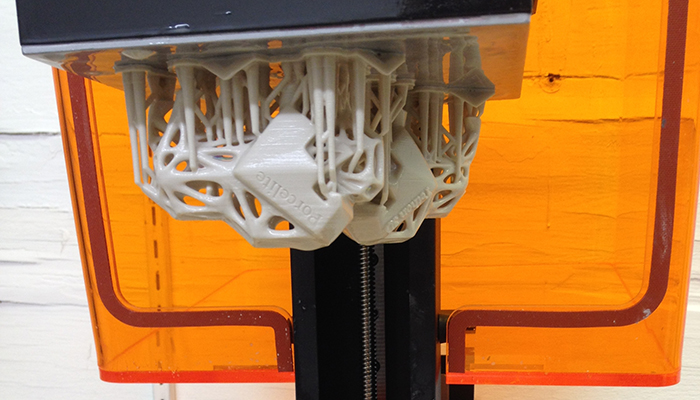
[Image: Tethon 3D]
“The Department of Mechanical & Materials Engineering is excited for this opportunity to work with Tethon 3D on developing 3D printing technology,” said Jeffrey E. Shield, Chair of the Department of Mechanical & Materials Engineering and Robert W. Brightfelt Professor of Engineering at the University of Nebraska. “Profs. Rao and Cui have the complementary expertise to contribute to this project in a number of ways, and Tethon 3D is a recognized leader in developing outstanding technology. It will be a great opportunity for our faculty and students to interact with such an outstanding company.”
The new DLP 3D printer will give manufacturers the opportunity to create high-resolution metal and ceramic parts for the cost of DLP manufacturing, which is lower than most metal manufacturing systems.
“The Academic Research and Development Program supports partnerships between Nebraska entrepreneurs and academic institutions, and continues to produce incredible results in terms of putting our companies on the leading-edge of innovation and enhancing their industry competitiveness,” said Nebraska DED Director Dave Rippe. “We congratulate Tethon 3D and the University of Nebraska on their new venture, and look forward to their success.”

Tethon 3D, which has solely been a materials company thus far, will be creating a new hardware division for the venture.
“Our printer will create new opportunities for designers to develop complex ceramic and metal components and will enable higher volume manufacturing of 3D printed ceramics and metals,” said Linder. “We are passionate about creating new markets, fabricating designs that were previously impossible and disrupting existing manufacturing approaches.”
Discuss this and other 3D printing topics at 3DPrintBoard.com or share your thoughts below.
Subscribe to Our Email Newsletter
Stay up-to-date on all the latest news from the 3D printing industry and receive information and offers from third party vendors.
Print Services
Upload your 3D Models and get them printed quickly and efficiently.











You May Also Like
“A More Complete End-to-End Solution”: Stratasys Launches Post-Processing Partnership Program
I think it’s safe to say that post-processing is no longer considered the “dirty little secret” of 3D printing that it once was, with users realizing that finishing is just...
Why SiC-Dedicated Additive Manufacturing Is Gaining Industrial Relevance
Silicon carbide is not a material problem—it’s a manufacturing one. Silicon carbide (SiC) has become a critical material across semiconductors, aerospace, energy, and defense. Its exceptional thermal stability, chemical resistance,...
Championing a Made-in-America Future for Additive Manufacturing
As the additive manufacturing industry continues its rapid global evolution, one theme has risen to the top of strategic conversations: the importance of strengthening domestic production to support national competitiveness...
Friendshoring and Additive Manufacturing: Turning Australia’s Research Strength into Commercial Impact
Global supply chains are being re-written. After decades of globalisation driven primarily by cost efficiency, geopolitical tensions, trade disputes and pandemic-era disruptions have exposed the risks of concentrating manufacturing and...