First 3D Printer Will Be Sent to Space By NASA Next Month

3D Printing has been around for 30 years, however it was only recently that the technology has progressed enough to make it useful for a wide array of applications. One of these applications is in outer space. Astronauts at 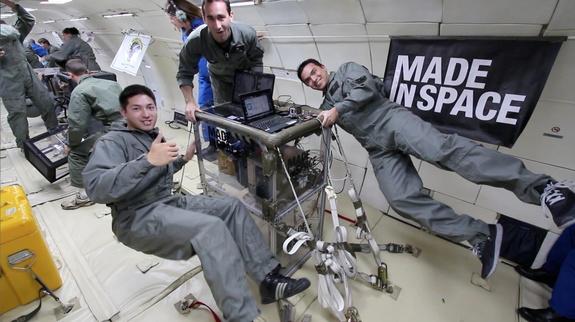 NASA are expected to take the first 3D printer out of the Earth’s atmosphere later next month.
Expedition 40/41 crew will be aboard the shuttle responsible for bringing this exciting machine to the International Space Station. The printer will likely be used some time this summer as the crew works on the space station. Astronaut Reid Wiseman, is one of the crew members bound for the station in May, and is excited about the prospects of having a 3D printer on board.
“Imagine if Apollo 13 had a 3D printer,” Wiseman said. “Imagine if you’re going to Mars and instead of packing along 20,000 spare parts, you pack along a few kilograms of ink. Now, you don’t even need to know what part is going to break, you can just print out that part. Let’s say your screwdriver strips out halfway to Mars and you need a screwdriver, print out a screwdriver. Really, I think for the future, that’s pretty fascinating. I really like that and it’ll be fun to play with that on orbit. I think the ground will uplink a sample and get it to print out because if they let the crew print stuff out, we’d run that thing out of ink in five minutes”
The 3D printer which will be sent to space, is manufactured by a company called Made in Space. They call the printer “3D Print”, and believe that the device will be capable of printing out close to 30 percent of the spare parts that are currently being housed at the space station. Such a printer could save NASA a tremendous amount of money. Instead of having to bring along tens of thousands of different parts on a mission, they can 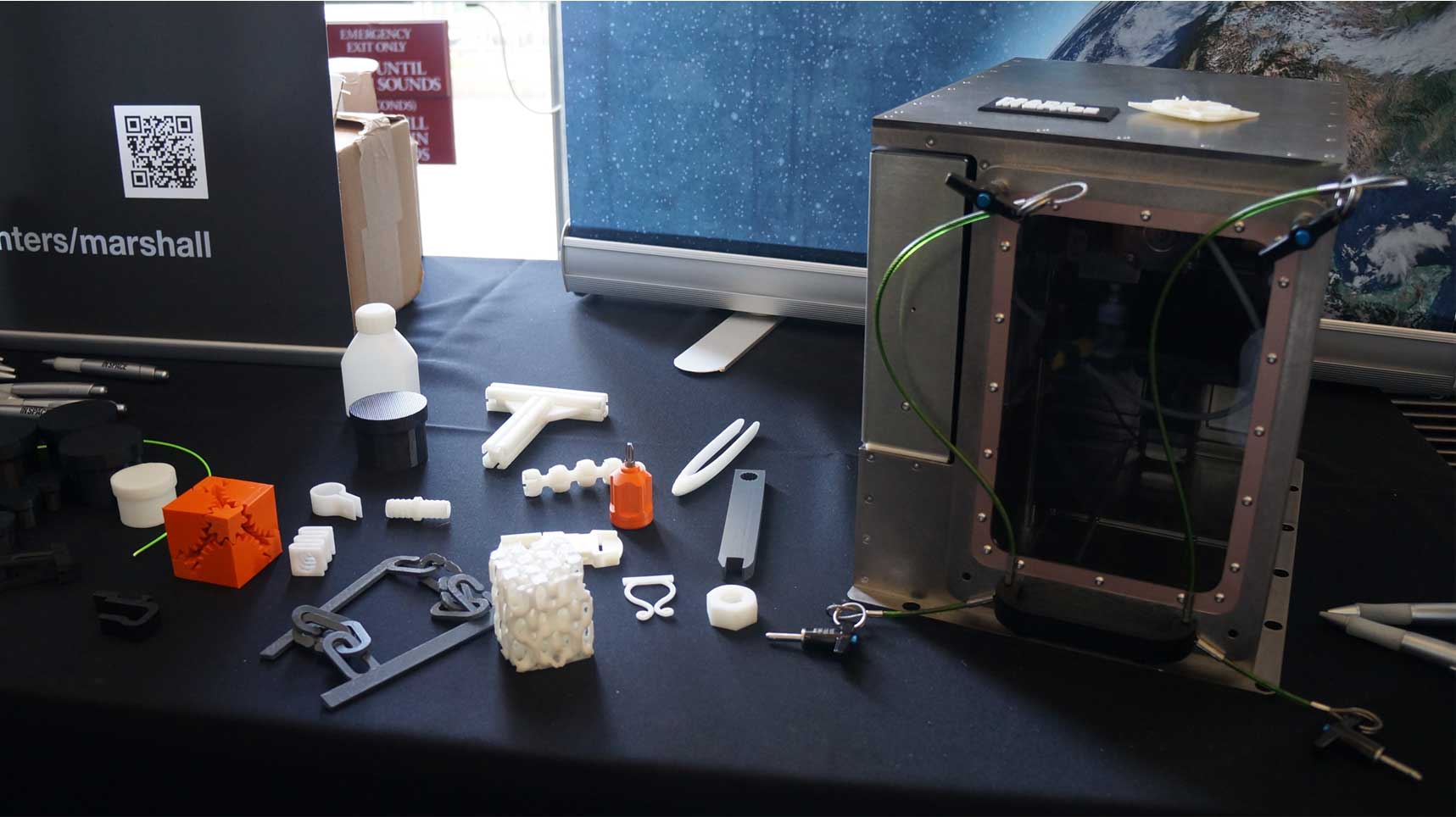 simply pack the “3D Print” printer and several kilograms of printer “ink”. Considering that it costs approximately $1000 in fuel for every pound of material that is launched, any cut back on supplies could save millions of dollars per launch.
This mission will be a stepping stone for the future of 3D printing in space, and could one day lead to printers capable of using terrestrial soils/dust to print bases on the Moon, or even Mars. Discuss this impending NASA mission on 3D Print Board. (Source/Photos: Space.com)
Subscribe to Our Email Newsletter
Stay up-to-date on all the latest news from the 3D printing industry and receive information and offers from third party vendors.
Print Services
Upload your 3D Models and get them printed quickly and efficiently.












You May Also Like
U.S. Navy Lab Uses 3D Printing to Reduce Tooling Lead Time By Over 90%
The F-35 Lightning II Joint Program Office (JPO), responsible for life-cycle management of the key fifth-generation joint strike fighter (JSF) system used by the U.S., its allies, and its partners,...
Etsy Design Rule Change Reduces Selection of 3D Printed Goods
Online marketplace Etsy has implemented a rule change requiring all 3D printed goods on the site to be original designs. The update to the site’s Creativity Standards states, ¨Items produced using...
Honeywell Qualifies 6K Additive’s Nickel 718 for 3D Printed Aerospace & Defense Parts
6K Additive is renowned for manufacturing sustainable additive manufacturing (AM) powder, and offers a wide portfolio of premium metal and alloy powders that include titanium, copper, stainless steel, and nickel,...
MetalWorm Sells WAAM Systems to Research Institutes in Brazil and Malaysia
Turkish WAAM firm MetalWorm has sold a system in Malaysia and another in Brazil. This is an excellent example of a few emerging trends in additive. Firstly, WAAM was experimented...